
Genovesa, commonly known as “Bird Island,” is located in the northeast section of the Archipelago. After a very long and sleepless night from Mosquera, it was with an exhausted but giddy attitude that we hopped into the panga for our wet landing on the beach of Darwin’s Bay for our first adventure of the day. Armed with two DSLR cameras and many lenses, we were ready to find out if Genovesa would live up to it’s nickname.
It did. Big time.
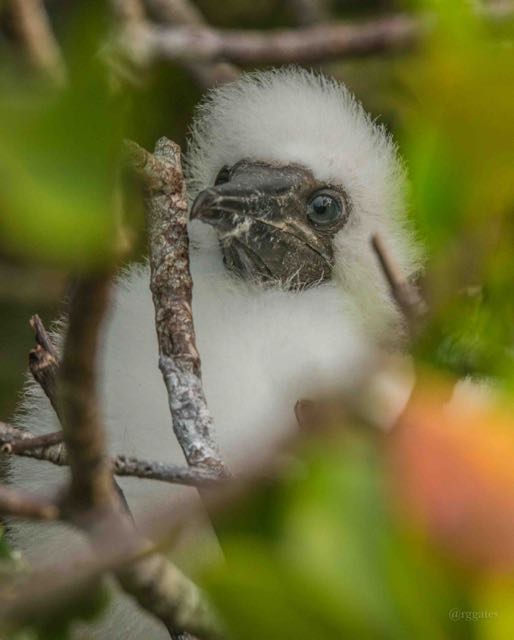
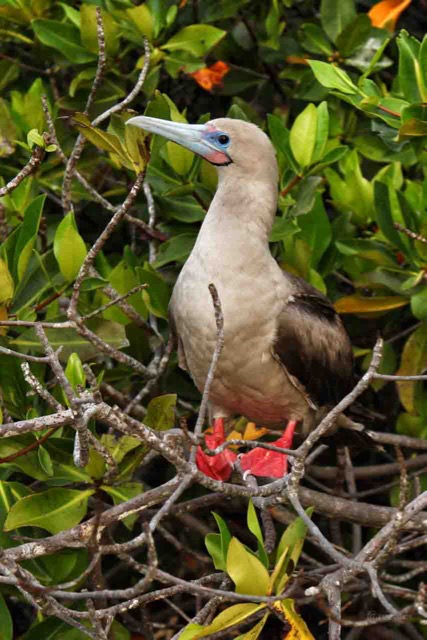
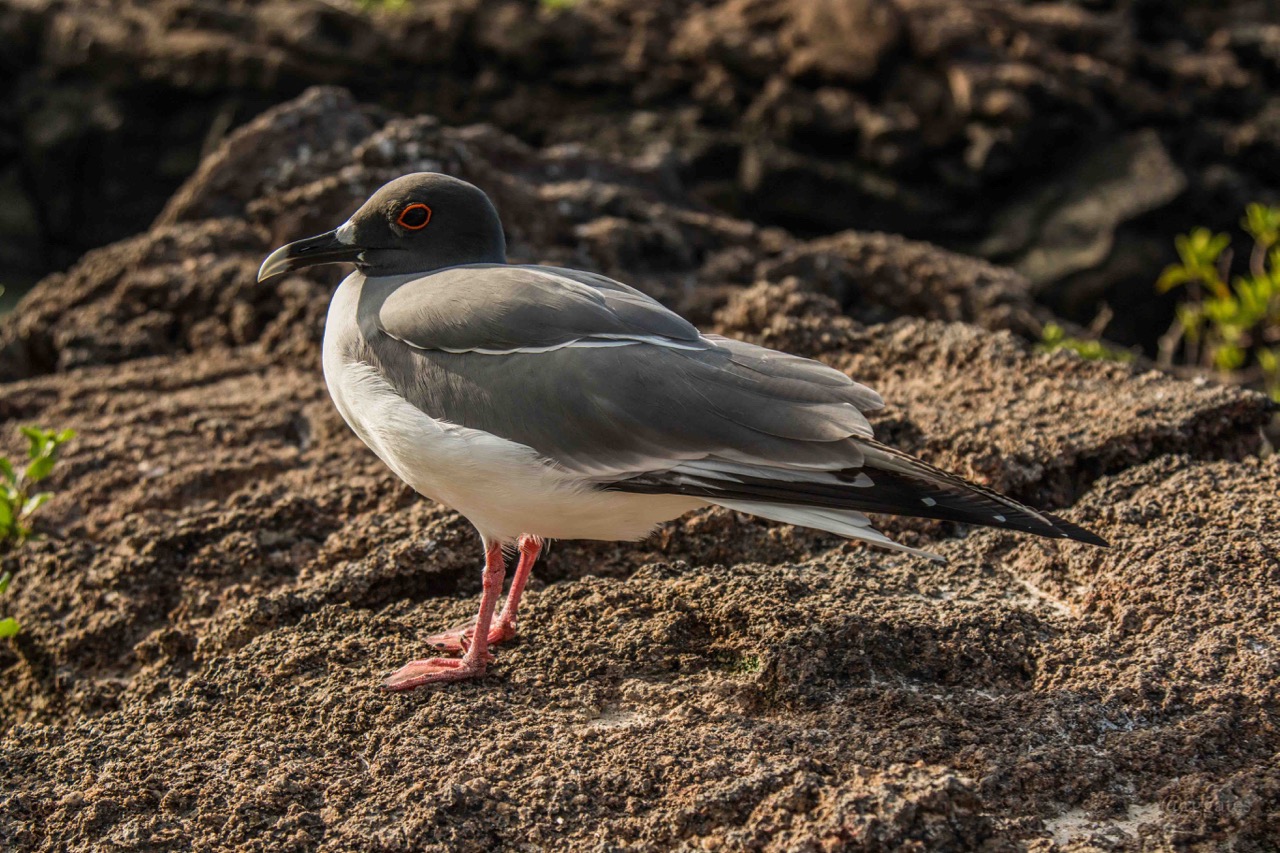
Home to a large and varied population of birds including the tree-nesting Red-footed Booby, Nazca Booby, Swallow Tail Gull, Great Frigatebird, Galàpagos Dove, and Red-billed Tropic Bird to name a few, this island did not disappoint. A mid-February visit also revealed a plethora of Red-footed Booby chicks -adorable little white puffballs with black beaks resting quietly in the trees while our cameras clicked away.
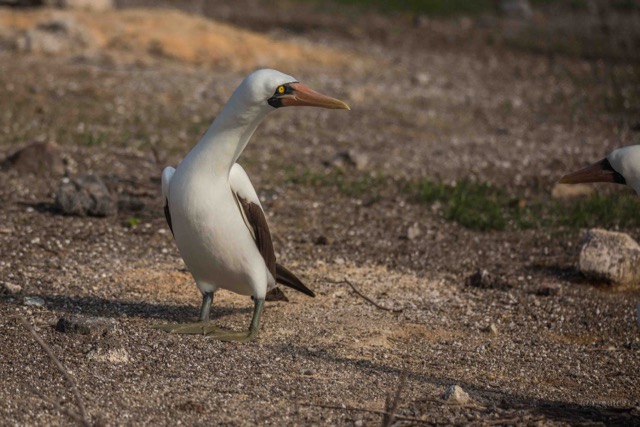
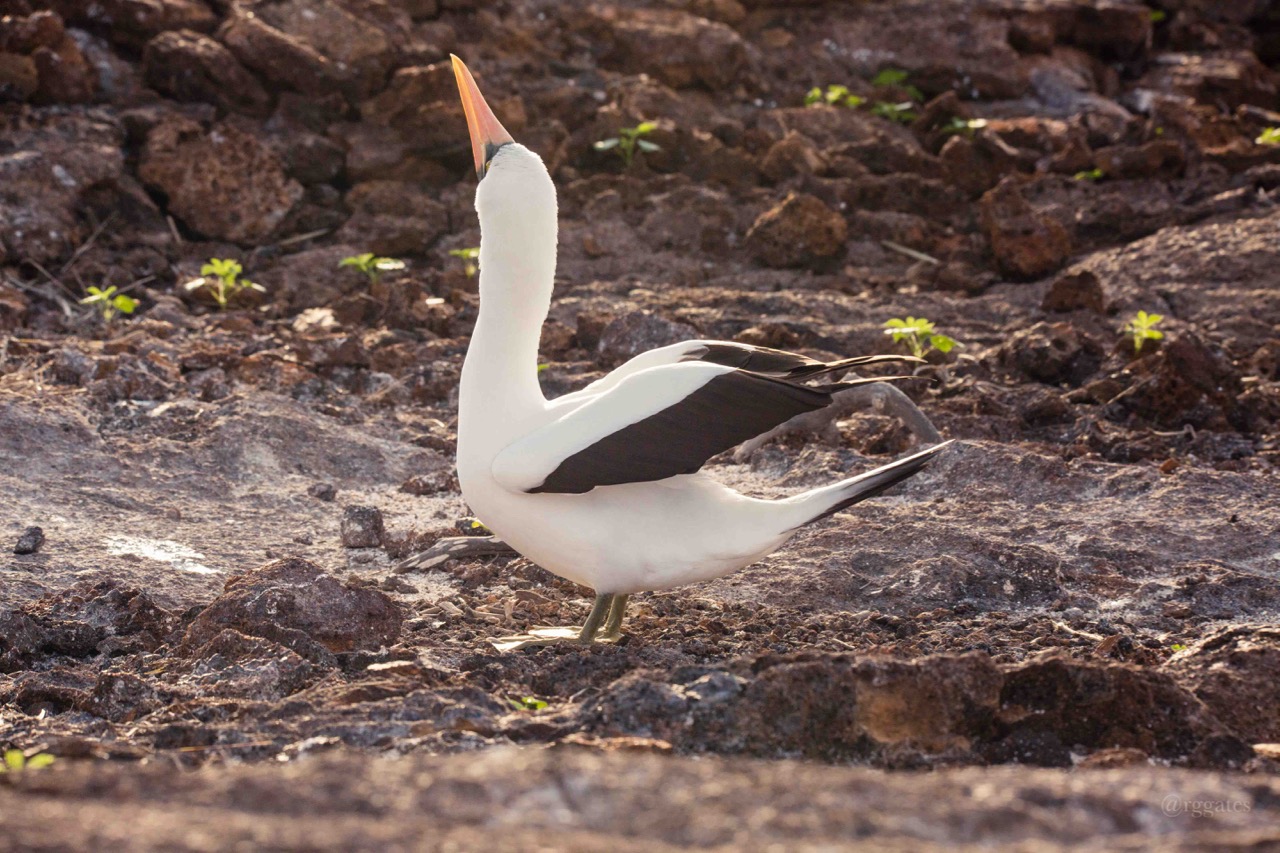
As the well-delineated walk progresses from the beach, the different habitat preferences are easy to see -Nazca boobies prefer the sandy and more barren areas for their ground nests and courting rituals; Red-footed Boobies prefer the rather short, dense trees for nesting and the Swallow Tail Gulls could be seen strutting their stuff just about everywhere.
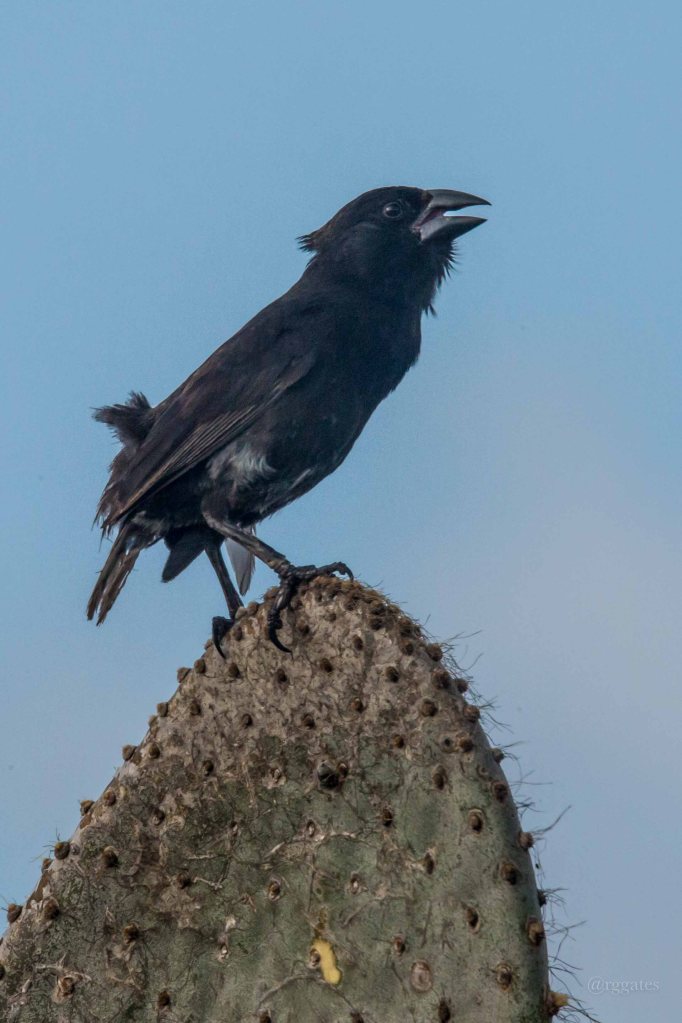
As the walk continues, sandy ground gives way to sharper, more irregular volcanic rock dotted with bushes and cacti. The Galàpagos Dove can by seen hopping between bushes, though rarely holding still, while the black Cactus Finch is often seen perched atop Prickly Pear.
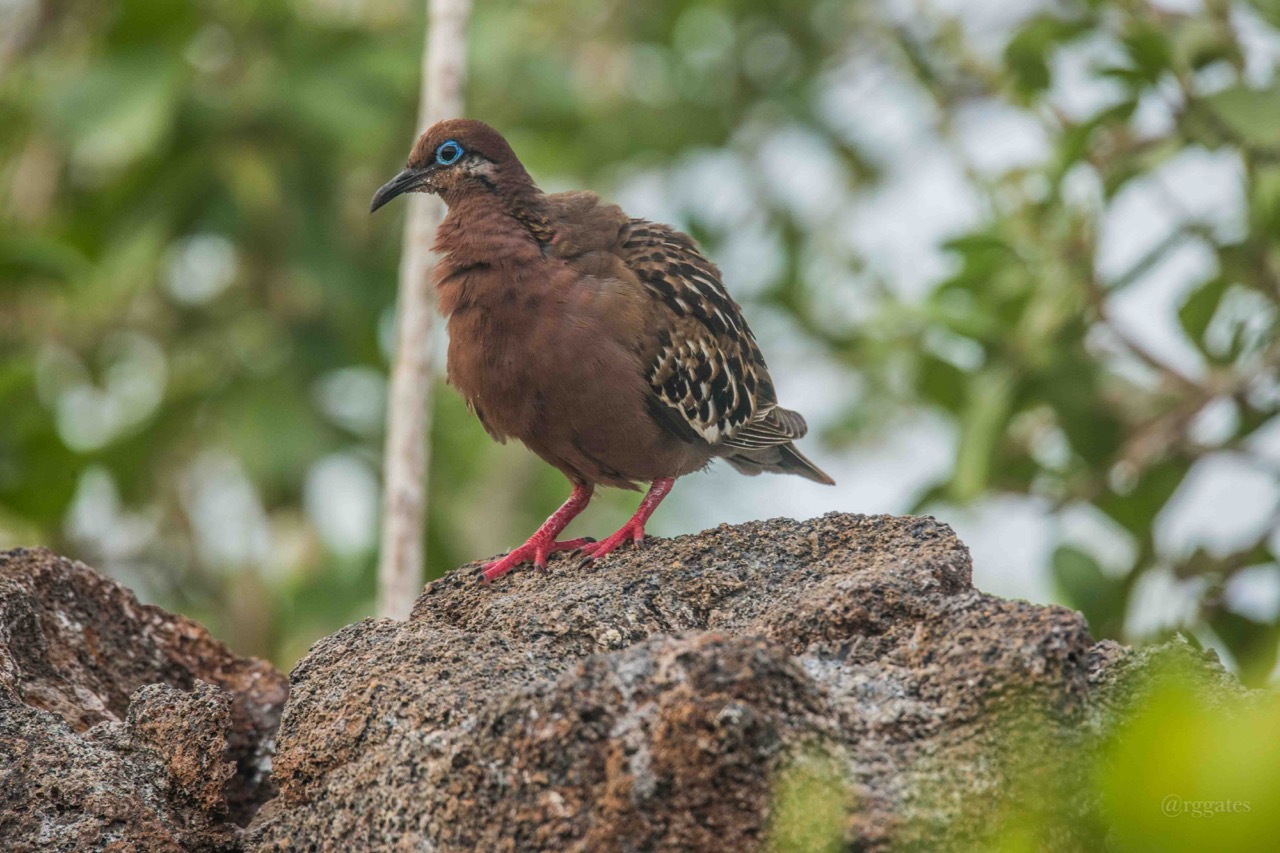
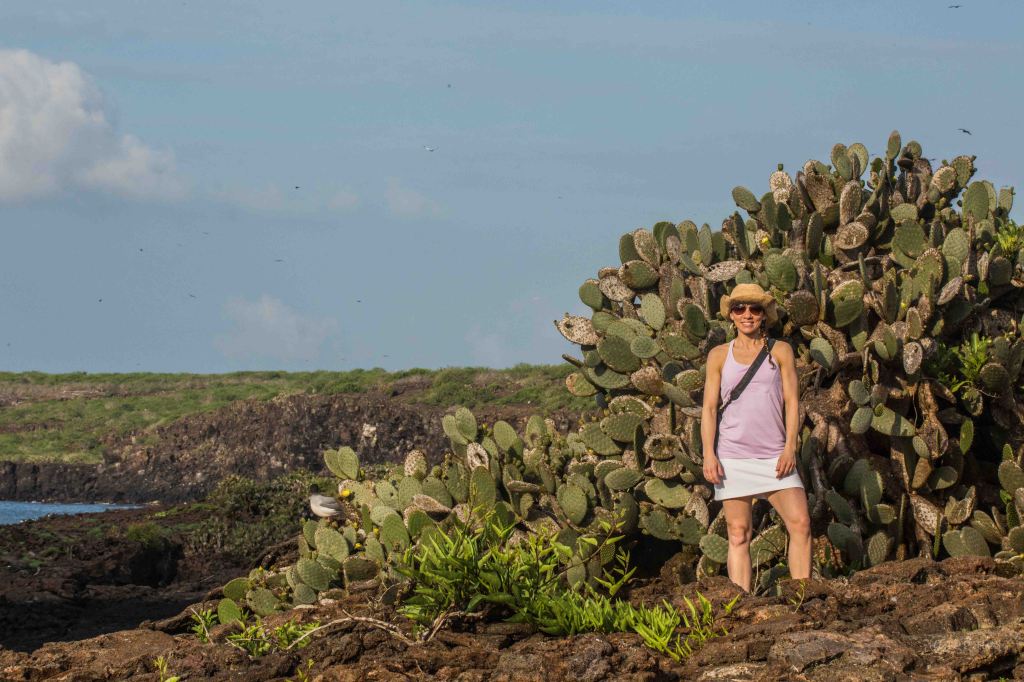
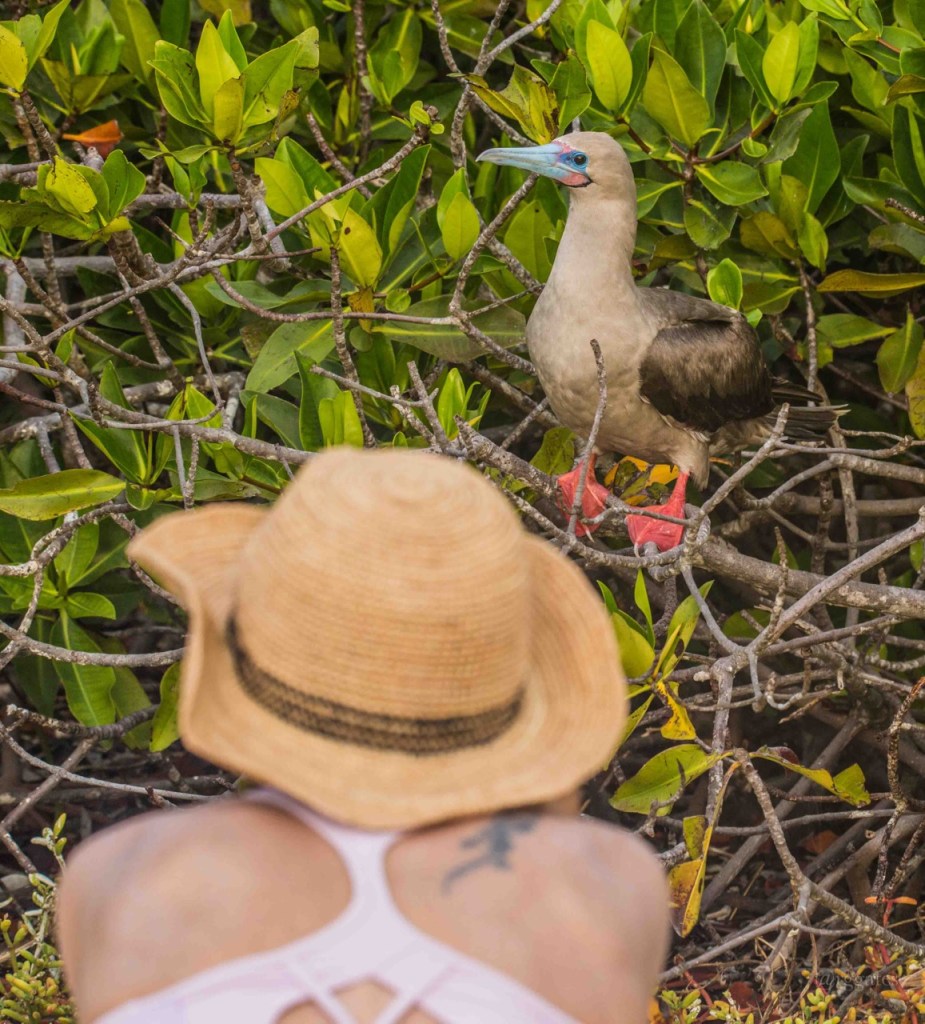
Watch your step while gawking at the wildlife though. We were told repeatedly to pay attention to each footfall while walking. A fellow traveller and photography enthusiast said, “You can walk, or you can photograph, but you can do both.” Wise words that will save your gear. Thankfully, there were no injuries on our trip, as the terrain of the Islands is unforgiving and medical assistance is a long way away. Best to pay attention and not try to do two things at once.
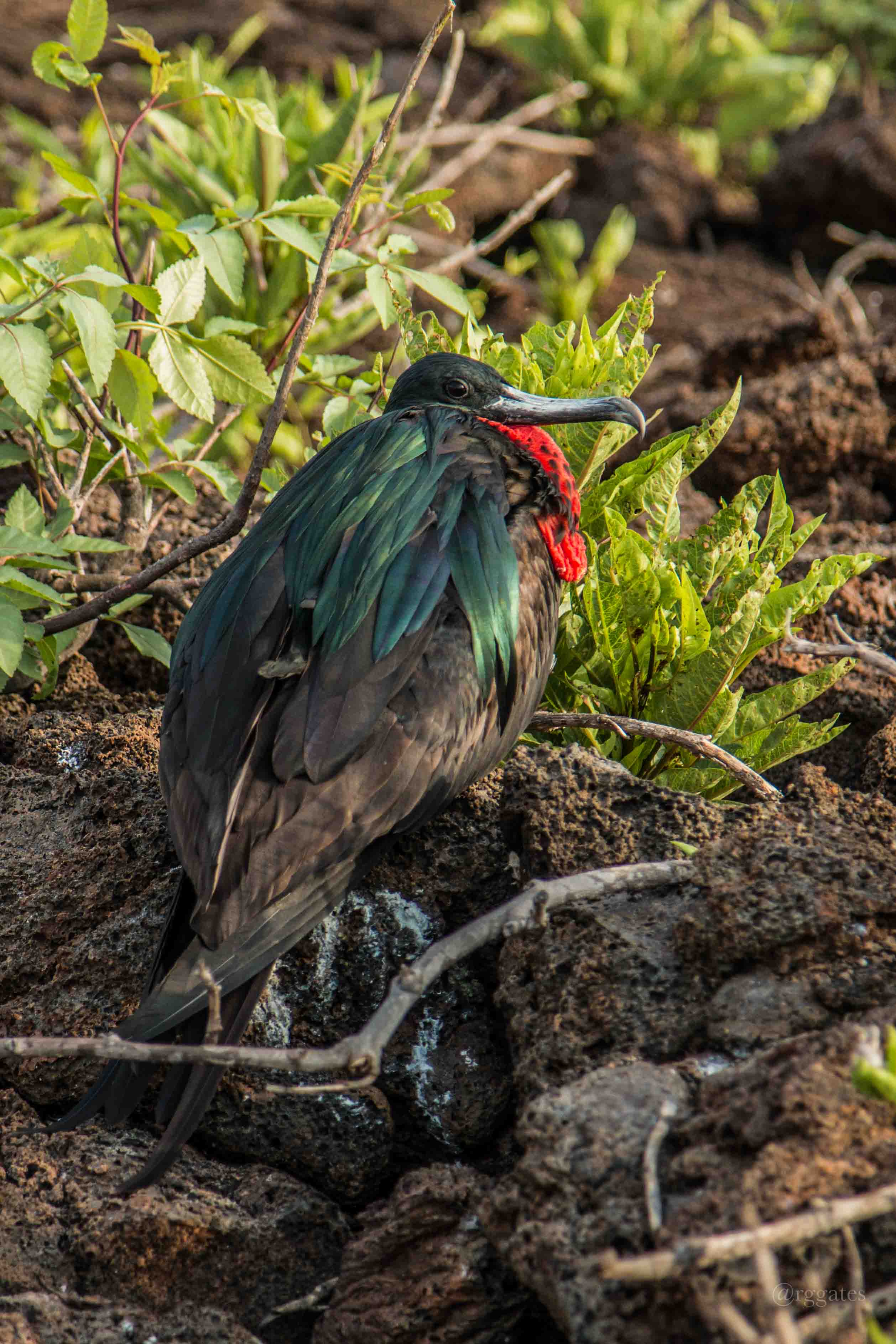
Perhaps the most startling sight as we wound our way to the edge of the cliffs was the vast numbers of Greater Frigatebirds perched in the bushes at waist level as far as the eye could see. Gorgeous greenish-blue iridescent feathers graced the backs of these large, imposing birds. Although magnificent with their bright red gular sac (males only), these birds are seriously intimidating up close and personal! They may have looked peaceful for the moment on their perch…
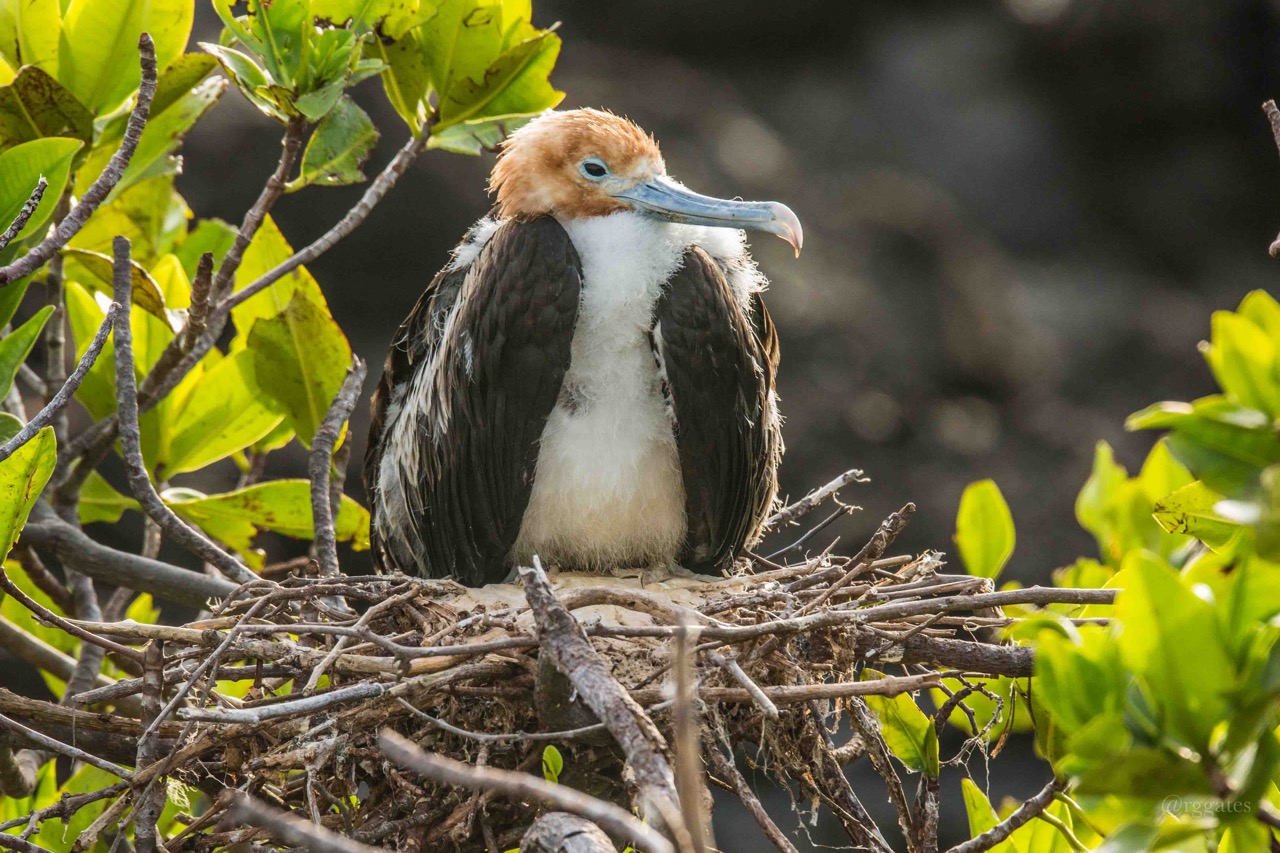
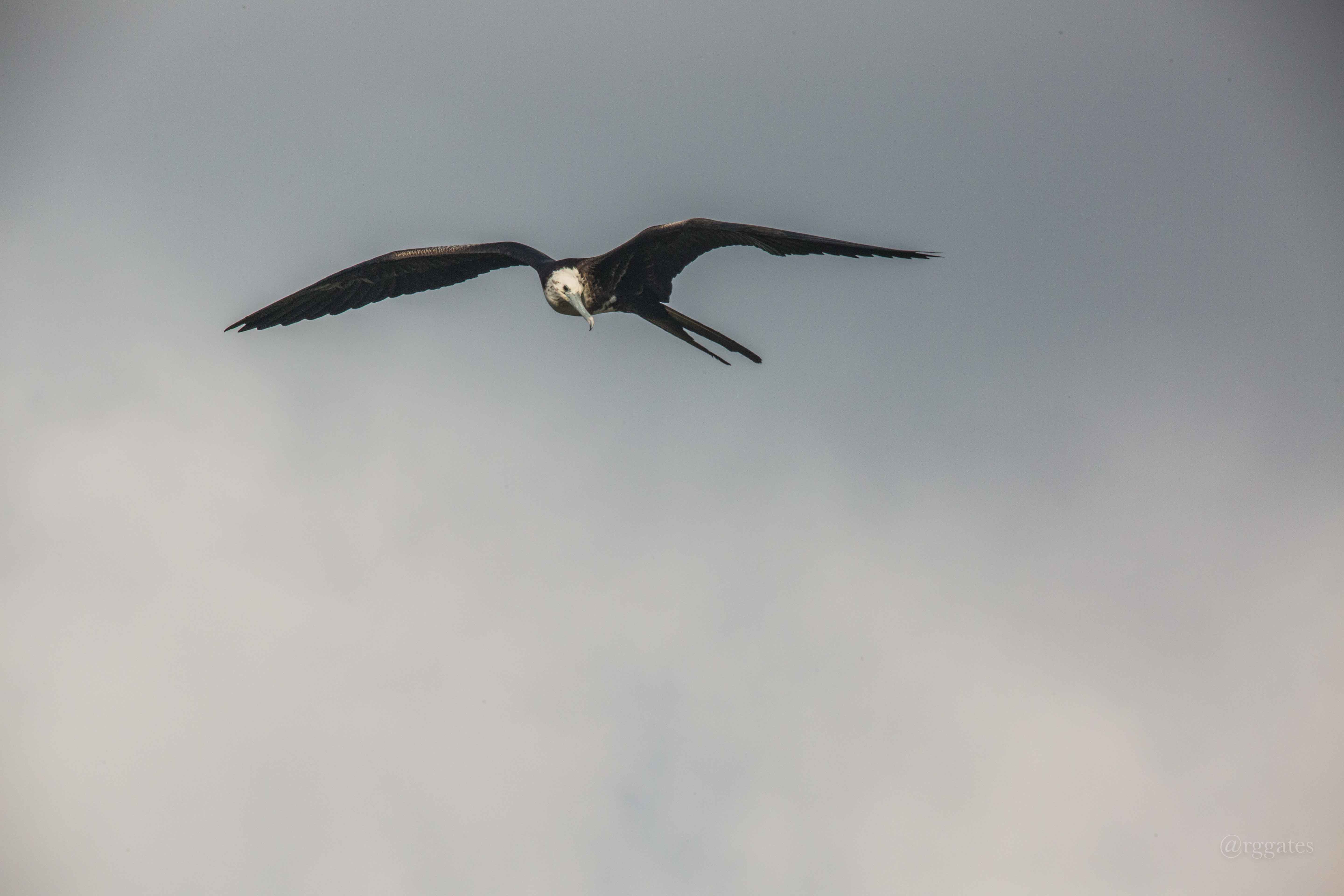
… but we saw one in action from the boat later that day attacking a red-footed booby mid-flight. They routinely use their scimitar-like beak to harass other birds in mid-air hoping to dislodge the current catch.
As we would discover in subsequent days, most of the paths at the various landing sites are of an out and back variety. Although it would be nice to see additional portions of the island with a circuitous trail, preserving the landscape and wildlife while simultaneously allowing people to enjoy it has to be a pretty difficult task. Overall, the areas open for visitation seem to be an excellent representation of the flora and fauna each island. We certainly never felt cheated with regard to wildlife viewing.
As with most days, after we finished the morning walk around 8:00 am the sun was already intense. We all headed back for a quick breakfast before suiting up for a mid-morning snorkel. This wasn’t just any old snorkel however… we were heading into an areas known for Hammerheads. Seriously, sharks, and not just a few.
Darwin explained that they really were relatively harmless in this area.
- We were swimming during the day.
- We were with a group.
- No one was sporting a large gaping, bleeding wound.
- (As well as something about them being “vegetarian hammerheads.”)
We should all be fine! Hmm… I was just going to have to take his word for it because there was no way I was going to be the only one too afraid to go in the water. You really only need to swim faster than the person beside you, right?
Visibility wasn’t great, which gave the water an eerie feeling. Not knowing when or if we were going to see any top-of-the-food chain predators combined with murky water did nothing for my nerves either. We were all told to stay in a loose group so if someone saw something we would all be able to follow their directions and check it out. Another fabulous reason to stay with the group is so you look like one very large object in the water instead of a small, tasty morning snack. Just sayin’.
All at once people started popping their heads out yelling, “Hammerhead!” to get everyone’s attention. There weren’t just one or two to admire – there were about 15-20 lazily swimming by and hardly giving us a second glance. Although my heart rate steadied after being in the water with them for 20 minutes or so, I’m not ashamed to admit I let out a big sigh of relief after climbing back into the panga with all of my limbs intact.
It was with a large feeling of accomplishment as we swapped pictures and video while waiting for lunch. There’s not much down time with so much to explore on land and in the water on Genovesa, so directly after lunch we were back in the pangas for a hot, but interesting ride along the volcanic cliffs searching for Red-billed Tropicbirds, Lava Herons and Marine Iguanas. Getting to the next site landing site is usually just as interesting as the hiking or snorkeling – that’s what’s so unique and fabulous about the Galàpagos!
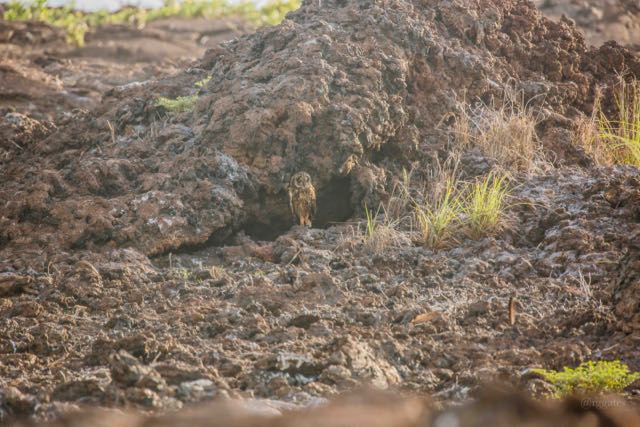
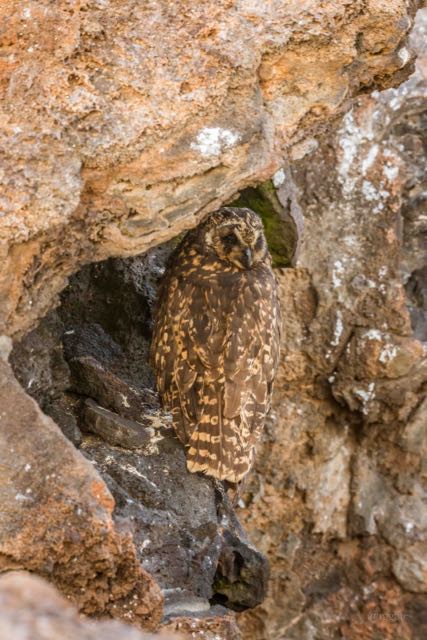
Prince Philip’s Steps was our final excursion for the day. I was on the hunt for the Short-Eared Owl, which fortunately may be found during the day camouflaged among the lava fields leading to the cliff edge. They prey on the massive Storm Petrel colonies nesting among all the nooks and crannies of the cliff face. Take the time to scan the barren lava to find these beautiful hidden creatures.
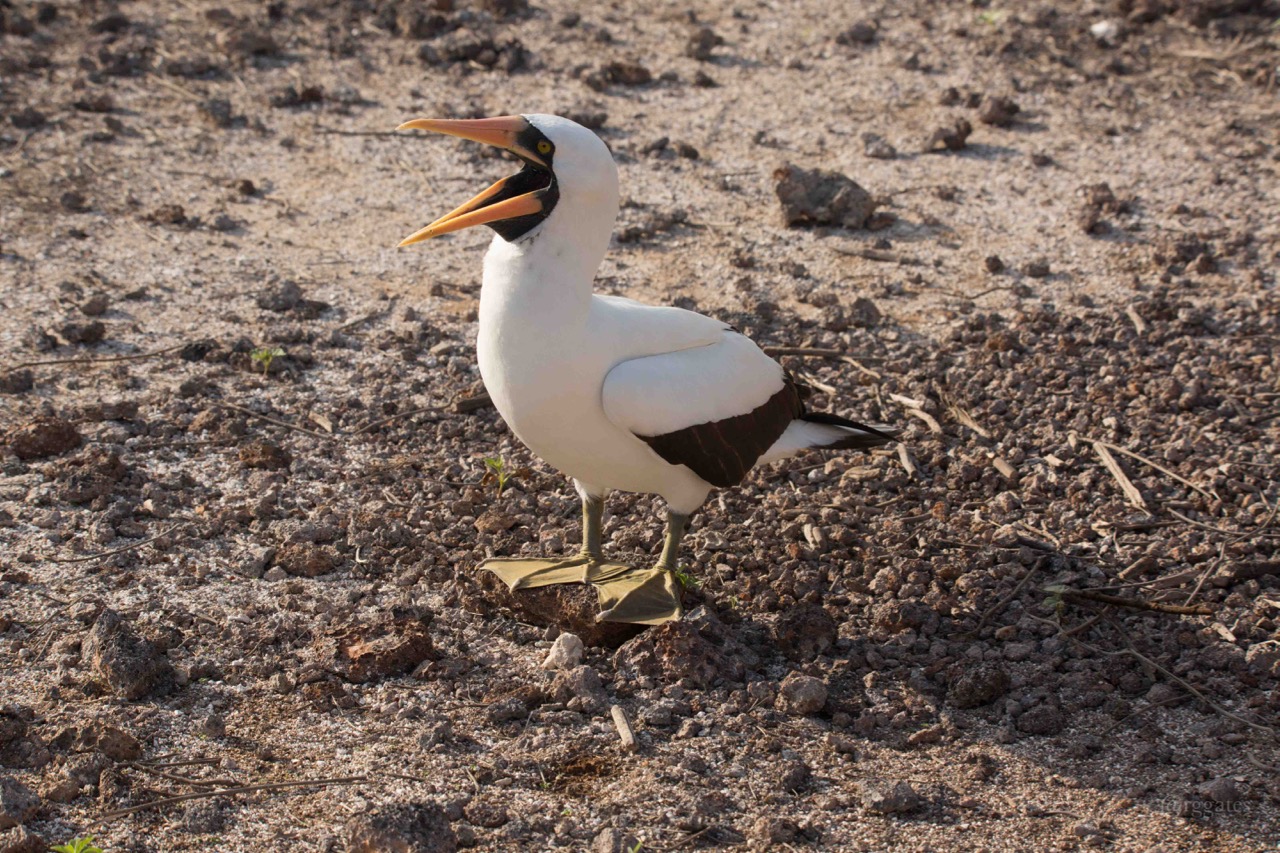
Nazca boobies are the real star of the show along the path on this side of the island. They are everywhere! Watch your step as nests are placed just about anywhere.
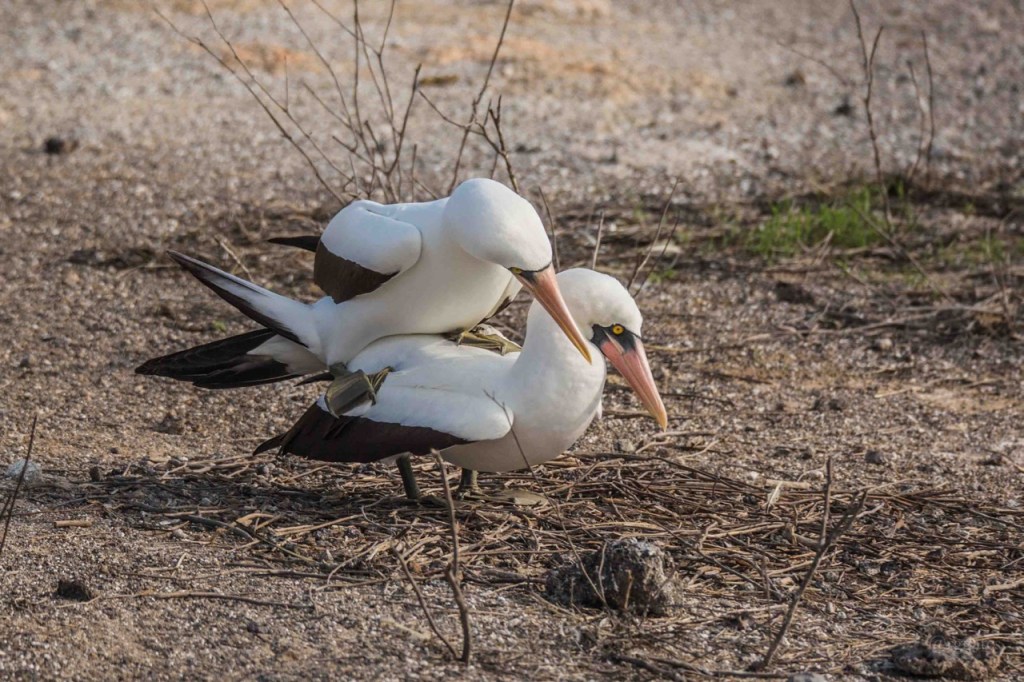
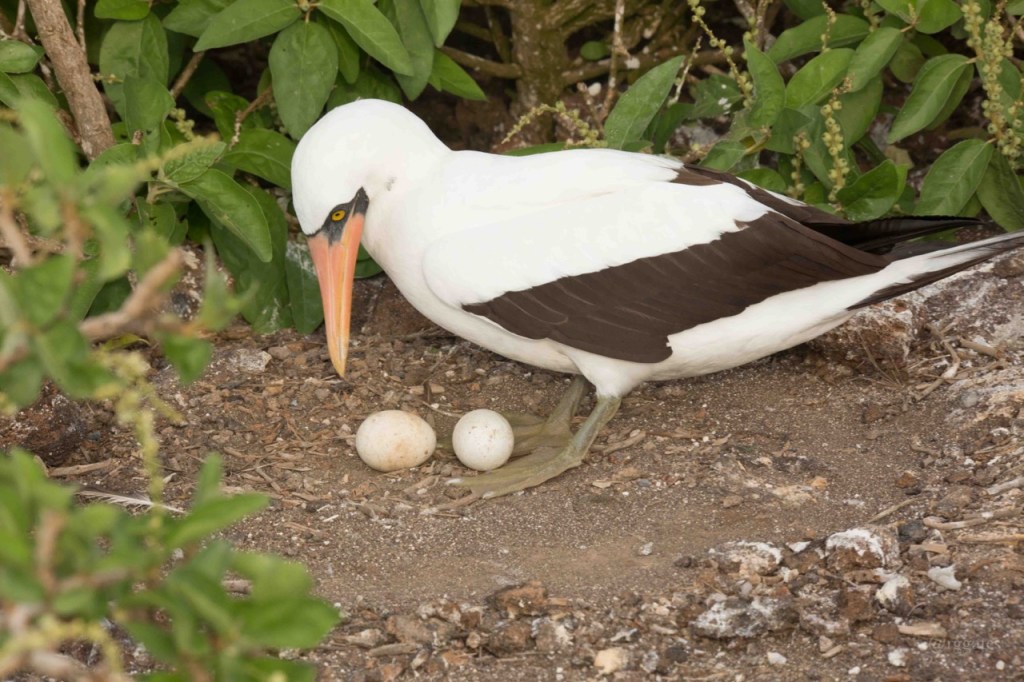
Many nests were occupied by two eggs. In a good year with a sea flush with food, both chicks may be reared to adulthood. The more likely scenario, however, is the larger chick pushing the smaller from the nest which then becomes food for an opportunistic predator. Life is harsh on the islands.
Marchena was next on our list, and we’ll have details posted soon. Stay tuned.
More from our Galápagos series…
 #Gates50States
Leave a reply to Galápagos-Starting the Journey | Gates50States Cancel reply