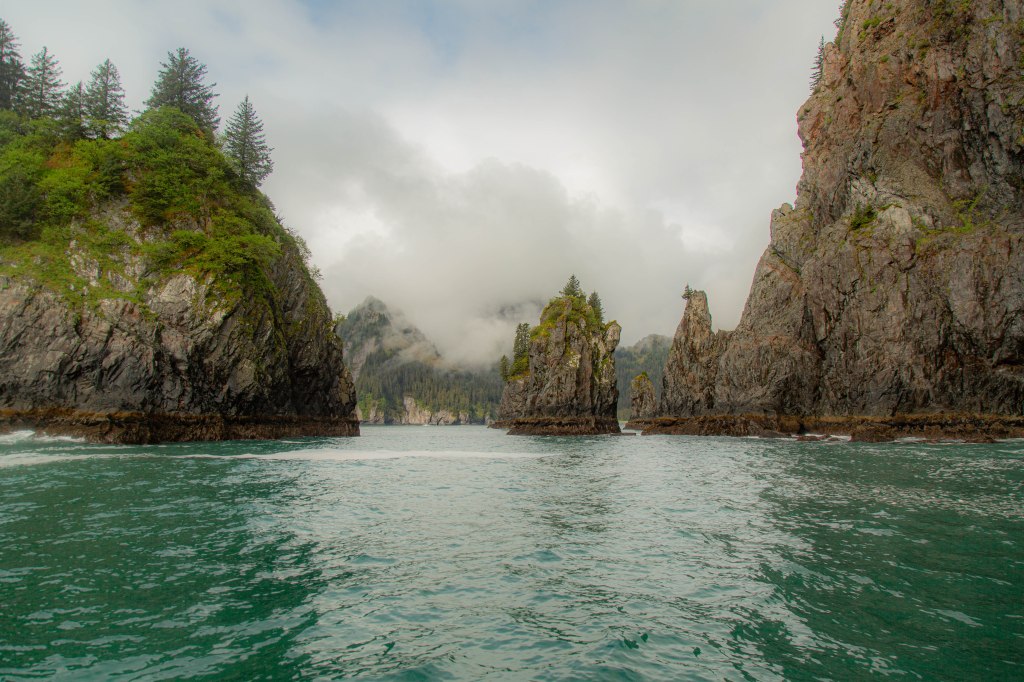
Fair warning: Grab a beverage. Get comfortable. This is going to be a very big, very long post. Just like the state of Alaska, this post will dwarf the others on our blog. Even Washington & Texas. But we must do justice to the epic-ness of the fun we had, and we believe you’ll enjoy the content, too. This is one big mix of informative text, helpful links, story-telling, photographs, and video… a post as varied as the state we visited. Enjoy!
Writer’s note: To say Jenn contributed to the success of this trip is like saying Michael Jordan contributed to the success of the Chicago Bulls in the ’90s or John Williams contributed to the success of the Boston Pops. She kind of was the reason for our trip’s epic success. Historically, I (RG) have done most of the writing and photography, and that’s the case here, too. But Jenn has some good things to add that are best written in her voice, so I’ve included her portions as block quotes like this interspersed in my narrative. Enjoy!
We hatched our Gates50states plan over a decade ago, and from the very beginning we knew Alaska would be the big one. Yes, Hawaii is very exotic and can be an ordeal to get to, but because Alaska is just so big, and the potential experiences so varied, and the cost of doing travel and visiting is so great, this was going to be huge. We’d been mentally gearing up for years, and Jenn put a plan in place that absolutely lived up to our expectations.
Planning for Alaska was one of the most difficult logistical accomplishments of our Gates50States travel. While I won’t necessarily disparage cruise-goers, I will go so far as to say you have not experienced Alaska if you’ve only participated in a large ship cruise, even if you’ve tacked on Denali or Fairbanks. And by this, you are missing out on exposure to a fundamentally different view of and practice of life.
The Alaskan Way may not be how everyone wants to live their whole lives, but I submit everyone should take advantage of at least a small period of time experiencing the Last Frontier on a more intimate level rather than with 4,000 other passengers in scripted touristy towns.
Every vacation/trip longer than two days typically rates a Pages itinerary in our house. The many facets of an Alaska vacation make an explicit itinerary absolutely necessary. Lay out the days available and start filling in with lodging first.
We’re very partial to VRBOs and B&Bs -necessary for a family of five so we don’t kill each other, but also excellent for meeting locals and experiencing less touristy areas. High traffic areas, such as Seward and Denali, require booking six to nine months in advance depending on travel dates. We found early June to be on the front end of tourist season which gave us more flexibility, but many options were already taken six months in advance. If the immediate Denali Nat’l Park area is desired, then nine-plus months would be best.
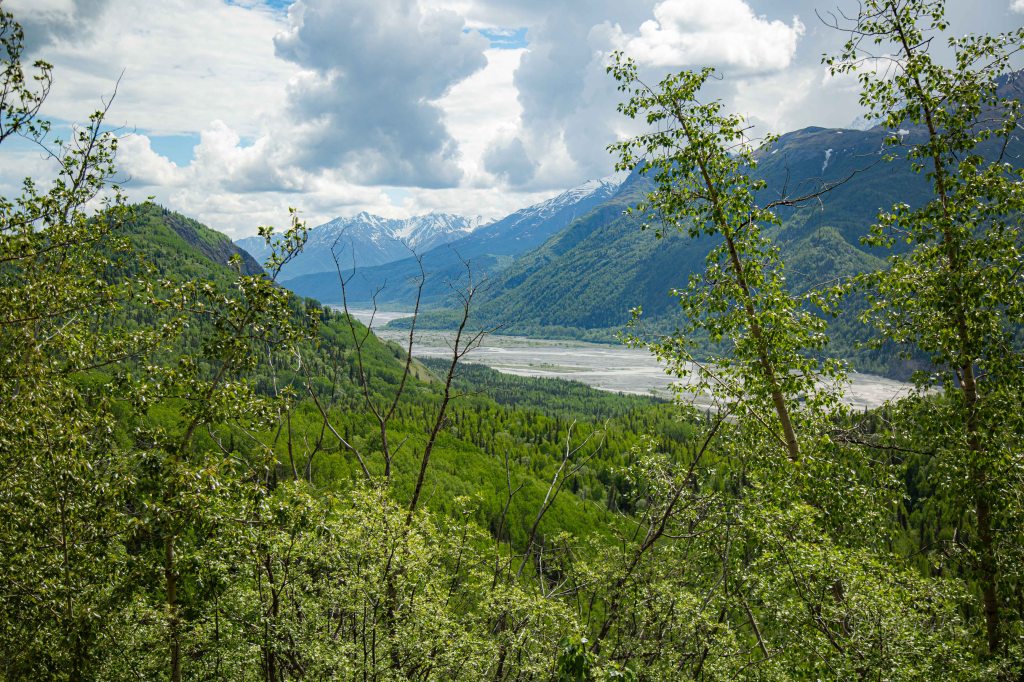
Our visit started in… Minnesota. We still needed to visit Minnesota, and the airlines offer good flight options from Minneapolis. So our big 2026 plan involved CLE to MSP, then after our MN tour stop we hopped onto Delta from MSP to ANC and arrived in Anchorage.
Our, “Welcome to Alaska!” moment came quite early when our hotel shuttle nearly bumped a young moose trotting across the Holiday Inn Express parking lot! That’s never happened to us in Ohio!
A second, “Welcome!” moment came overnight when it never really got dark. There’s a reason they call Alaska the “land of the midnight sun.” It’s one thing to read about this, it’s another thing to experience it. We got used to sleeping without darkness pretty quickly, but looking out our window each evening, no matter where we were, it felt like a continuous six (or seven 😉) o’clock no matter what the clock actually said. That never stopped feeling strange.
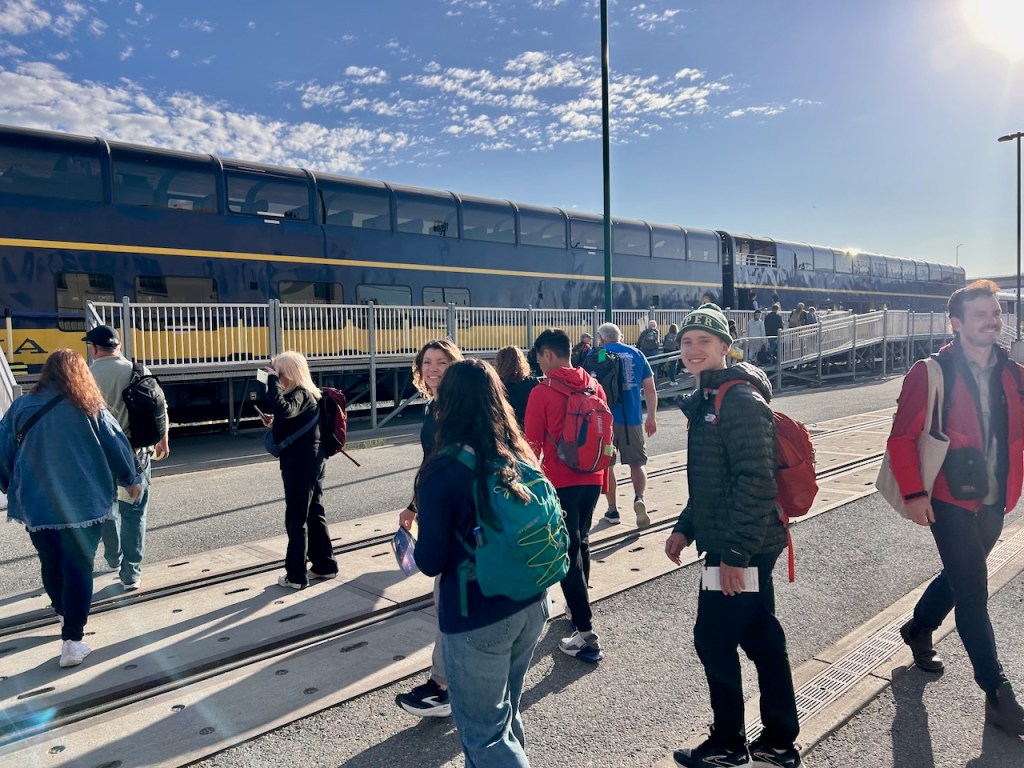
With a variety of ways to get from here to there in Alaska, we wanted to experience as many of them as possible. Of course sled dog travel on the snow was not an option given the season (though keep reading for what’s below), but most options were available to us, and our in-state trip started with a train ride from Anchorage to Denali.
Jenn and I usually make the long drives wherever we’re going (Iowa and Montana were particularly long), and very recently Lincoln has participated some. The Alaska Railroad gave us all opportunity to take in the sights without the responsibility of the drive.
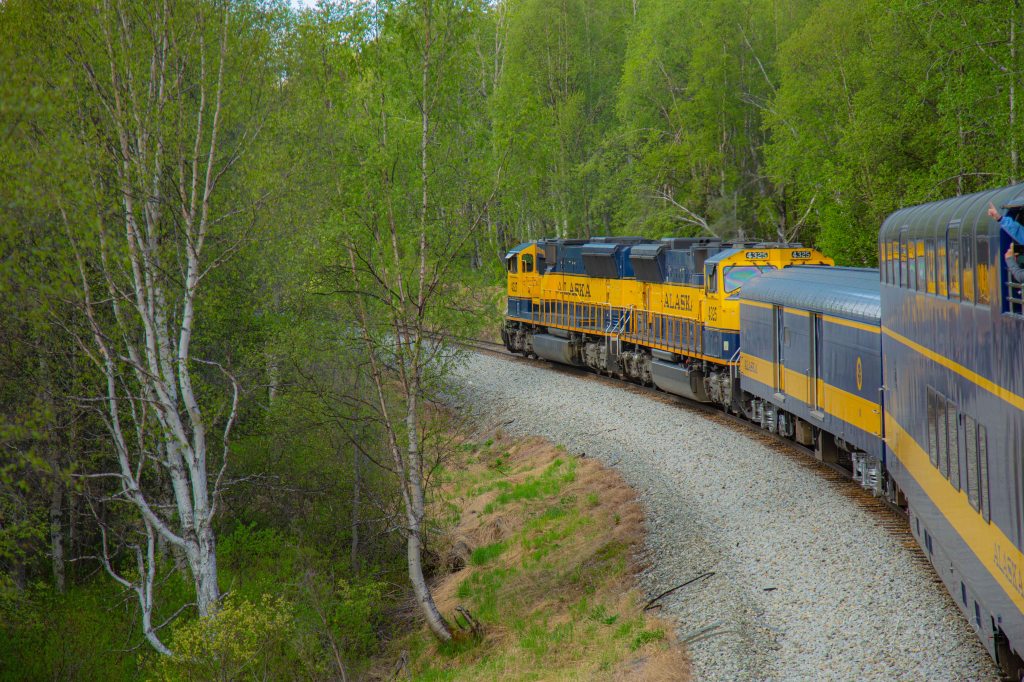
We purchased tickets for the car with windows for a roof and dining beneath. It would not be fair to say obtaining reservations/tickets was difficult, but it was interesting. During Jenn’s search, the website indicated the level of travel/ticket we wanted was sold out. When she called and told the representative what our family was doing and what we wanted, tickets became available. Perhaps they work to sell one full car before they open a second (or third, etc.). Who knows?
In any event, we were able to travel like we wanted in a car that wasn’t full, which gave us plenty of space to get up and move around. Each of us had access to windows whenever we wanted, and the platform on the back of the car was never completely full. Riding back there gave us fresh air, and unobstructed views.
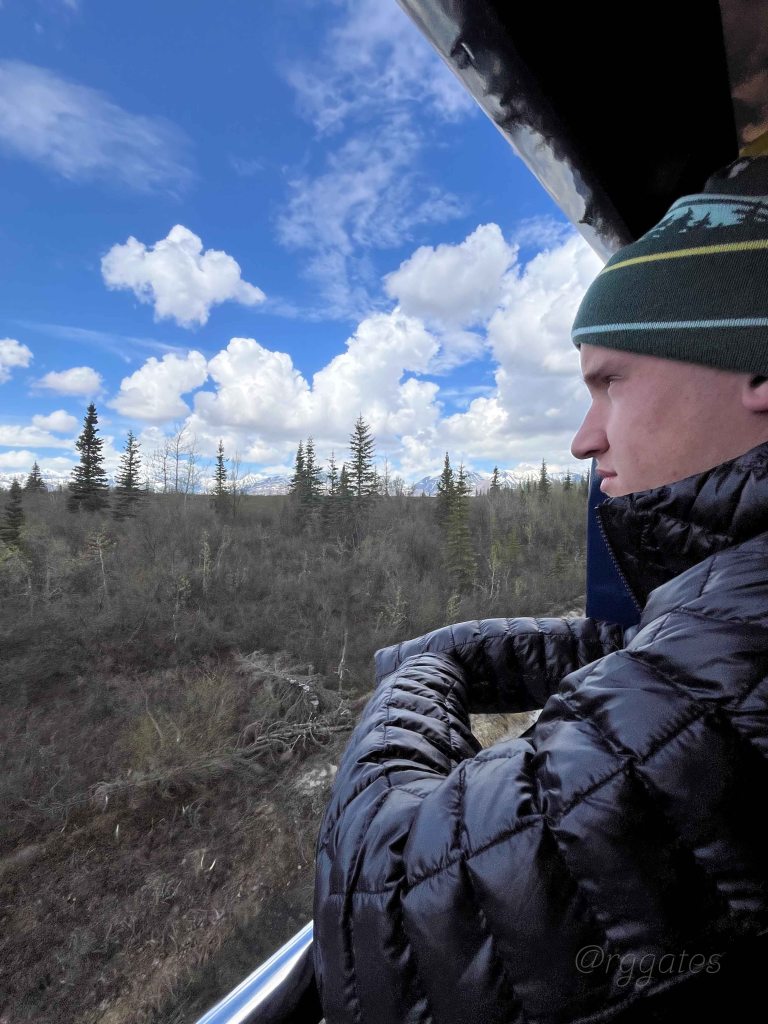
Having now driven the southbound route that our northbound train took, we can’t really say the train gives access to sights you’d absolutely not see from the car. It does, however, give all of the passengers an opportunity to take it all in. Further, with so much road construction on the highways (and Alaska does road construction and slowdowns very… thoroughly… given the short work season), it was nice to always be moving forward throughout the journey.
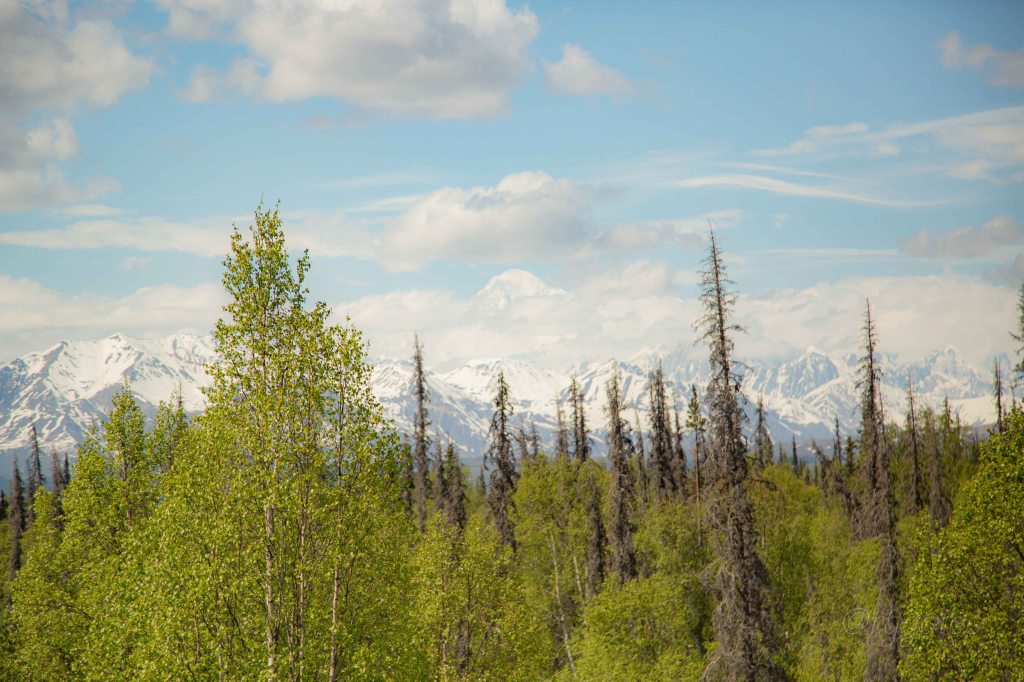
Mt. McKinley’s peak made an unobstructed appearance for us on the train ride. We were told repeatedly during our time in the Denali area that only 30% of visitors actually see the peak, so we felt good knowing the pressure was off for the rest of our visit.
Somewhat sadly at the time, we saw very little wildlife during our ride. This was apparently surprising to the staff aboard the train. We didn’t know it at the time, but we were going to get a huge dose of Alaskan wildlife in the coming weeks, so there wasn’t much for us to be disappointed about.
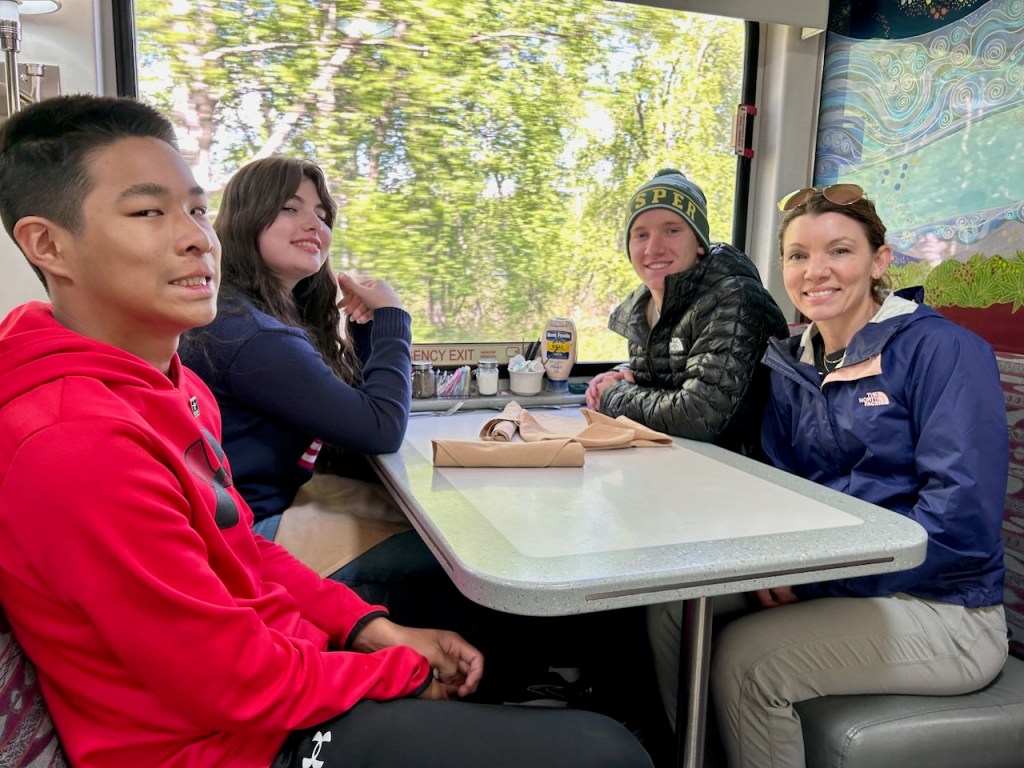
We enjoyed our meals aboard the train, and they do service quite well. Having experienced the top tier of train class and service, we were glad to have done it, but we don’t know that we’d do it again. To be clear, that’s not to say we wouldn’t recommend it to a first-time visitor. One can certainly ride a train in other states, but the consistently beautiful landscape views over the course of many hours are unique to Alaska, and ought to be appreciated.
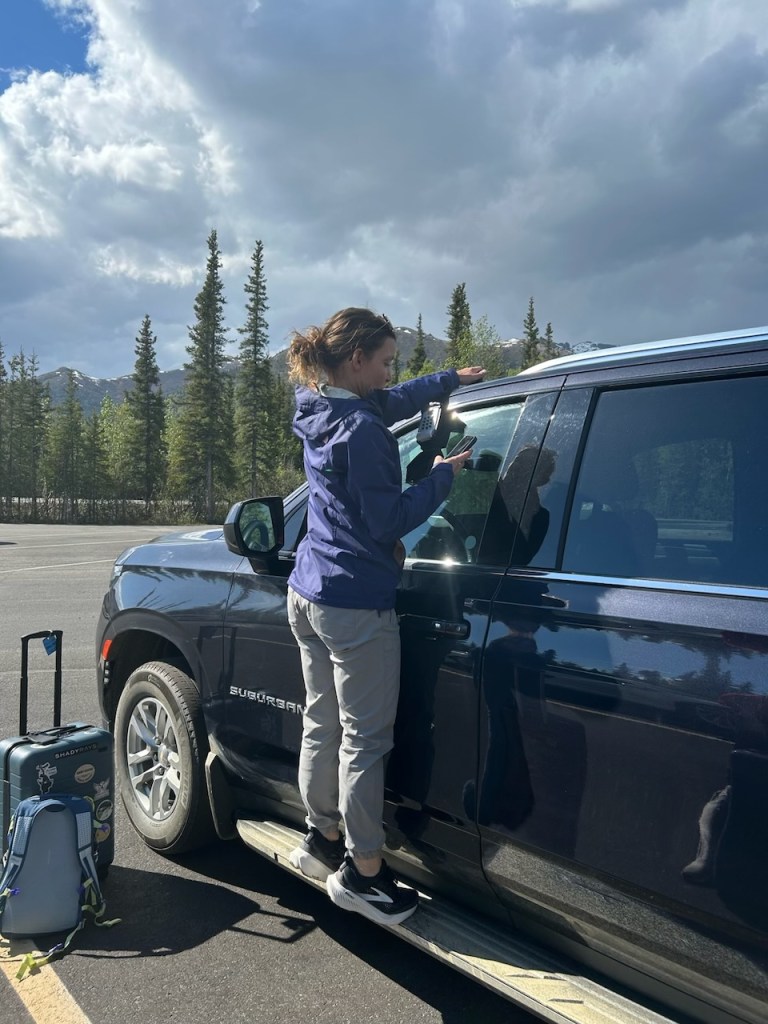
If you really want to see Denali and have options in the area… book a car. We wanted the train experience one-way, so we picked up a car with Alaska Auto Rental which allowed pick up at the Denali Train Depot and drop off at ANC. Be prepared to pay a serious premium for one-way rental and vehicles in general in Alaska. Sticker shock was real as we paid >$6K for a large SUV for 2 weeks!! We couldn’t even drive the McCarthy Road or Denali Highway.
Keys to Denali is a local company which provides car rental in the Denali area as well, but you have to return to the same location.
All things considered, it was very convenient to pick up our rental car in Denali and return it to Anchorage, so after we arrived at the Denali depot, our rental Chevy Suburban was waiting for us in the parking lot.
Sidebar: Each trip, at least one point of humor emerges that the kids just seize upon. It’s often quite organic in how it arises, and there’s no real way to plan for it.
- In the Dakotas, it was the PDAS, the Prairie Dog Alert System. On our 2020 during our wonderfully peaceful travels during the early days of the Covid pandemic, at some point on a hike in and amongst a prairie dog colony we noticed how they all seemed to warn each other of our approaching, as though they had a formal way of alerting their friends and family of an intruder. That turned into the Prairie Dog Alert System, or PDAS, a story we all made up along the way that turned from a small joke into an elaborate tale. During our drive to the Rankin Ridge trail, Lincoln wrote in his travel book an elaborate list of PD___ items: PDWT (Prairie Dog Watch Tower), PDP (Prairie Dog Prison), PDPS (Prairie Dog Public School)… you get the gist. If they had a colony, then it only made sense they had a whole civilization, right? <wink> The kids giggled for weeks about that.
- The drive through Wisconsin & Michigan included Buddy Weddings, where the kids’ companion stuffed animals endured long, elaborate weddings on long drives. Bear married Ele[phant] to start, and by vacation’s end, seemingly every buddy had married every other buddy.
- There was Penguino during the Illinois, Missouri, & Iowa visits, a foam penguin toy one of the kids got at school and Lincoln named it “Penguino” during our time on the road. They were on a silly kick, and I don’t remember who decided who cam up with the name, but it was very early on in our drive. Later in the trip, I ran to the nearest grocery store in Illinois for some salad ingredients. There in the Mexican grocery store (it was closest to our VRBO) sat a prepackaged dessert on the checkout shelf called “Penguino.” What were the odds?!
- This year in Alaska it was a clip from “American Dad,” the line was repeated somewhere between 6,000 and 7,000 (again, 😉) times over the course of two-plus weeks, and it was dramatized by the kids exponentially more than the original. “… Debbie, this is my breakfast.” Incredibly simple… probably crazy to outsiders… but it made the kids laugh a ton.
So of course, the kids nicknamed the rental we picked up at the train depot Debbie. Why not?
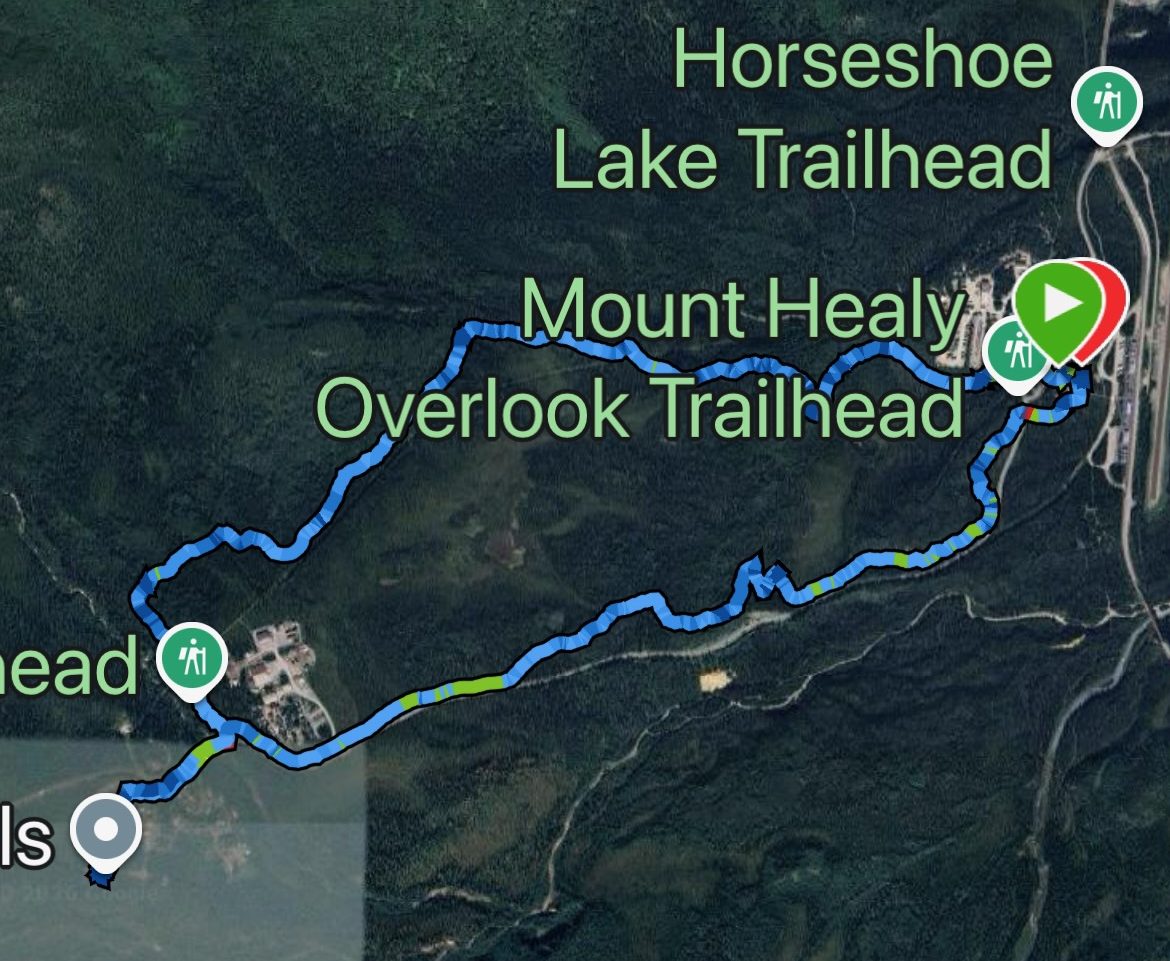
We stayed in Healy (for which a car is necessary) and don’t have any regrets. It’s a quieter area with a decent grocery store and only 15-20 min from the park entrance.
After a long day of travel, an early morning awaited us.
Denali Air, and our pilot Colin, could not have provided a cooler experience under the circumstances. Up front, I’ll point out we were unable to land on the glacier as was the original plan, but that was because Colin evaluated the conditions, decided it was best we all lived, and skipped the landing a plane in dense clouds on an ice field surrounded by mountains plan and instead spent some extra time in the air flying around the peaks & glaciers, giving us a look at the park we’d not otherwise get. Amazing… absolutely beautiful.
Flight seeing should be on everyone’s bucket list if you can swing it (~$750-800 pp in 2026 dollars).
The Denali National Park visitor’s center is clearly used to handling large volumes of people given the cruise ships bussing loads of visitors in at a time, and they do a pretty good job of spreading things out and preventing bottlenecks. After flight-seeing, we did our usual national park shopping (bags, coasters, patches, stickers, etc.), and took some short hiking trails to the sled dog kennels and demonstration.
Sled dogs are a unique feature and asset to the park, and they maintain a complete kennel of dogs for use as they manage the park in the winter months. No machines are allowed out in the wilderness, so the dogs do the work. These dogs don’t look like the Siberian Huskies and Alaskan Malamutes we see at the clinic. These dogs have been bred over generations for peak performance in the Alaskan wilderness conditions.
Most who’ve been paying attention to conditions in Denali National Park over recent years know there was a massive landslide that took out a portion of the park road a few years ago preventing visitors from driving to the end. It wasn’t simply a handful of rocks that fell on the road, but rather the side of mountain that slid out from under the road. You can see the extent of the slide in the photo I took as Colin flew over it. The bridge spans what had been the road.
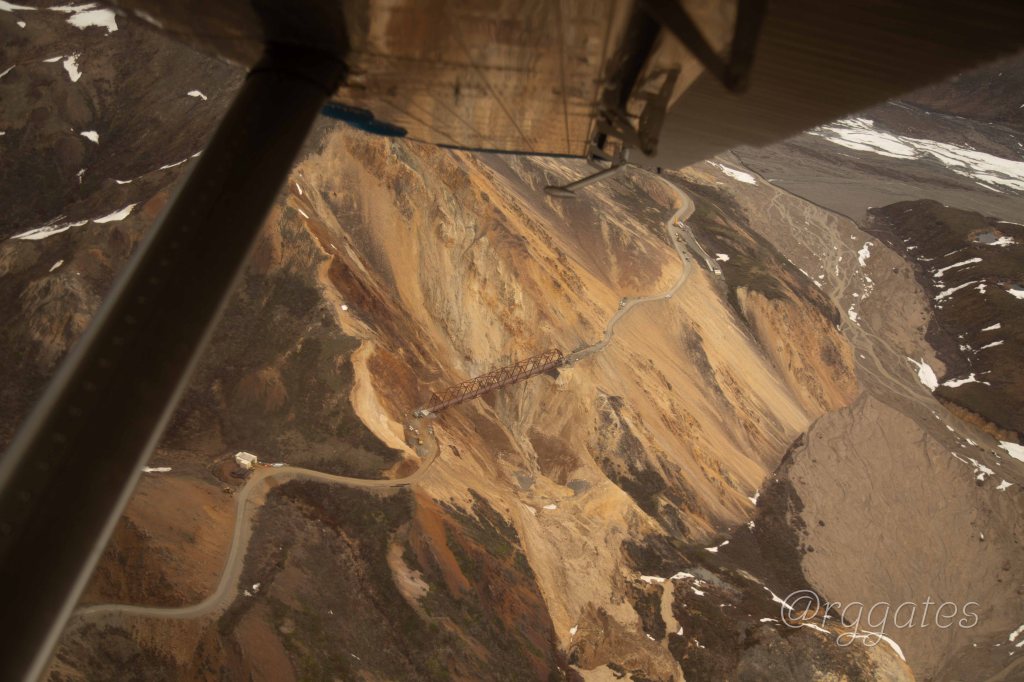
Repairing it has been quite the ordeal, and it has limited the amount of traffic allowed. Cars are allowed only a handful of miles in, the park busses are allowed more miles in. We drove the extent we could in the evening (that looked like early afternoon given the sun not really setting!) knowing we’d be seeing more on our bus ride the next day.
Travel when the whole road is open (should be May of 2027) to explore the Polychrome area and Eielson Visitors Center.
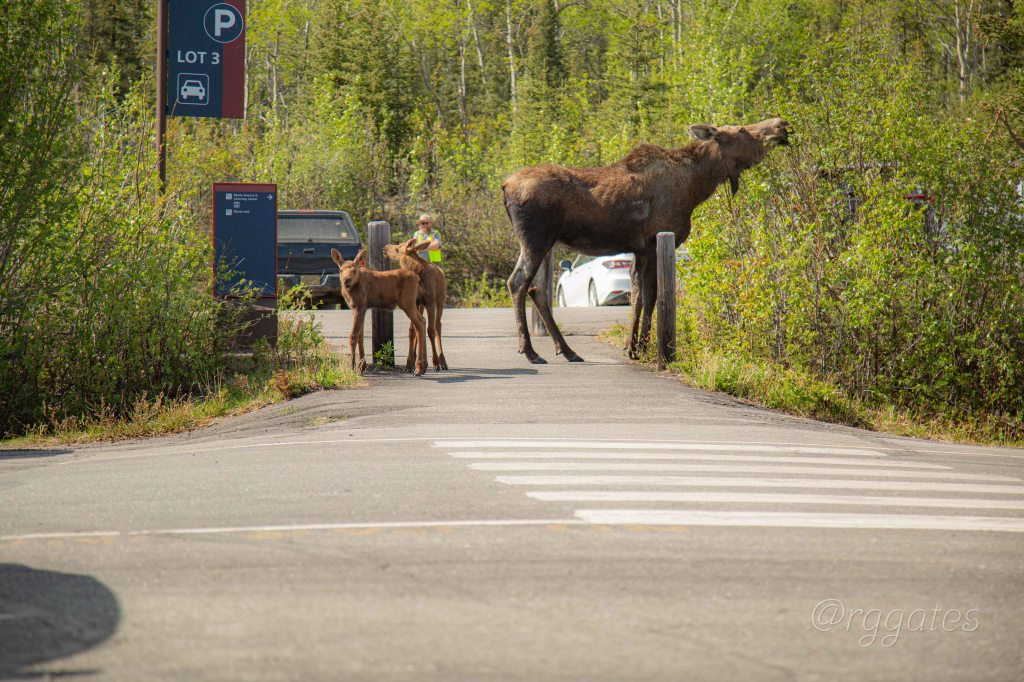
On the way out, we had to take a detour to Debbie because there were moose in the way. So far we’d only seen moose on pavement!
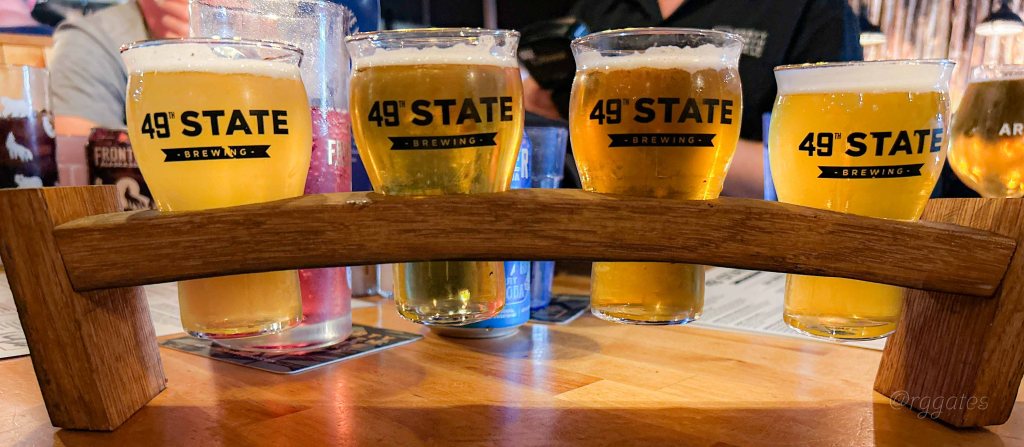
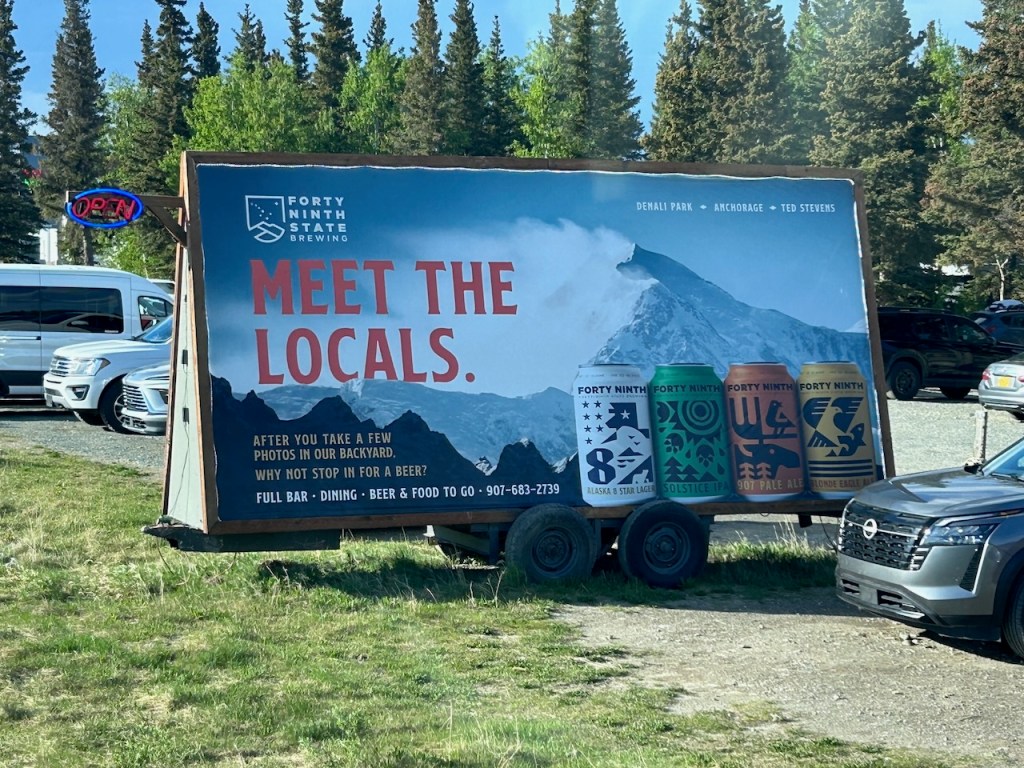
There are some touristy restaurants very near the Denali NP entrance, but if you drive a little way north into Healy you’ll find the really good 49th State Brewery. We asked the kids on our last evening in Alaska to reflect on a number of things, one of which was, “What was your favorite restaurant?” They named 49th State Brewery first.
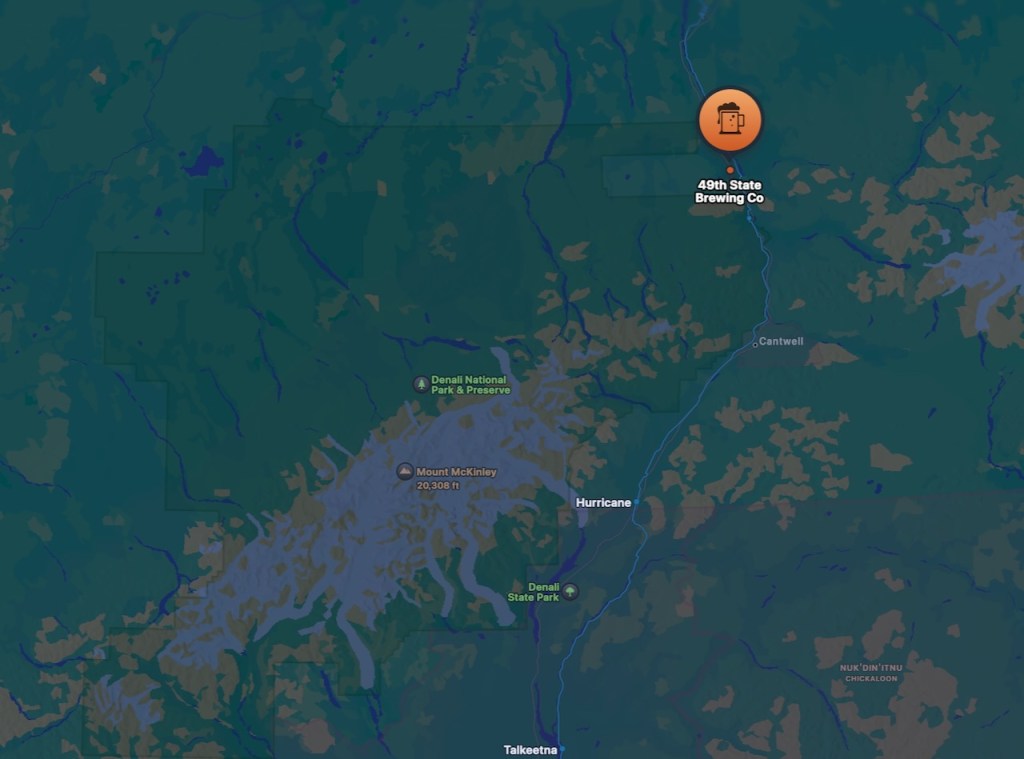
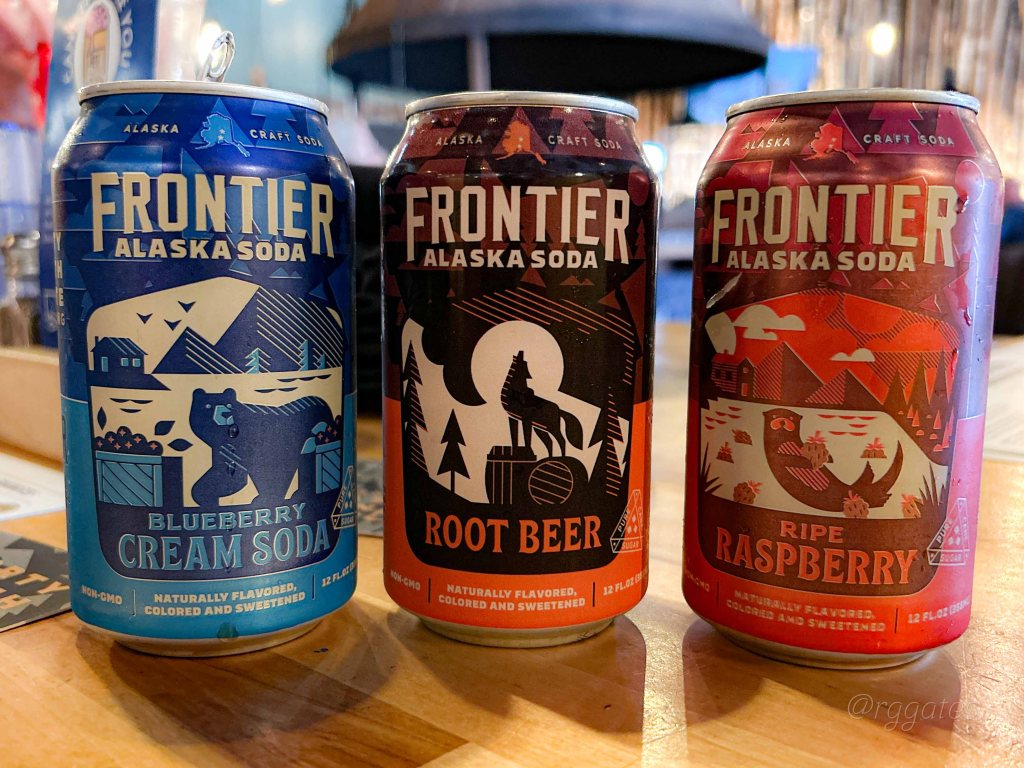
We’ve been to a number of places over the years where the restaurant was pretty shabby because the owner/investors knew, given the foot traffic and proximity to a big draw nearby, they didn’t have to produce a good product. (Imagine a restaurant on the beach with over-fried food and lousy drinks.) That’s distinctly not the case here at 49th State Brewery. This would be a good place to take a family no matter where it was located, and we all enjoyed a very good meal. They even make their own sodas, and the kids enjoyed those.
Denali National Park offers two bus tour options. One is narrated and quite structured. We did not choose this option. The other is the Transit Bus, which will stop for wildlife when it’s identified by passengers, and the driver will narrate as much as he/she wants to, but it’s more or less a… transit bus that takes you from here to there. The there is the point on the road a bit before the landslide at Mile 43 (starting in May of ’27 it’ll go all 90 miles), and that’s where we hopped off with all of our rain gear already donned and started our walk in the old glacial river bed. (Travel tip: bring good rain gear.)
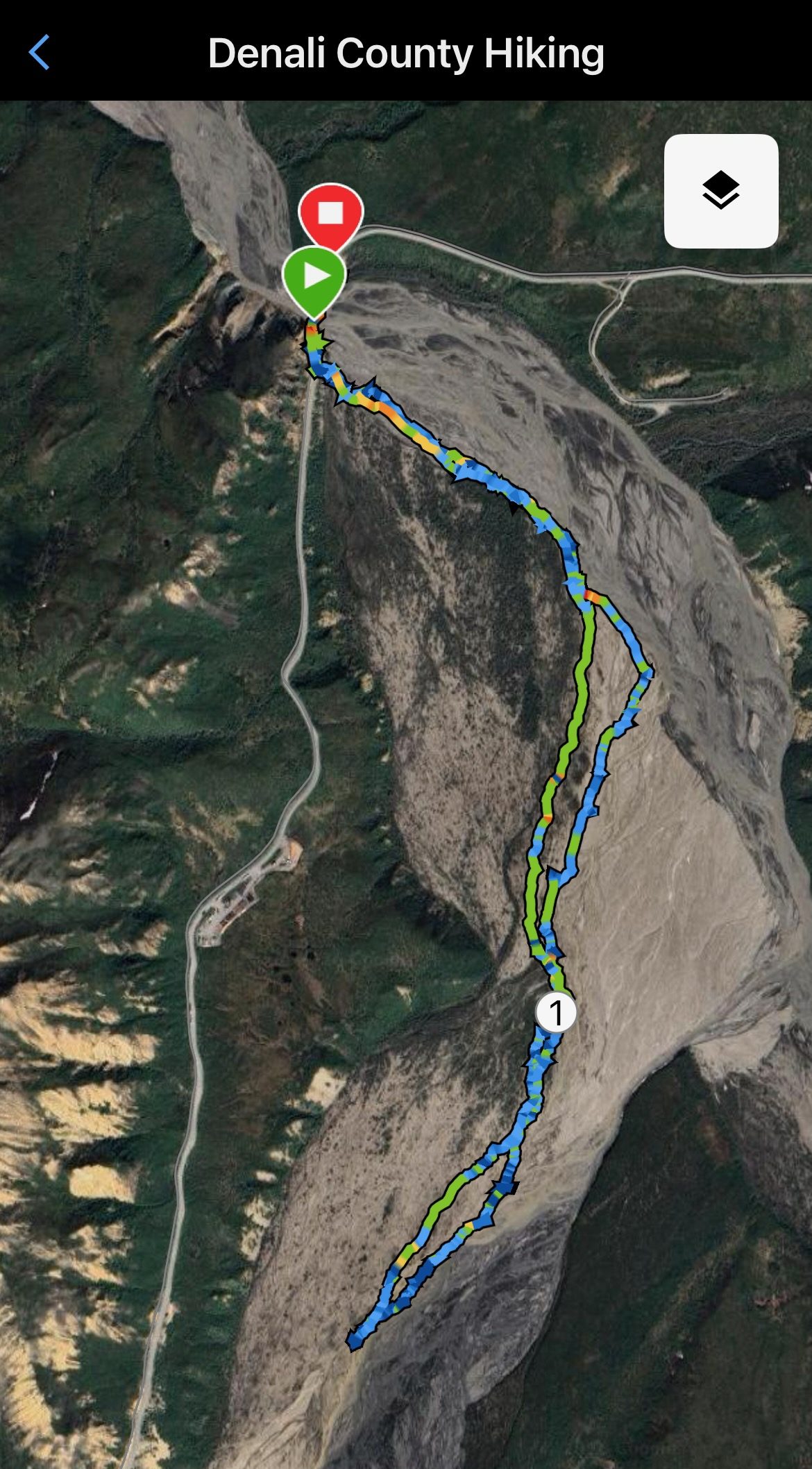
The weather was really kind of gross: rain, low-hanging clouds, cold. We knew this was a possibility as blog after blog and report after report told us to be prepared for rain in Alaska. “Bring your rain gear and be ready to use it!” they said. Yeah, they weren’t lying, and you should prepare yourself, too.
The Gates family knows how to churn out miles on hikes, but this one was different. We didn’t even make it to two miles on this outing, but hopping over countless streams, dodging unsure footing, trying to not get stuck in the mud or between creeks too deep to cross is more tiring that you’d think. The rain also had become exhausting, so we called it a win and moved on back to the bus after making what felt like a long trek up the wash. Looking back, this day has proven to be like so many that seem miserable in the moment, but end up being fun memories down the road. None of us regret this day or wish we hadn’t set out in the rain like we did.
“Budget an extra day for the transit bus in case weather is terrible the first day. If you’re feeling really adventurous, join a ranger-led hike. The hikes are different every time and don’t follow trails – a true Denali experience with a knowledgeable guide!”
After the hike and bus ride, our clothes dried out for the most part, and we dropped in for a lunch of hot dogs at Denali Doghouse (a cool menu with lots of varieties of hot dog preparations). Then it was back to our place, and we spent the rest of the afternoon taking it easy and warming up. With all of the go-go-going in Minnesota, then making it to early reservations during our first three days in Alaska, it was a good slow down for some restful hours.
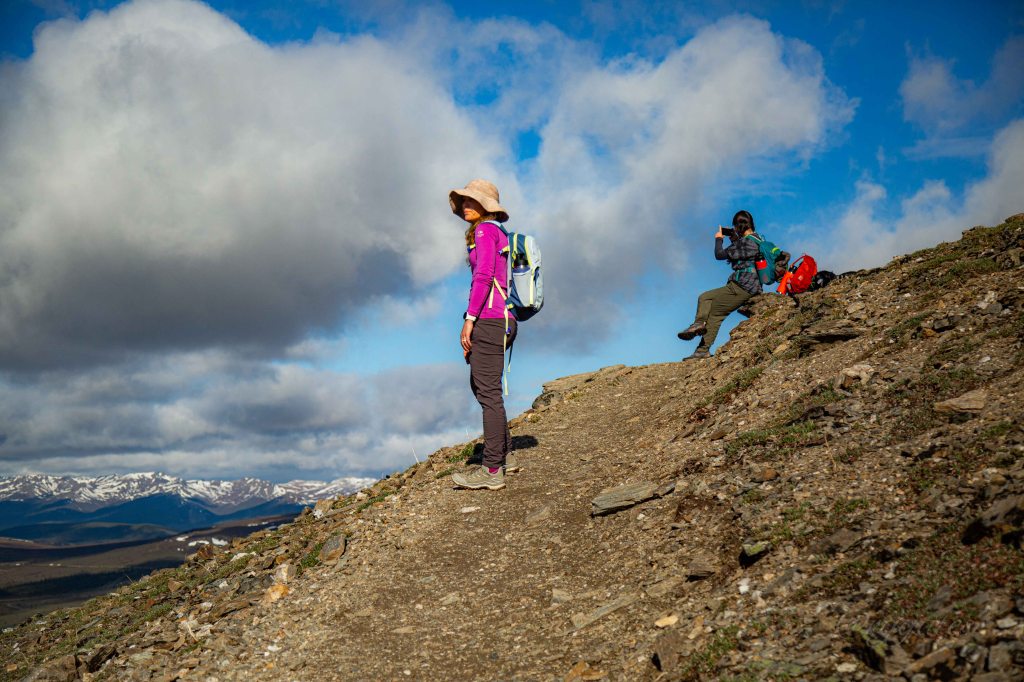
Before we got out of Denali on our last day, we awoke early to hike the Savage Alpine Trail, one of the few trails outside of the visitors center area but also accessible by the park road. In addition to rain prep, we also prepared by bringing lots of layers.
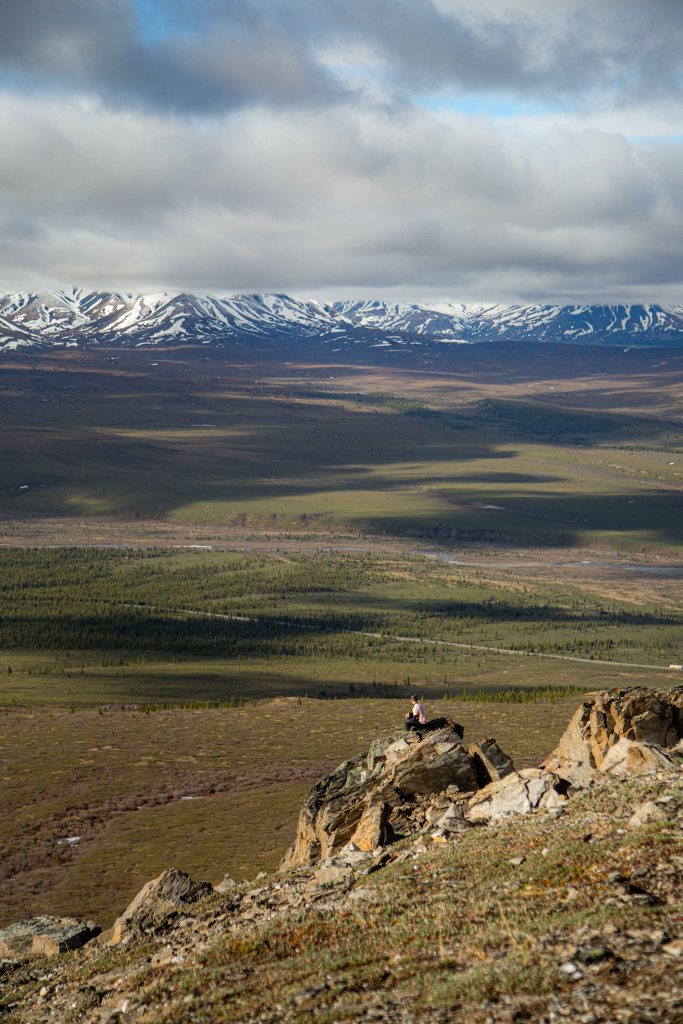
This hike was a good example of why layers are a good idea: it started quite cold (low 40s), we worked up a sweat on the climb with clear skies and the ever-present sun, then near the top of the mountains it was windy and cold again with ice on the trail. We shed then reapplied layers, and were thankful we’d prepared.
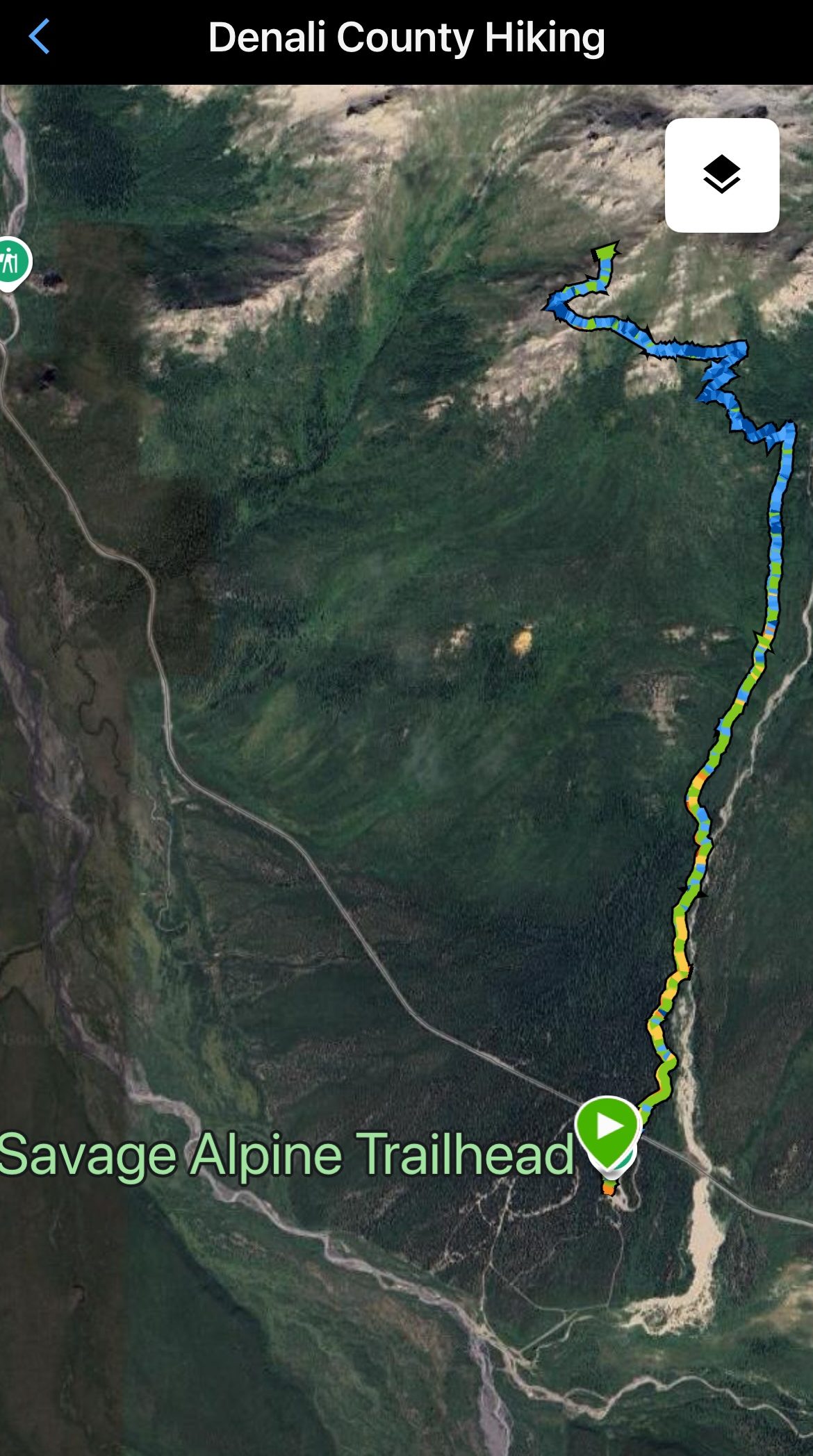
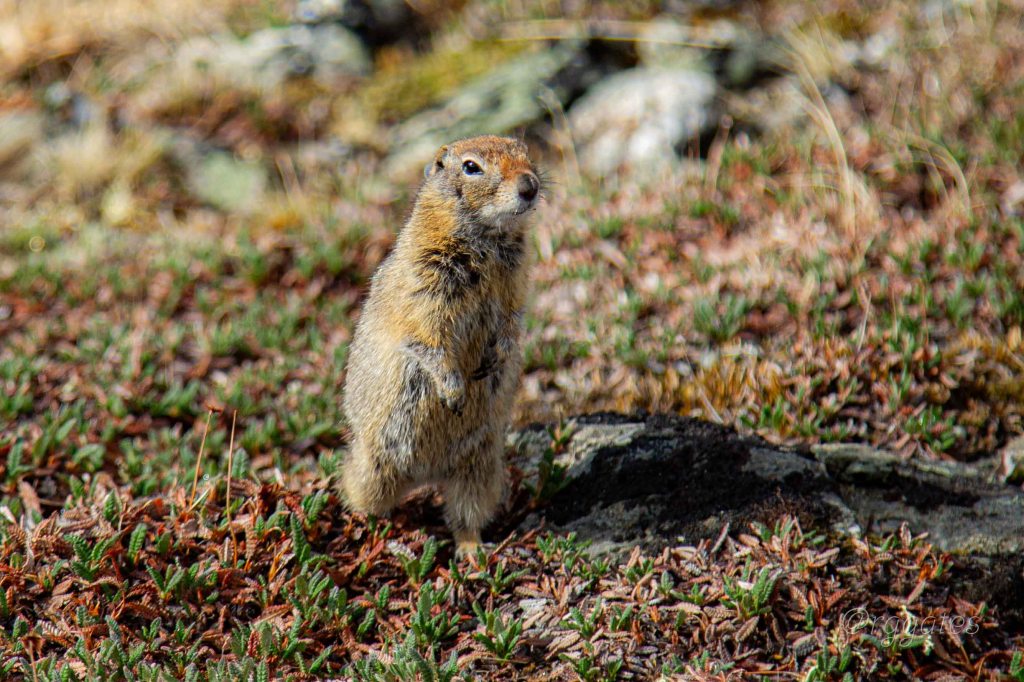
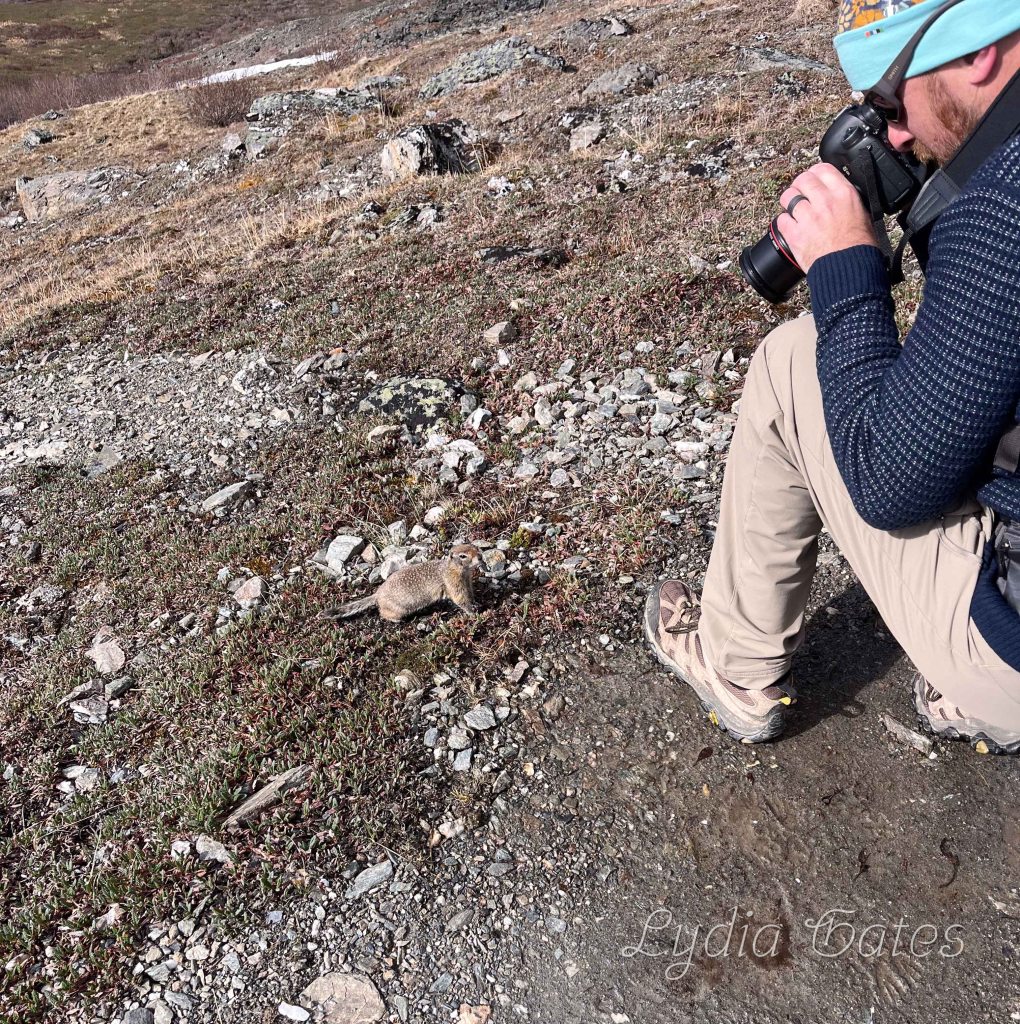
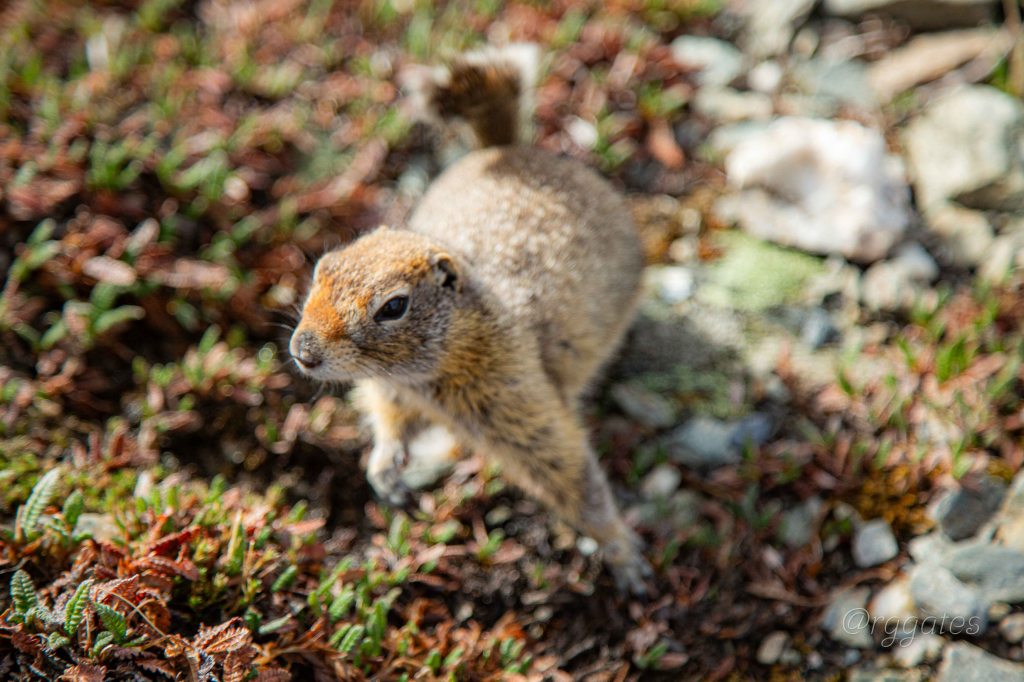
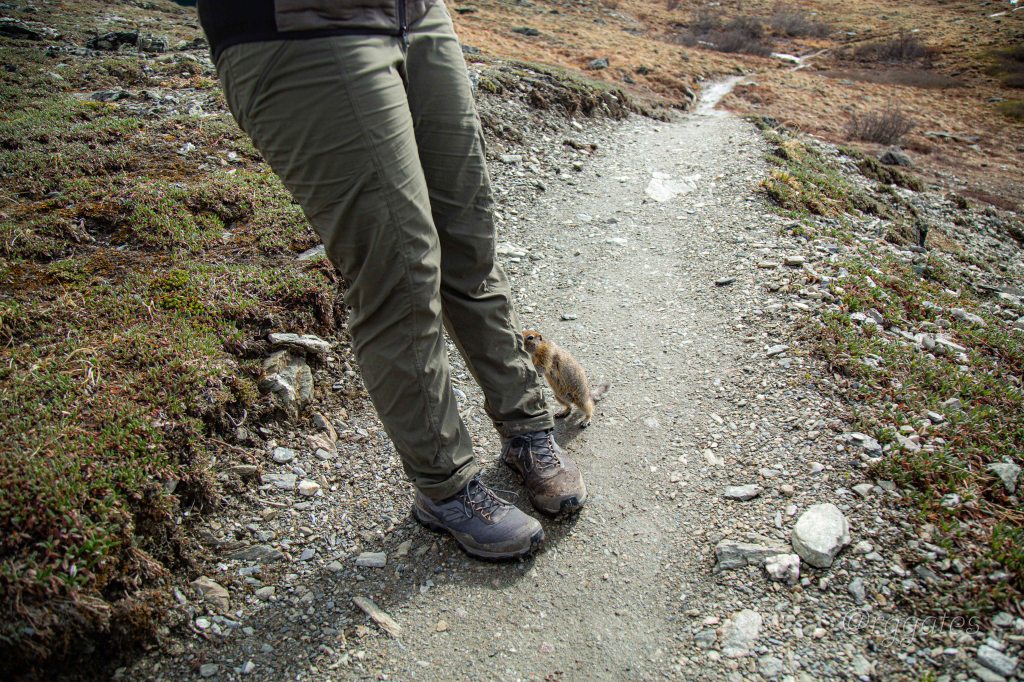
While Jenn completed the loop portion back to the trailhead with Lincoln and Henry, Lydia and I stopped at the peak and returned the way we’d come. We took it slow, and this ground squirrel put on quite the show for us.
I’d brought some good camera gear to capture our sights and memories, and my Sigma 150-600mm works as a decent (though quite heavy) scope. But we didn’t bring binoculars with us. You should.
Denali Mountain Works, just outside the park, has a good selection of Nikons. They offer rentals, but we knew we’d want them in Whittier, Seward, and Seldovia, too, so we bought a set. As our trip wore on, we were darn glad we had them. The nice lady at the outfitter told us we’d really like having them on the coastal portions of our upcoming trip, and she was absolutely correct.
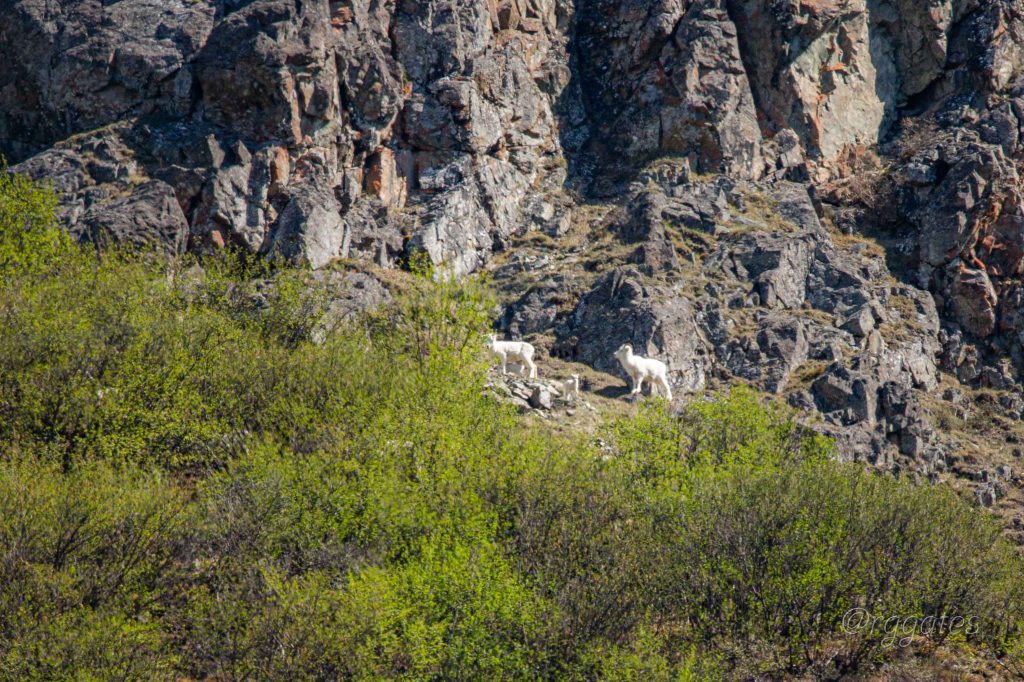
Lincoln and Jenn, especially, used the binoculars to spot Dahl sheep way up high in the mountains, cut the distance between us and the many sea otters we’d soon see (keep reading!), see puffins before they dove below the surface of the water in Cook Inlet, and identify eagles across bays in the trees along the coast.
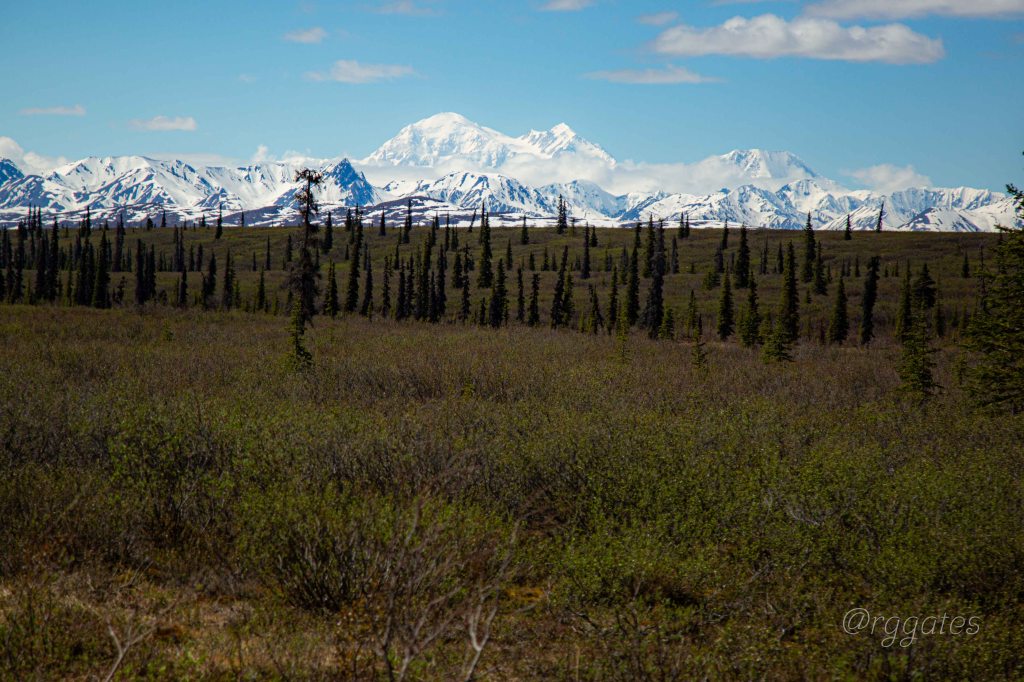
Then, not only did we see Mt. McKinley from the train and the plane, we also got a very clear view of it on our drive. I guess if you’re in Denali for a couple of hours, you may not get to see the peak. But if you’re around for a couple of days and spending those days outside, don’t worry much that 30% story. It seemed like it wasn’t too far away, but we were miles and miles and miles from the foot of the mountain.
Our original itinerary included one night in Palmer to break up the drive, then a trip to Valdez for several nights. Valdez is a bit off the typical itinerary path, and the drive is supposed to be stunning. VRBOs and hotels are limited, so those need to be booked well in advance. Our plan was to drive to Valdez and then take the ferry via Alaska’s Marine Highway to Whittier across Prince William Sound providing both Alaska-style transportation and wildlife sighting opportunities. Unfortunately, the ferry schedule doses’t come out until mid-March and it’s not always the same as previous years. This makes booking lodging very challenging.
The only aberrant day for the ferry from the previous June was the day we needed it to run.
We didn’t want to make the 10+ hour drive from Valdez to Seward (our next stop), so we made the tough decision to cancel our trip to Valdez and reallocate 2 additional nights to Palmer and arrive in Seward a day early – all of which proved to be good decisions.
We’ll catch Valdez next time when we explore Wrangall St. Elias NP.
Jenn found a nice B&B VRBO in Palmer, Alaska’s Harvest Bed & Breakfast, a log cabin with a sheep farm and a fantastic view out the window. It was the perfect home base for our exploration. They have a nicely appointed B & B, plus a 3 bedroom cabin on the property where we stayed, providing options for variable traveling groups.
The owner, a very skilled craftswoman, spun the wool she collected into all sorts of things and sold her wares out of a little shed on their property. It was really cute and clever. The place was located in the back of a small neighborhood, which allowed Jenn and me to take morning walks while the kids slept in.
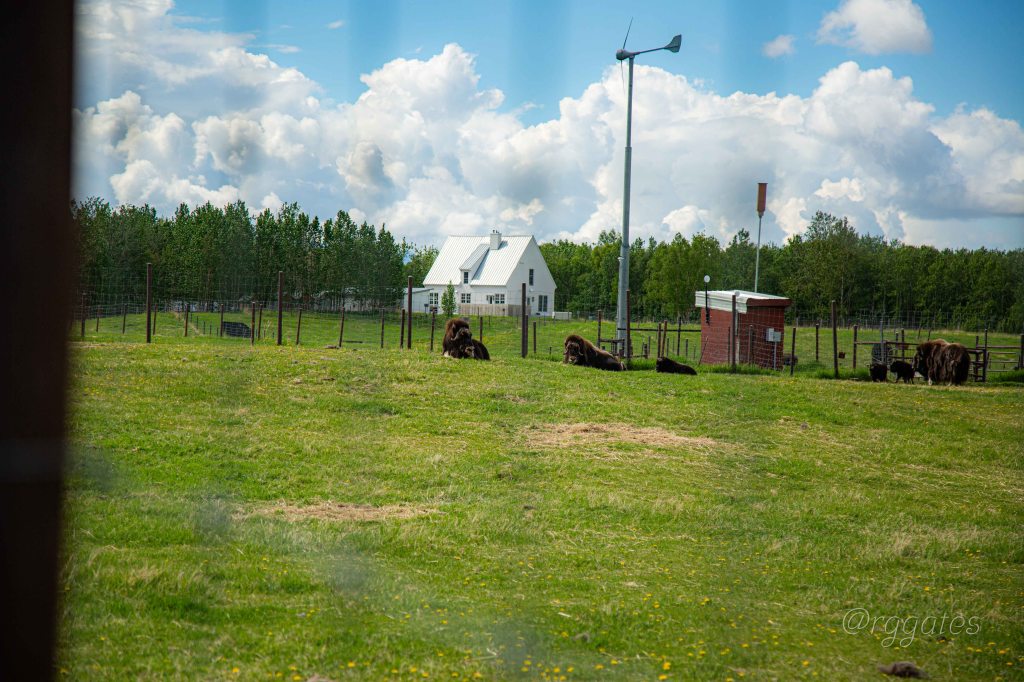
On one side of Palmer is the Musk Ox Farm, and on the other side is the Reindeer Farm, which is more like a rescue for a wide variety of Alaskan wildlife. And not far from Palmer is Wasilla, home of the Iditarod Museum.
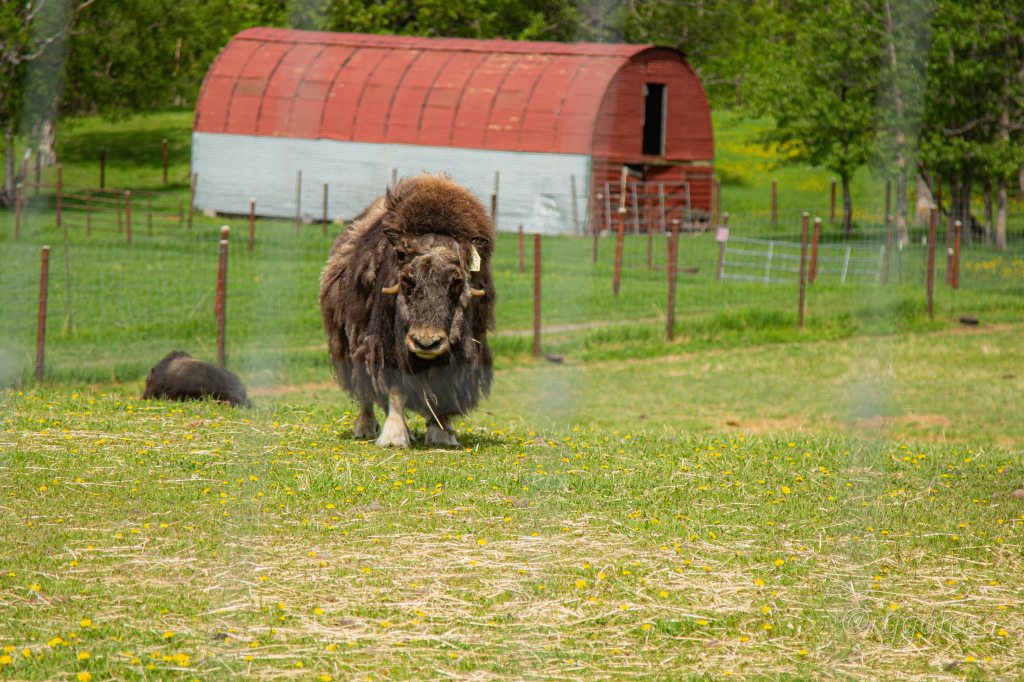
Musk ox are Jenn’s new favorite animal. They look like they’d enjoy a good snuggle, but don’t let that fool you. They’ve got a giant, thick skull, and they like to head butt things. Their undercoat is extremely warm (and valuable), but harvesting it is a challenge. This farm treats them like royalty and serves as a really cool ambassador for the species. Do not miss this if you’re in the greater Palmer area.
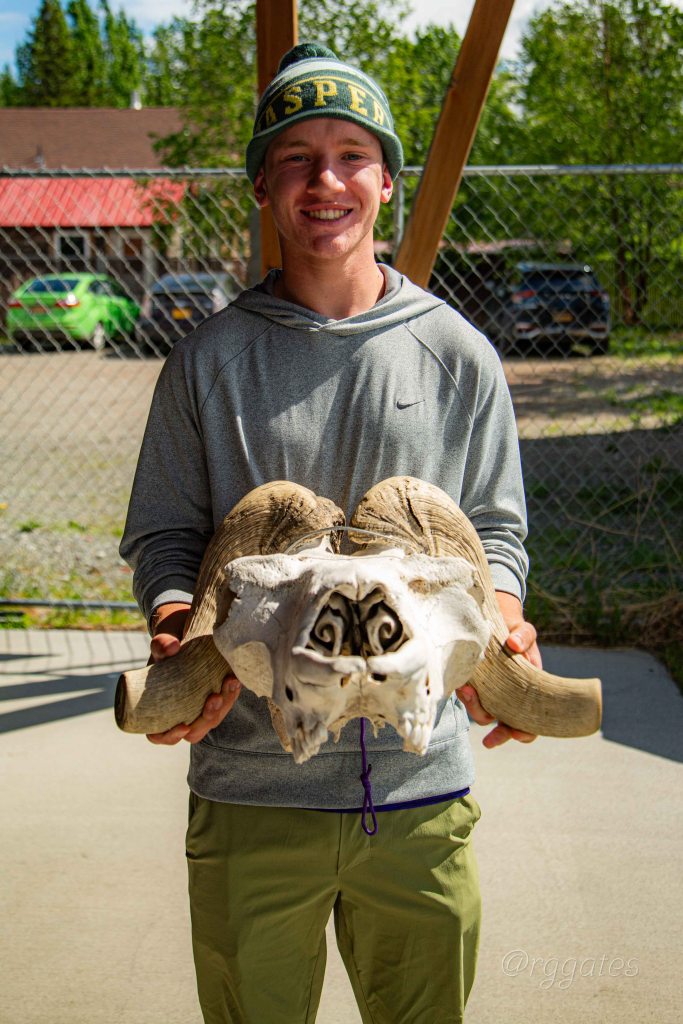
Nothing in Alaska is low-cost, and museums and wildlife places such as this are running ~$30 per person these days. Also, there is a wonderful little gift shop with a number of items made with qiviut, the name given to musk ox fleece, and it… is… pricey. This is understandable, given the low supply and high demand, but prepare yourself for larger-than-you-may-think numbers.
The Reindeer Farm is pretty touristy in appearance, but they seem to care for their animals quite well. This, too, was ~$30 per person when we attended. I get it… it’s pricey to provide for so many animals.
We don’t follow sled dog racing at all, but we gained a new and good appreciation for the sport and lifestyle at the Iditarod Museum. They do a really good job of displaying the history of the specific event and the overall sport, highlighting the pioneers and superstars of the past and present. They take the ignorant like us and lead us to marvel at the several facets about why sled dog racing is such a special thing for both the drivers and the dogs.
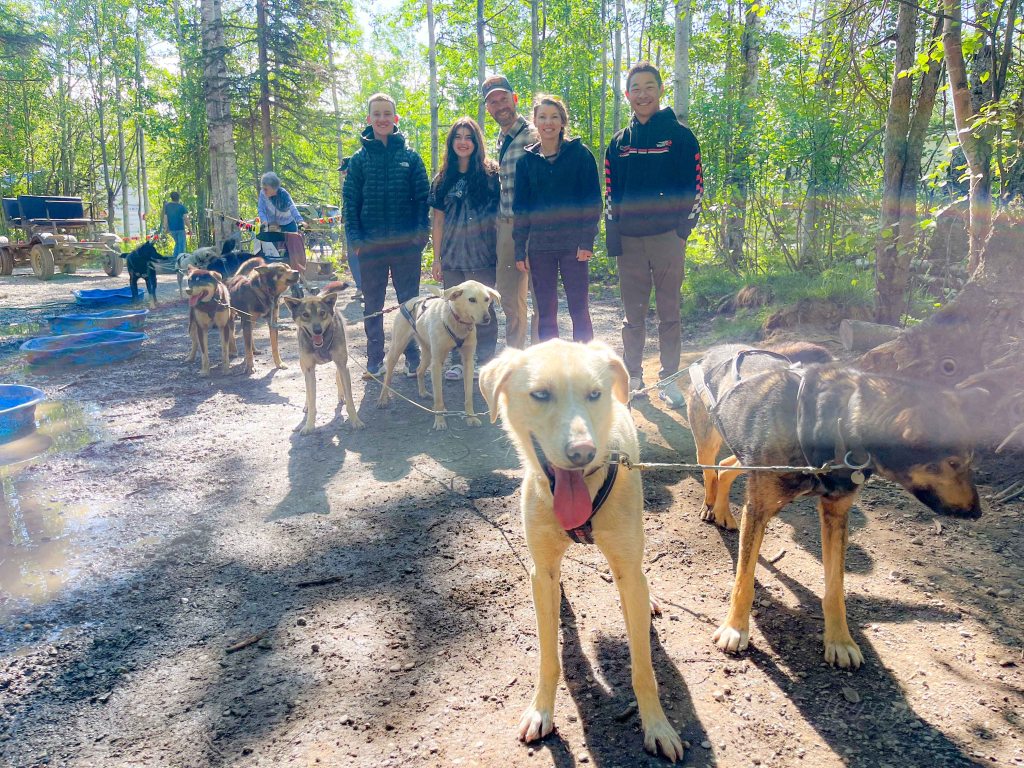
Admission to the museum is $10. With that, you get either $10 off in the gift shop ~or~ one ride on the training sled. Riley Dyche, a six-time Iditarod participant, was on-hand with a number of his dogs giving demonstrations. Holy cow, was the ride impressive! Nine dogs pulled our particular sled (a four-wheeler in neutral with six riders) at a much faster speed than I was ready for. These dogs were clearly born to pull, and the joy they exuded during the pull was really amazing. We saw how much they loved the pull because when we were done, they were visibly both disappointed to be finished and eager for the next run.
One can eat pretty well in Palmer. Turkey Red has clever Alaskan dishes, and we ate at Palmer Alehouse twice. No small number of microbrews call Alaska home, and I enjoyed sampling from Palmer, Susitna, Anchorage, and other breweries at many of our stops. This ranked as the kids’ #2 favorite restaurant of our time away.
Palmer is also a good jumping off point for activities on the Matanuska Glacier or River, which we pursued on our second full day in Palmer.
That wasn’t the original plan…
We booked a tour with Nova Alaska for the Adventure Trek, however I completely misremembered the date (and didn’t double check my itinerary!) so we missed it. Thankfully, they were extremely gracious and allowed us to join the more standard Family Trek the next day. Although I really wished we could have done the trek farther out onto the glacier which included repels and other fun, I was very thankful they accommodated us at all.
I can count on one finger the number of times Jenn’s made a mistake like that. She was due for a slip up after thirteen years and countless travels, large and small. But back to the glacier…
You don’t want to fall on the glacier, with its sharp ice and sediment, so we wore rubber-application cramp-ons for traction. We saw deep crevasses, immeasurably deep mulans, a lake within the glacier… and then our guide filled up our water bottles with glacial water through a tap she drilled into the wall. We pay big money for that back in the Lower 48!
It’s really hard to get a sense of scale with glaciers. By the time we left Alaska, we’d seen a handful, and they all appear one way from far away, and very different the closer one gets. They’re simply massive, and, much like the Grand Canyon, difficult to communicate in a photo. Portions of them are quite dirty with the silt they accumulate as they creep down their valleys, other portions are the deepest, purest blue you can imagine. You’ll find creeks, rivers, puddles, ponds, holes, and trenches here and there all over glaciers.
As it turned out though, missing the adventurous part prompted us to pursue ice climbing on Exit Glacier [below] which proved to be a major highlight of the trip.
The drive through the Mat-Su valley was absolutely gorgeous and well worth it even if we didn’t have an activity.
We left Palmer in the morning hoping to see stunning views of the coast down to Whittier, but the fog was thick and the clouds were quite low-lying. The clouds lifted some as we approached the coast, but we couldn’t see the peaks across the bay. We’d have to hope for clearer weather on our return.
We timed our drive into Whittier quite well, and this is a big deal given the one-way tunnel to the town that also incorporates the train. The tunnel is your only way in. Miss your time, and you’re set back at least an hour. We arrived at the entrance to the tunnel for our reserved time. It was a long, dark drive. There was light at the end of the tunnel, and we arrived to see just how small and not-much-going-on Whittier is. What Whittier does provide, though, is a calm harbor and pier for cruise ships with nice mountain scenery around. We took the 26 Glacier day cruise with a guaranteed look at the massive face of Harvard Glacier and hopes of seeing wildlife.
The wildlife did not disappoint. We got our first look at sea otters. Oh, my. Alaskans and our readers in the Pacific Northwest will roll their eyes at this, but as Midwesterners, we couldn’t get enough of the sea otters. We’ve seen river otters at the beaver marsh in the Cuyahoga Valley National Park, a stone’s throw from our home, but we got to watch sea otters much more reliably. They’re always having a party, it seems.
Then we saw the spout of a humpback whale. Not terribly unusual… until there were two… and they were bubble feeding. So cool!
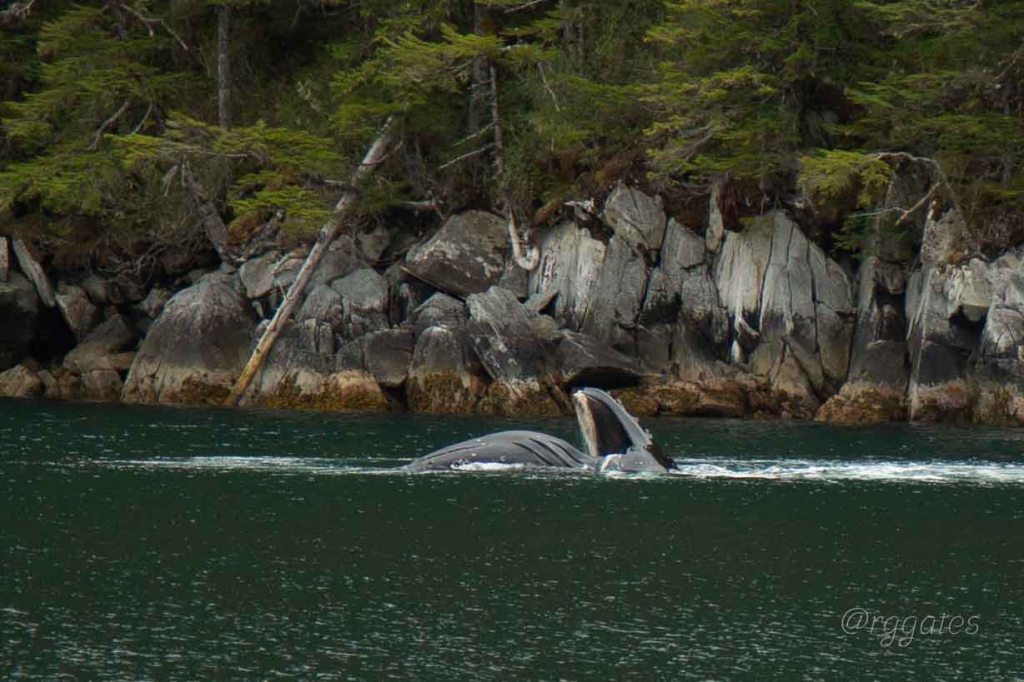
Then, as we rounded a bend to cut back into the glacial bay, Lincoln and I were on the bow of the catamaran alone, trying to make out what was floating in the water well ahead of us. It was larger and darker than an otter. Maybe a log? No, a black bear swimming across the bay! Lincoln signaled to the captain, and she slowed the boat down for us all to watch from a distance. The crew was very excited, telling us these are things they just don’t expect to see.
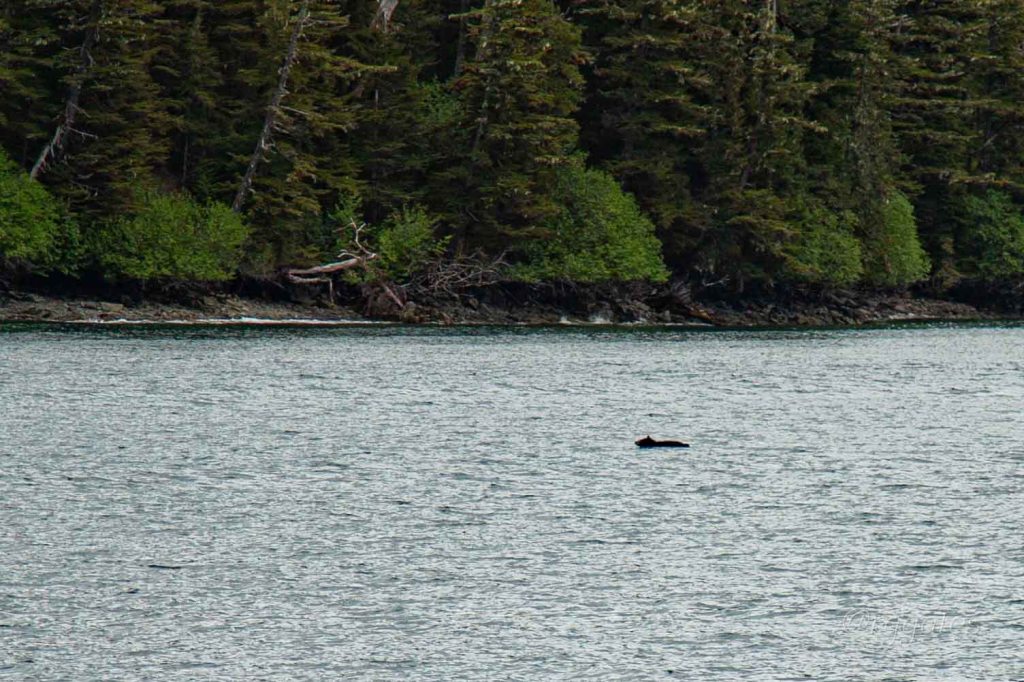
And then we saw further up the bay, standing on a chunk of ice, a bald eagle. Just iconic.
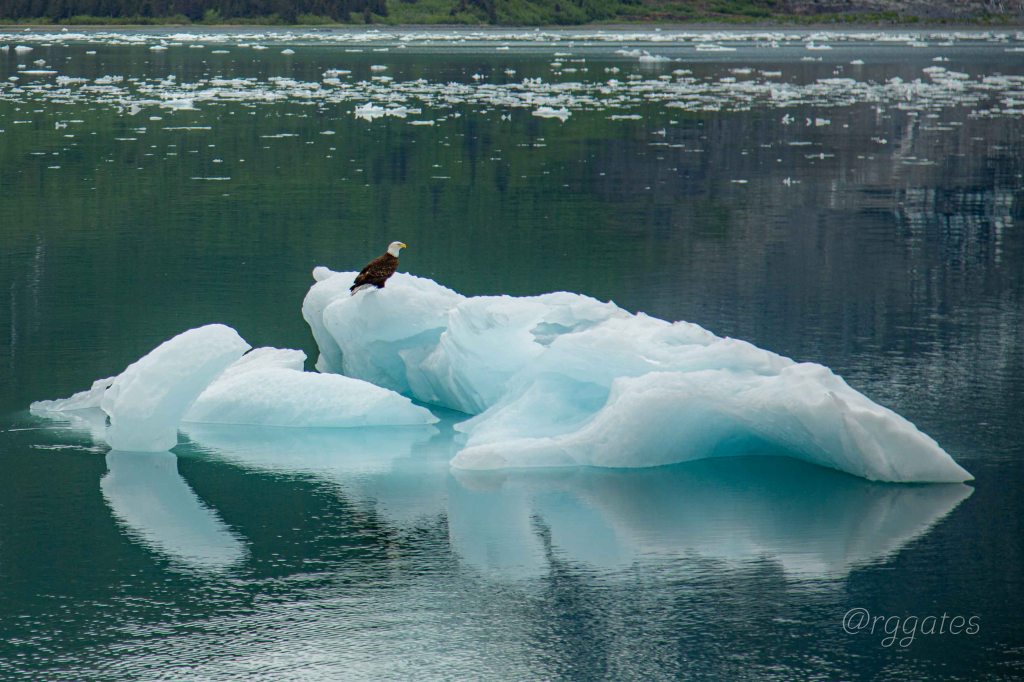
For safety reasons, the boat doesn’t even get within an eighth of a mile of the glacier. We’d hear it calve, but you’d have to see it first because by the time you heard it, most of the ice had hit the water. And as I mentioned earlier, there are rivers within the glacier, massive amounts of water that has melted off further up the glacier, running toward the bay. At one location, it looked like a fire hose was shooting out of the glacier.
The ice chunks of all sizes floating in the still water away from the glacier out toward the fjord’s opening are quite beautiful. We weren’t anticipating the snap-crackle-popping of the ice, either, as it melts and releases its pressurized air.
We recommend this tour. The boat is very clean and comfortable, the prepared lunch (chowder!) was very good, and the scenery is just beautiful.
After waiting a short time for our turn back through the tunnel, we continued on our way to Seward. We had lots planned for this area: ice climbing, sea kayaking, and visiting the Alaskan Sea Life Center.
Before we move on to our Seward activity,
Driving long distances in Alaska does prompt discussion about road construction – there’s a lot of it. They don’t close down just one lane at a time either. The entire road gets ripped up for miles and only one line of traffic goes at a time over dirt and gravel while following a pilot vehicle. Check for construction on your route and budget at least an extra 20 minutes in case you pull up at the wrong time.
We arrived in Seward a little too late for our restaurant preference, so we got tacos at the truck down on Fourth Avenue, Los Chanchitos. Pretty good!
We met our guides, Noah, Joey, Kieran, and Brandon, at Exit Glacier Guides early in the morning.
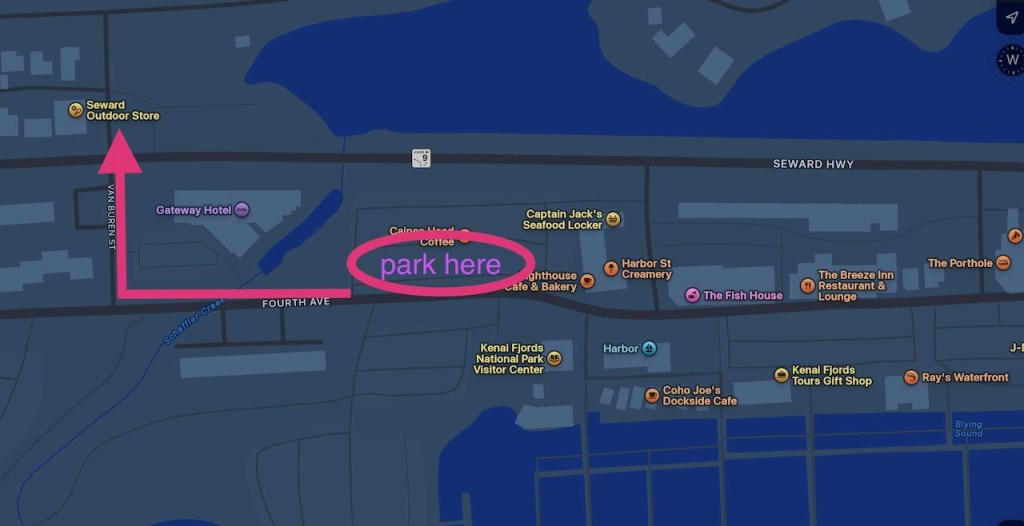
Before we hopped in the van, they gave us backpacks that would carry the boots and very legit mountain climbing cramp-ons we’d use. We stuffed our BBQ burrito (from Firebrand BBQ right across the street), fruit snacks, and chips down into the bag, made sure we were sufficiently layered up, and drove to our trailhead to hike up to Exit Glacier.
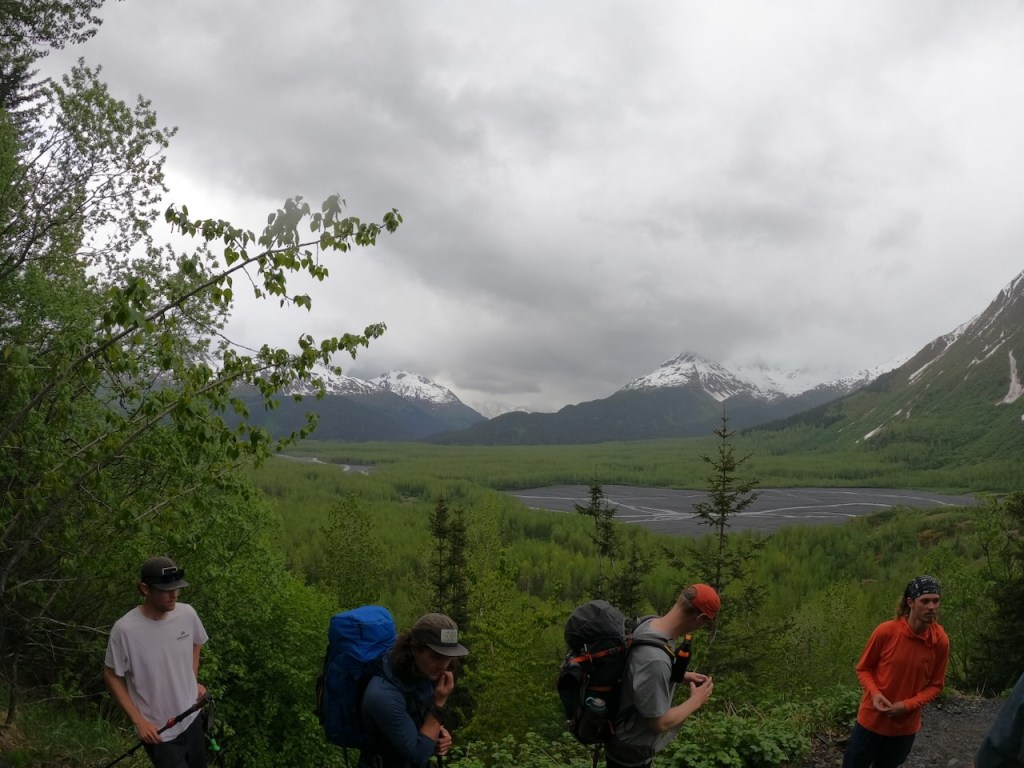
Glacier health is a topic of conversation in today’s world. Most accessible glaciers are retreating, and there are a number of reasons for this. Our guide team identified various points along our drive and our hike where the glacier had previously reached. It’s quite dramatic just how their jobs have changed in recent years as they approach the ice as it’s retreated. Even in the past year, their hike has grown longer as they have to walk further to reach the ice. Many, many years ago, folks could simply drive up very close to the face, but not any longer. We had to hike a couple of miles in, then scramble several hundred feet down from the maintained trail to begin staging for our hike out onto the glacier.
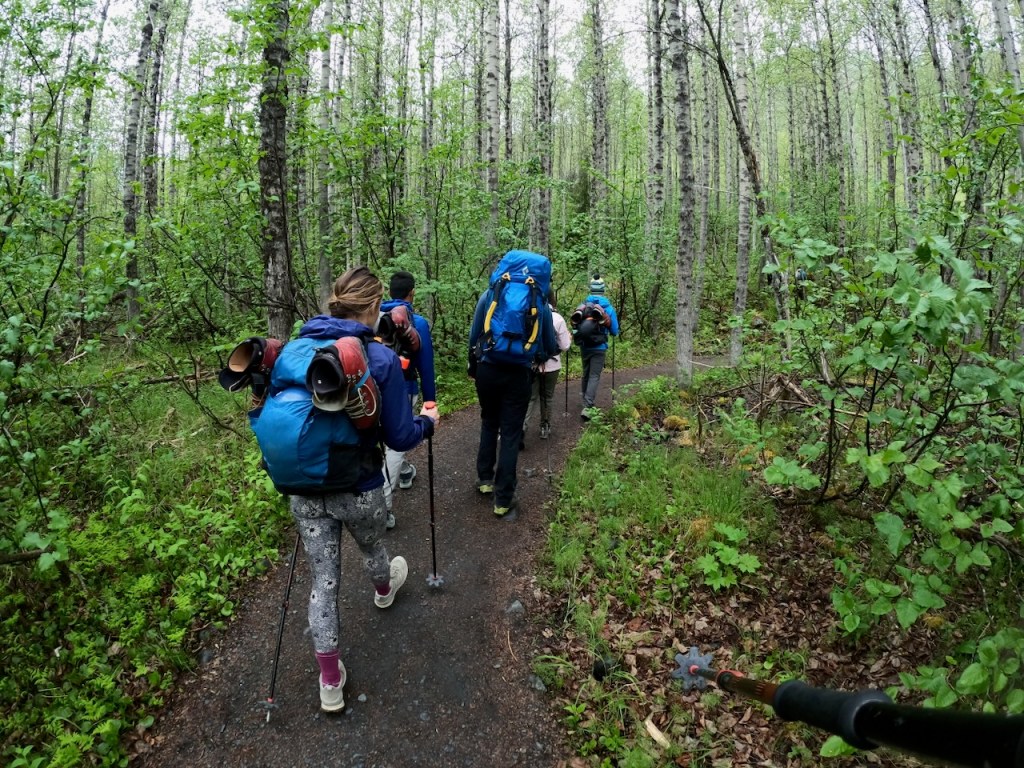
The boots & cramp-ons… yikes. We felt like authentic mountain climbers with this gear on our feet. Nobody wears this stuff for comfort on the rocks, but once we stepped onto the ice, we appreciated very quickly just how good this gear is for our safety.
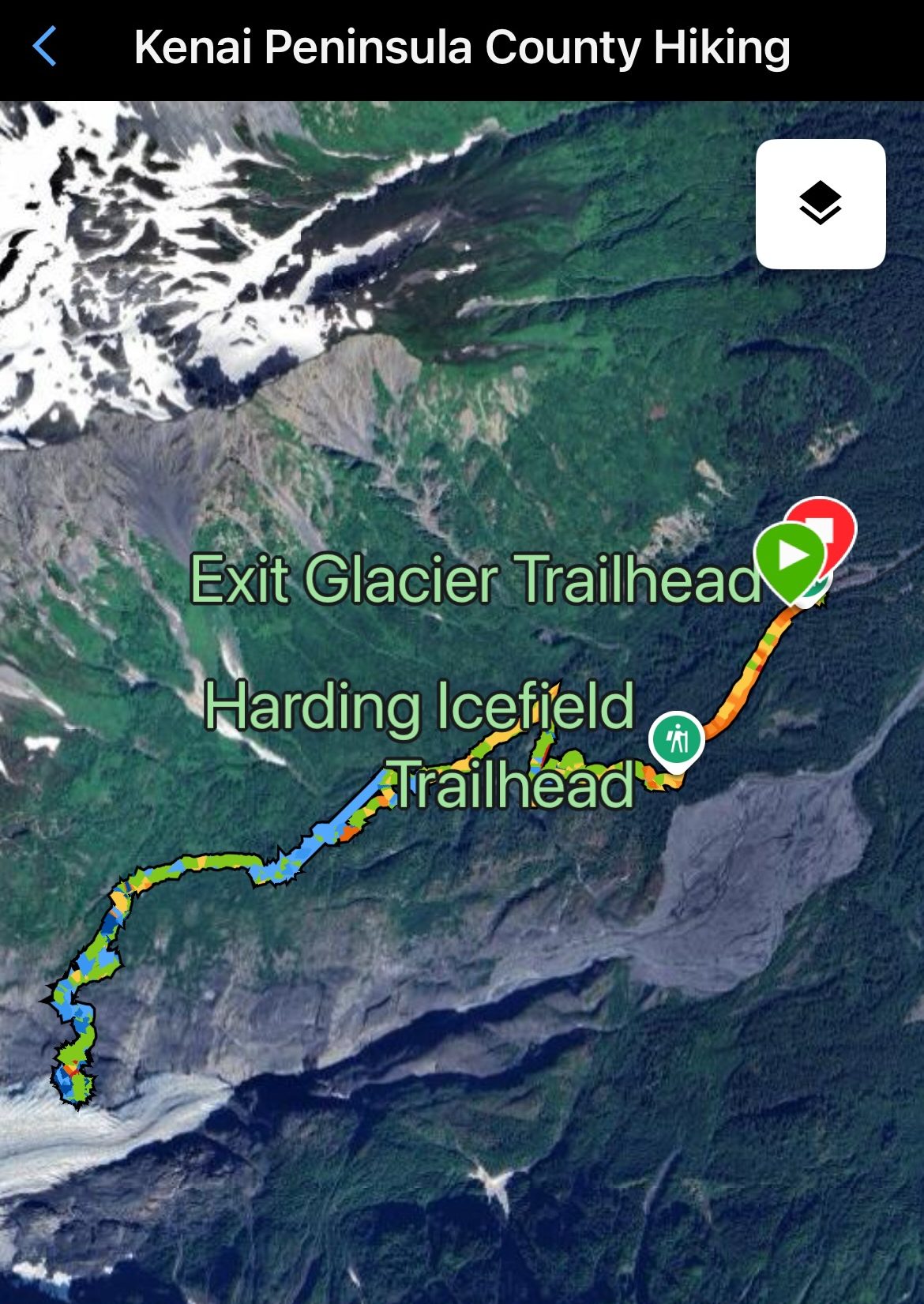
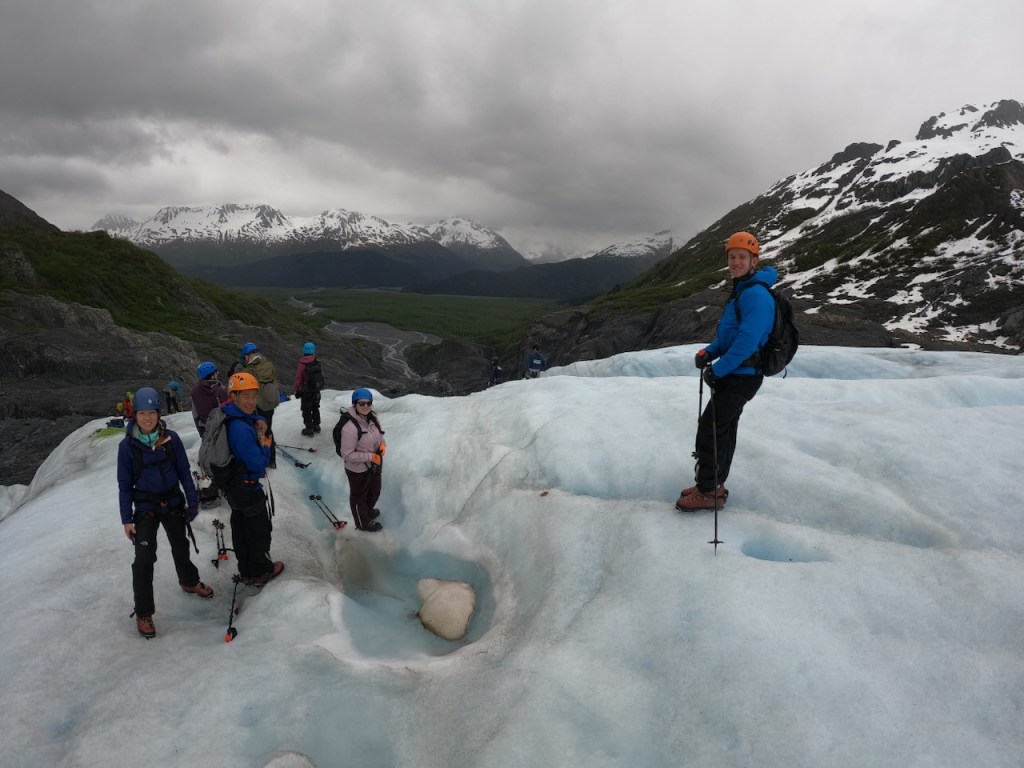
The guides work hard maintaining the trail daily by carving steps for us to climb up the steepest portions, and they taught us how to maneuver around the slopes and angles where there weren’t pre-carved steps. All four guys were really easy going, but at no point in time did it appear they were taking their roles anything less than absolutely seriously. There’s something inherently risky about climbing around on ice, then attaching ropes to anchors in the ice, then dangling from those ropes (we had to sign a waiver, after all!), but then there’s stupid risk. Our guides made sure we never approached stupid risk.
While we ate our lunches, they set up anchors at the tops of some slopes and got everything set for us to climb down (or more specifically walk backwards with our legitimate hiking boots attached to the rope), then use our toe spikes and the ice axes they provided to climb back up. We all had a great time!
The blue of the ice down deep, the different textures and slicknesses of the ice, the view from standing on ice then looking out over what is truly a sub-arctic rain forest… all of this was so neat, so fun to take in.
After our climbing muscles had said, “Enough!” we hiked back to the trailhead, and as we returned to the outfitter in the van, we all shared our personal “thorns & roses,” our challenges and what we loved about the day. Noah, Joey, Kieran, and Brandon are first-class, and facilitated an amazing experience for us, one that made each of the kids’ top three memories of our entire trip.
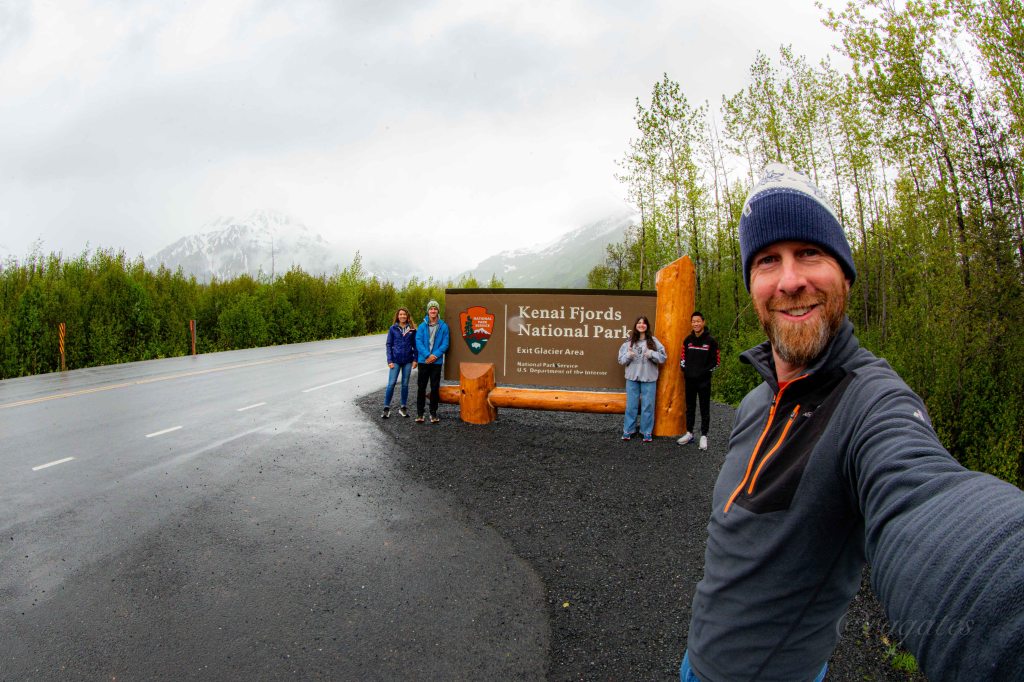
The Alaska Sealife Center highlights the importance of sea life to Alaska’s economy and the world’s beauty. An overwhelming percentage of live-caught fish sold in America comes from Alaska’s waters. An interpretive display detailed the disaster and aftermath of the Exxon Valdez oil spill in the Prince William Sound. (They’re still dealing with consequences.) And they’ve got a very good collection of animals, particularly of the fish and avian variety. We went late in the afternoon in an effort to avoid the crowd from a Celebrity cruise in port that day, and were mostly successful. For the last event of the day, they fed the birds, and we got to watch puffins and murres more or less fly underwater to catch their fish. Cost was ~$30-40 per person.
We ate dinner at Ray’s that evening. They’ve got a great location right on the water in the harbor. We had burgers and fish, and a pleasant atmosphere. This was another location that could have mailed it in with average food, but instead made good meals in a good spot.
Exit Glacier Guides’ sister company, housed in the same building, is Liquid Adventures, and Nora got us fitted with neoprene boots and kayak skirts for our trip to Aialik Glacier, a short trip over the mountain from Seward as the crow flies, but quite the long boat ride around Cape Aialik to the fjord to the west. With a good BBQ burrito from the same joint, we boarded Weather Or Knot, a sea taxi operated by Weather Permitting, for our journey around the cape with all the waves that come with the Gulf of Alaska.
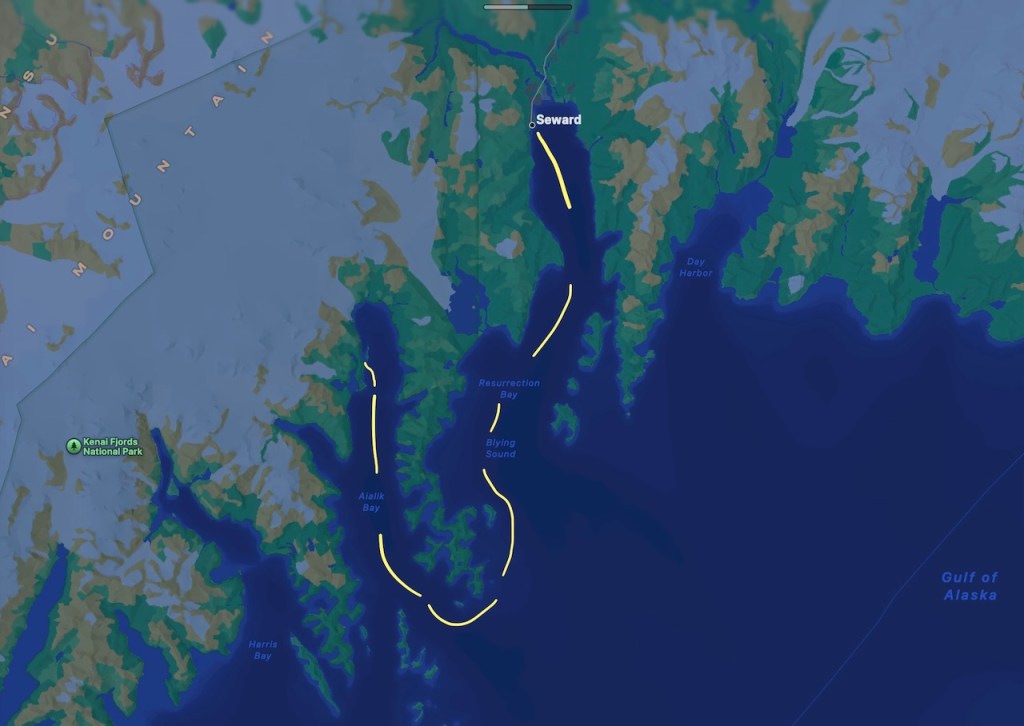
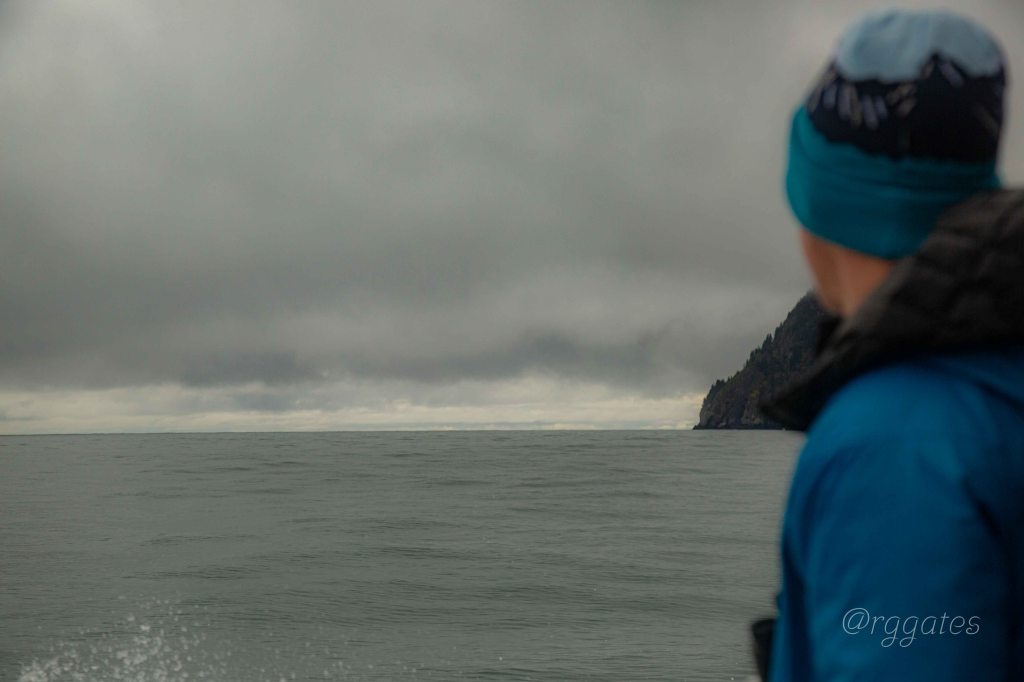
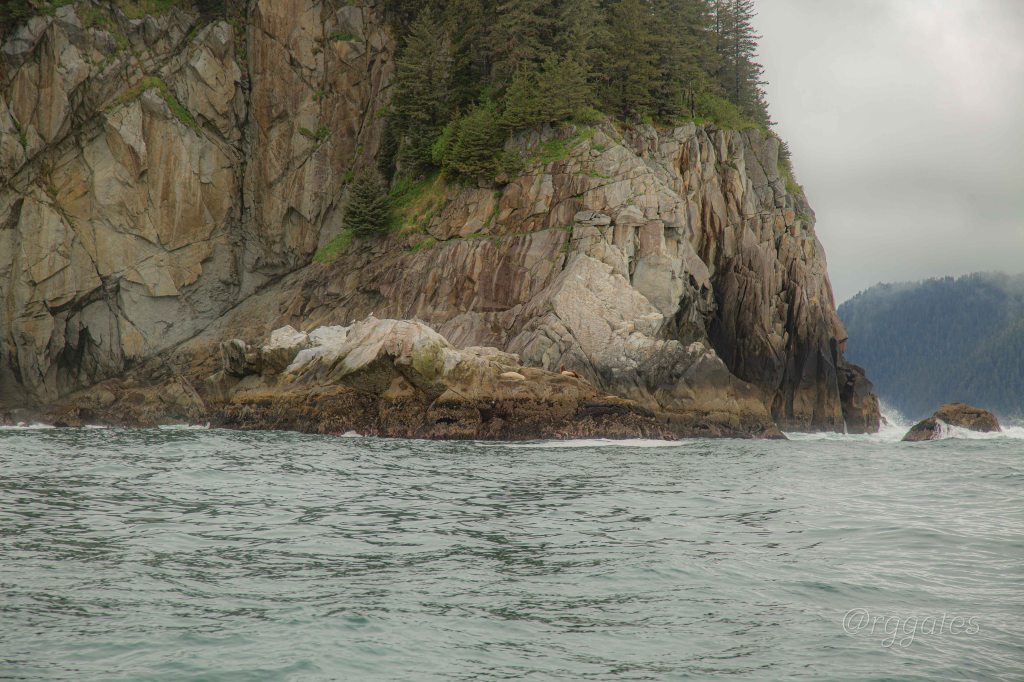
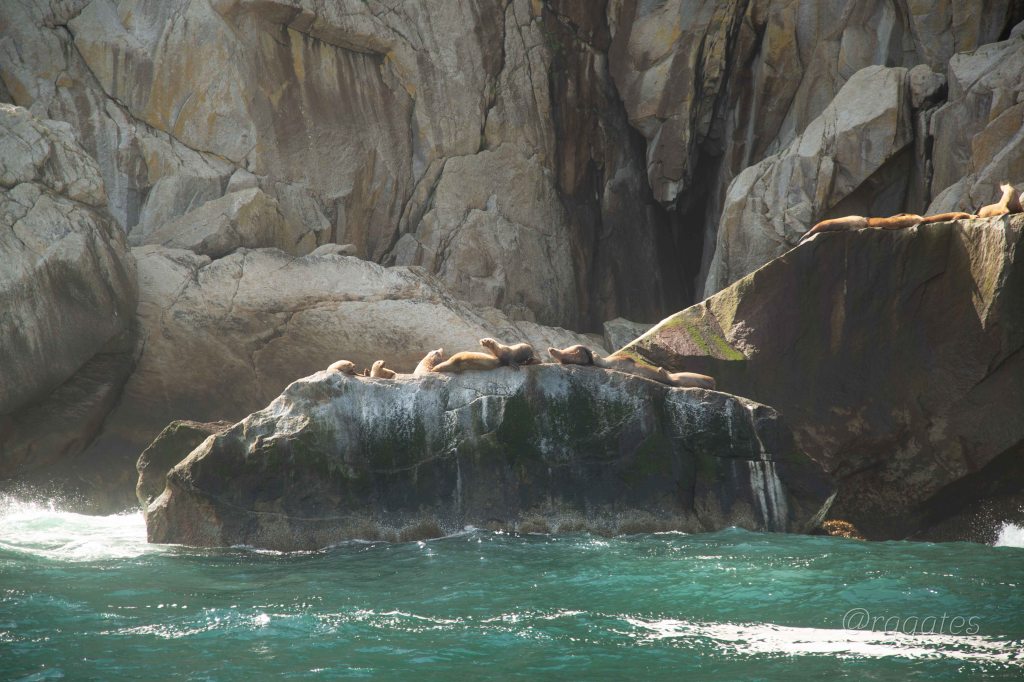
Of course we saw more sea otters, and another eagle, but this time we saw sea lions sunning themselves on rocks sticking up out of the water. We wondered how those sea lions made it up onto those rocks in the choppy seas.
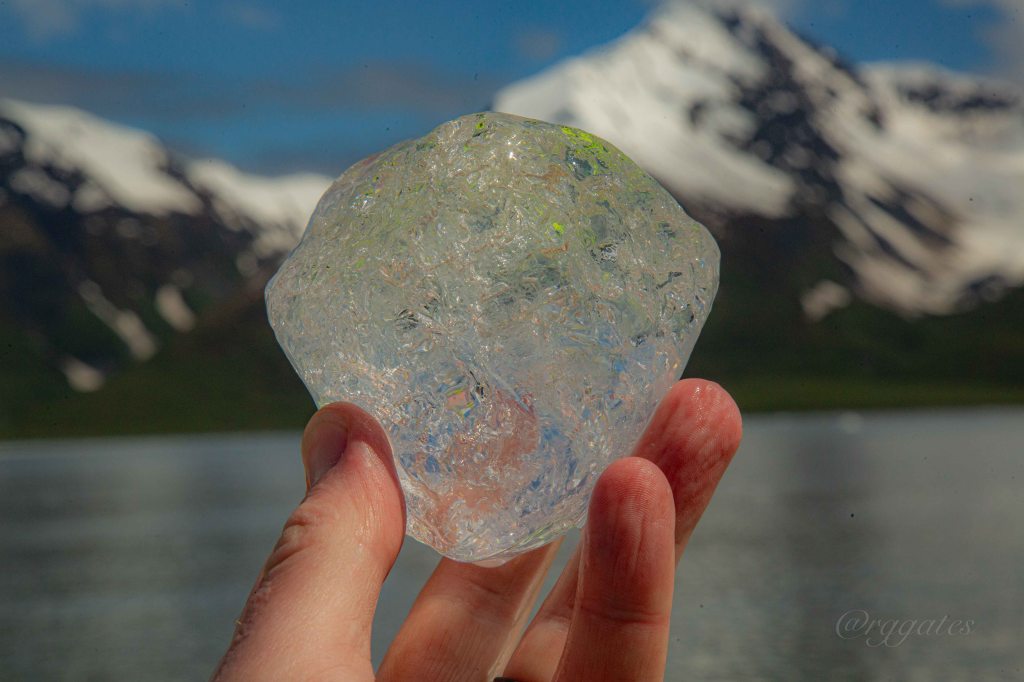
When we arrived at our destination up the fjord, the first thing we noticed was large ice formations on the rocky beach. Stuff you don’t see every day.
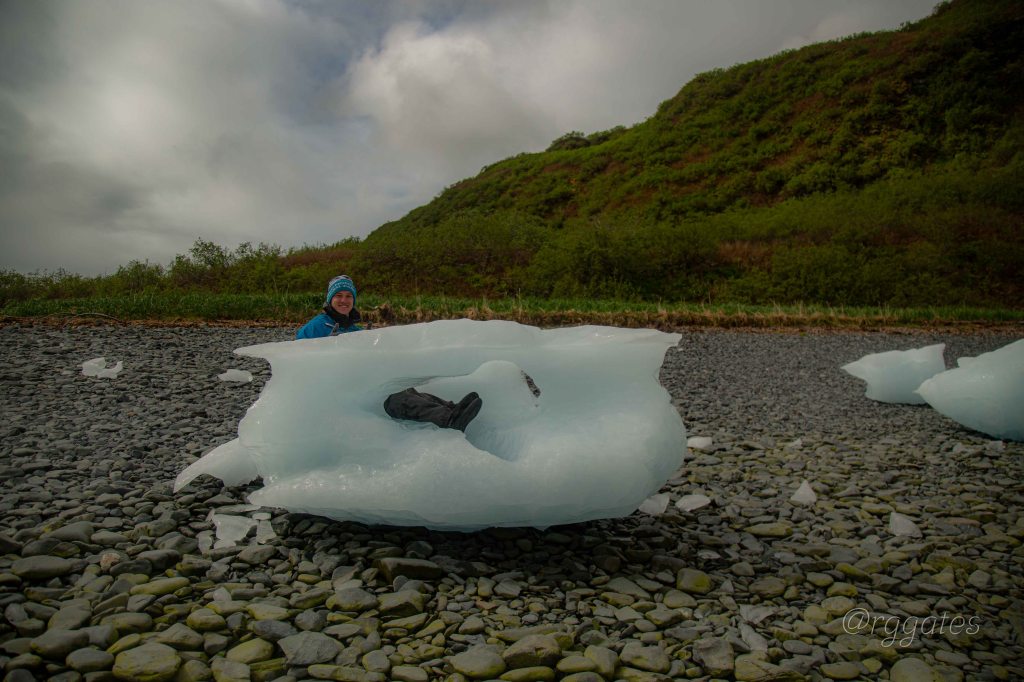
We then readied our waterproof pants, put on our kayak skirt (hilarious to watch the kids figure that out!), donned our life jacket, and uncovered the kayaks and paddles that were stored for us at the top of the beach. Jenn and Lydia teamed up, Henry and I formed a team, and Lincoln joined Becky, a New Zeland international living in Dubai and an honorary member of the Gates family for the day. Becky visits Alaska regularly (she’s a flight attendant with Emirates Executive [!]) and enjoys adventure, and we came to learn she’s a good paddler.
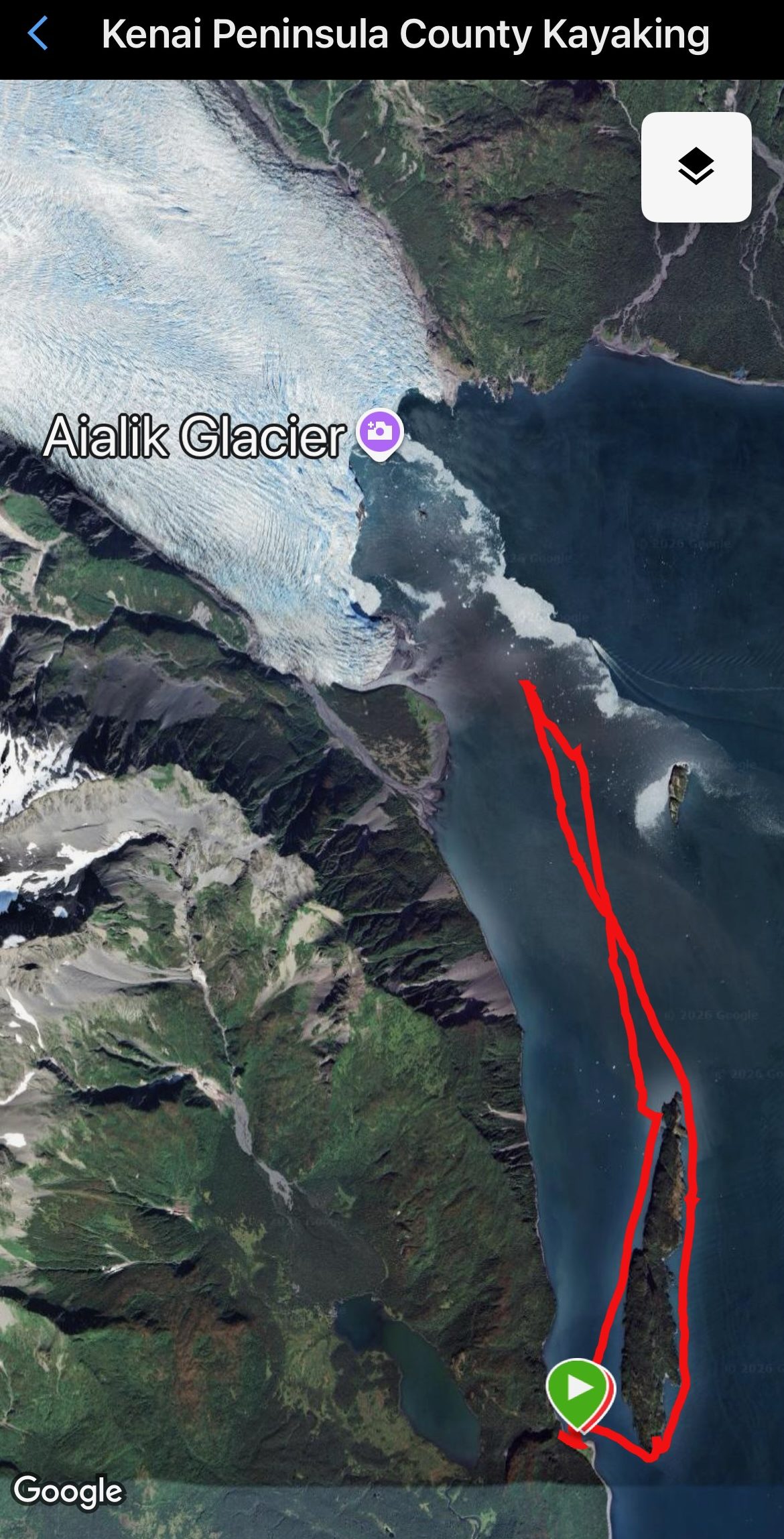
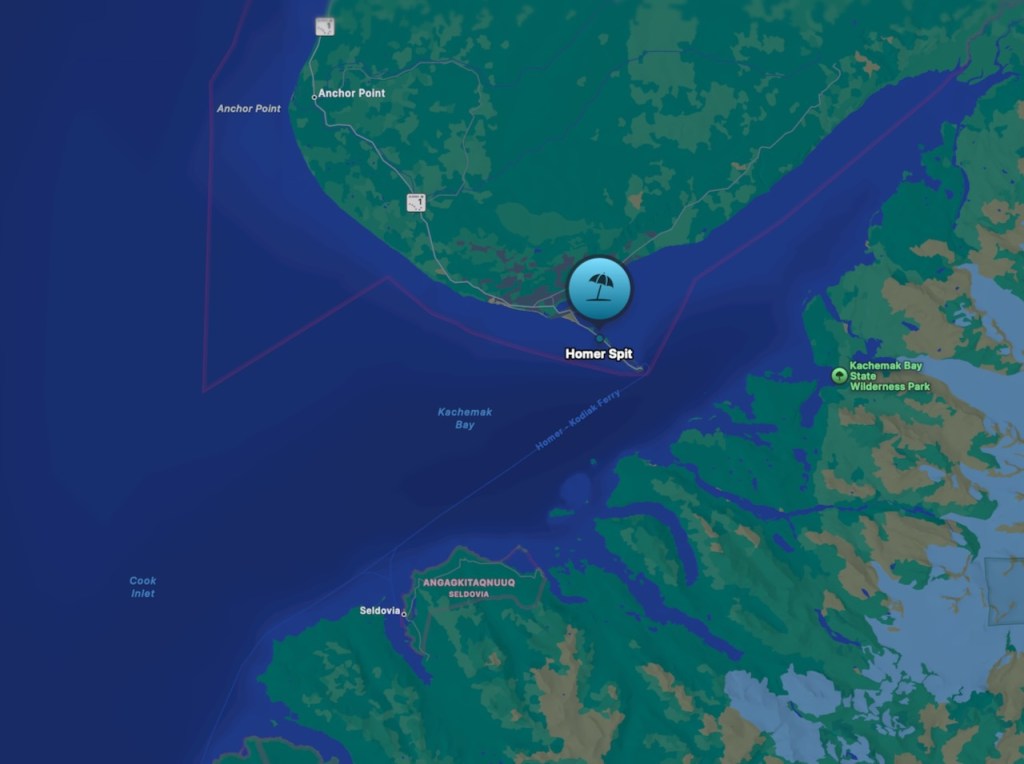
Another kayak tour group took the same taxi, and they headed straight for the glacier. Once we were all set, Nora took us the long way around a small island out in the fjord (you can see it on the map above) where a neat waterfall drained through a crevasse just beyond an arch in the rock.
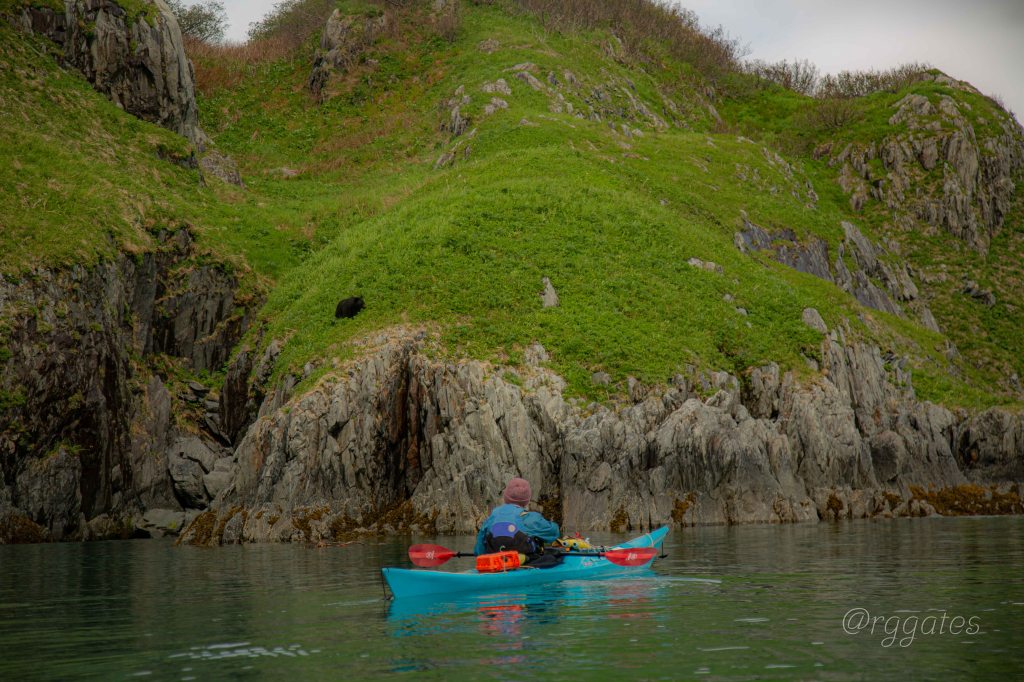
Once we paddled away from the little inlet, we turned the corner, looked ahead of us, and saw a bear eating a vegetarian meal just above the rock line a ways down the island. Nora cautioned us about getting too close (you never want to stress a bear), but we were able to approach close enough for some good photos, much closer than we’d be comfortable on land. The bear was uninterested and clearly not stressed. We were very interested.
We then paddled through calved ice formations toward the glacier. Recall our observations above about glaciers and scale. It seemed like it was always “just over there” when in fact it was a two mile paddle just to get to the minimum safe distance, a quarter-mile from the face. And then amazingly, wonderfully, the clouds pushed away and it became downright sunny. I’d decided at the last minute to bring my sunglasses, and I was glad I did. I wish I could have said the same thing about sunscreen.
We rafted our kayaks, Nora passed out lunch, and we marveled at the size and majesty of the glacier. We watched and listened for calving, saw some splashes in the distance, and then heard the sound a second or two later. We watched a flight-seeing plane that had emerged from behind us and were pleased to see it give us a sense of scale: that plane all but disappeared as it approached the glacier as it was dwarfed by the massiveness of the ice.
It felt like a long paddle back, which it was, but we detoured a bit to watch another bald eagle up in a tree on the same island that fed the bear. It had been screaming at some perceived nuisance. Observing that kind of wildlife just doesn’t get old, and it’s everywhere in Alaska.
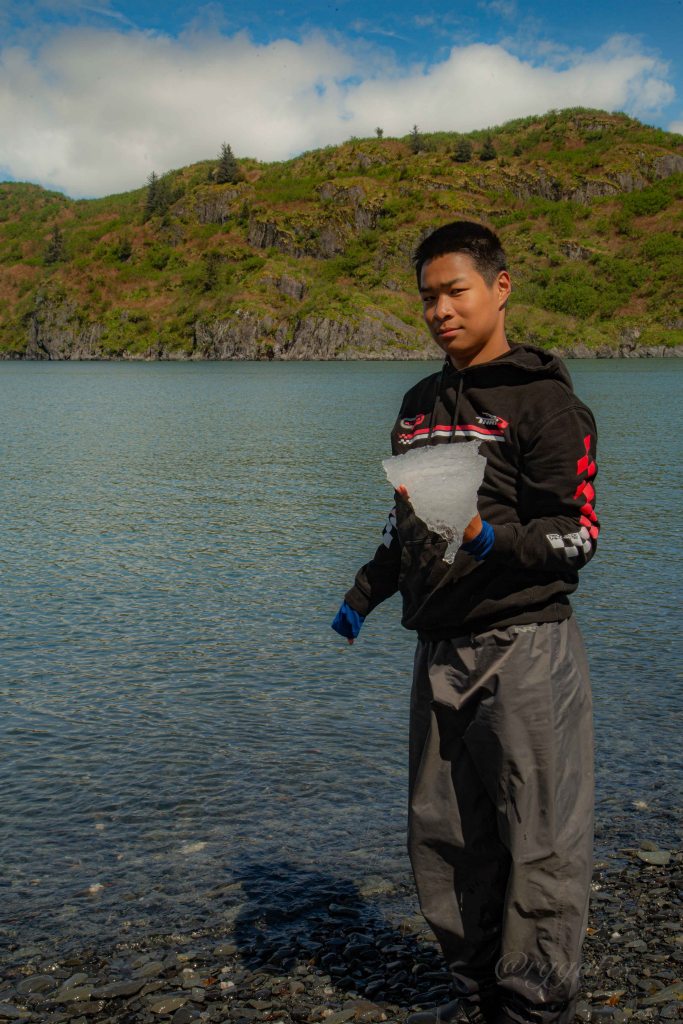
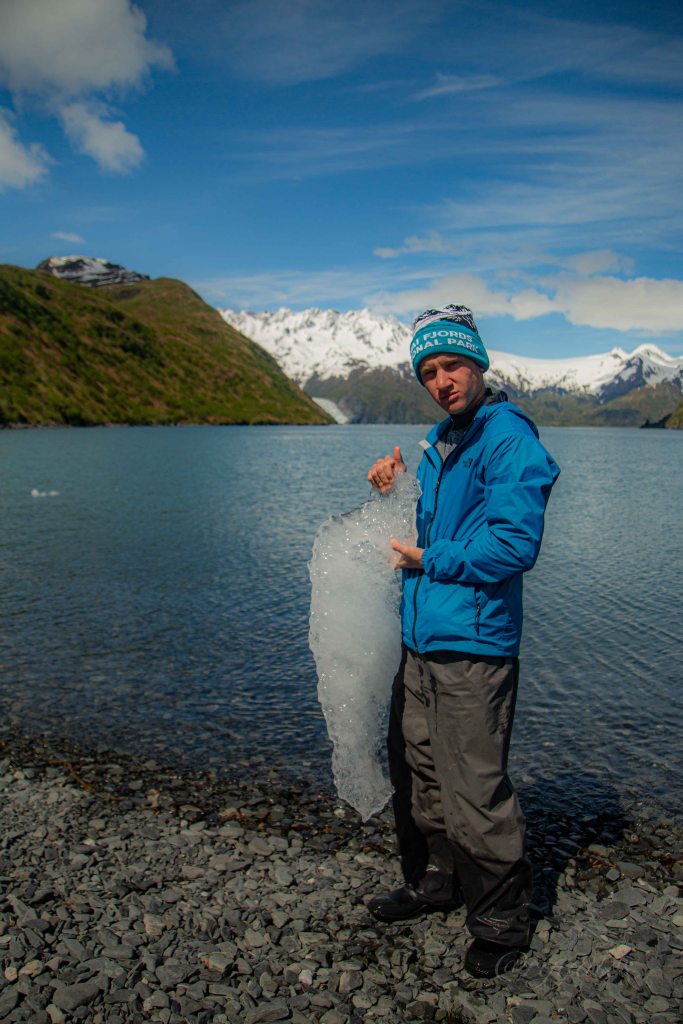
We made it back to the beach in time to rest a bit before our taxi returned. Henry and Lincoln enjoyed skipping stones in Lake Superior a couple weeks ago in Duluth, so they looked for flat stones to skip in the fjord. There weren’t as many flat ones, but that didn’t stop them. Becky jumped in for a swim (BRRRR!). Lydia and Jenn laid out on the beach.
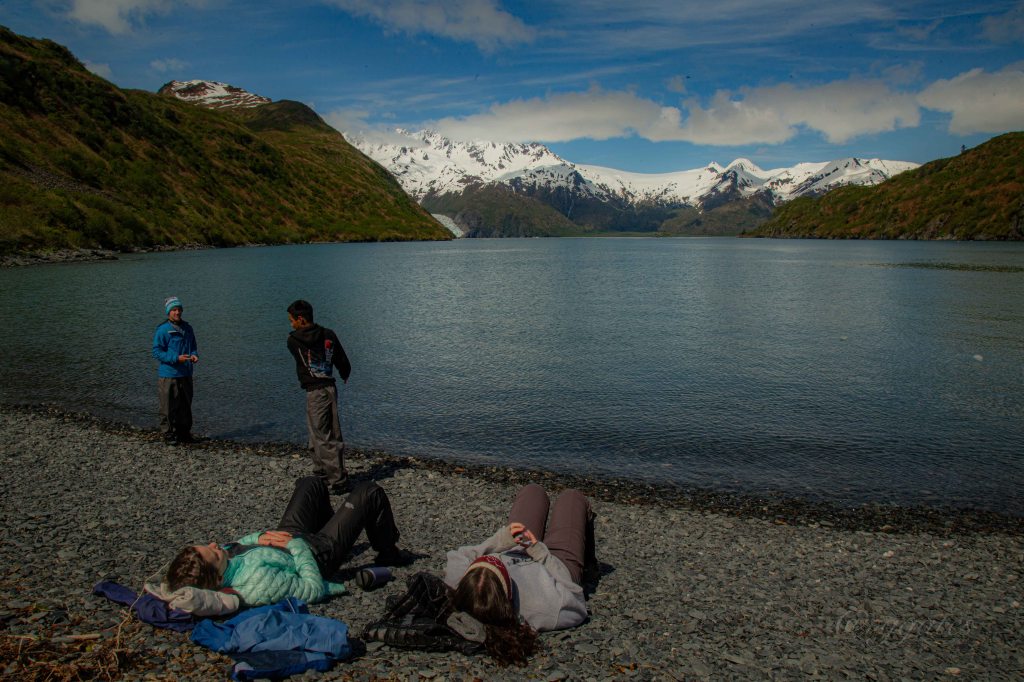
The ride back to Seward was clear and sunny. Sea lions put on a show for us at the cape, we saw mountains along the peninsula we hadn’t seen in the fog of the morning, and it wasn’t quite as cold.
There wasn’t too much of a wait at Seward Brewing Company when we arrived for dinner. I was interested to try something of the beers, and their menu looked good to us. This was a place, though, that can do a better job. The beer flight was predetermined (unlike at 49th State), they didn’t coordinate between the regular dinner kitchen and the pizza kitchen leading to a big gap between meal delivery (Lydia and Henry watched as Lincoln ate his food before it got cold as they awaited their pizzas), and overall I thought the food was pretty average.
We had really good weather to send us out of Seward that evening (and the following morning), allowing us to appreciate the mountains and bay circling the small town that had been covered by clouds and fog the previous days. The kids picked up some snacks at the Safeway for our drive, and we retired to our VRBO to run our clothes through the laundry one last time. (Access to laundry in our homes is a major reason why we pursue VRBOs over hotels at every chance we get.)
In the lead up to this trip, Jenn kind of threw caution to the wind knowing we were going to do Alaska like this just once with the kids. In an effort to experience the state’s remoteness, she stumbled upon a very well-reviewed place in Seldovia, the Treehouse Cove.
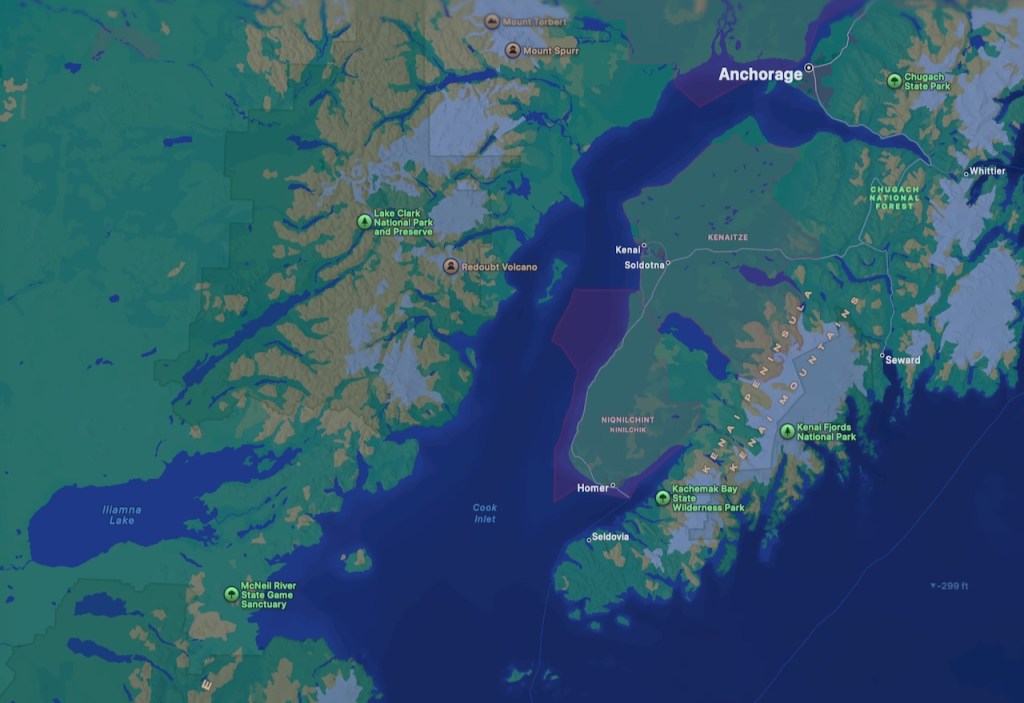
Scott and Janet have lived in Alaska for many, many years (Janet for her entire life), and they bought and developed some land on Seldovia Bay, which is off of Kachemak Bay, which is off the Cook Inlet, which is a massive body of water off the Gulf of Alaska, which is dwarfed by the Pacific Ocean.
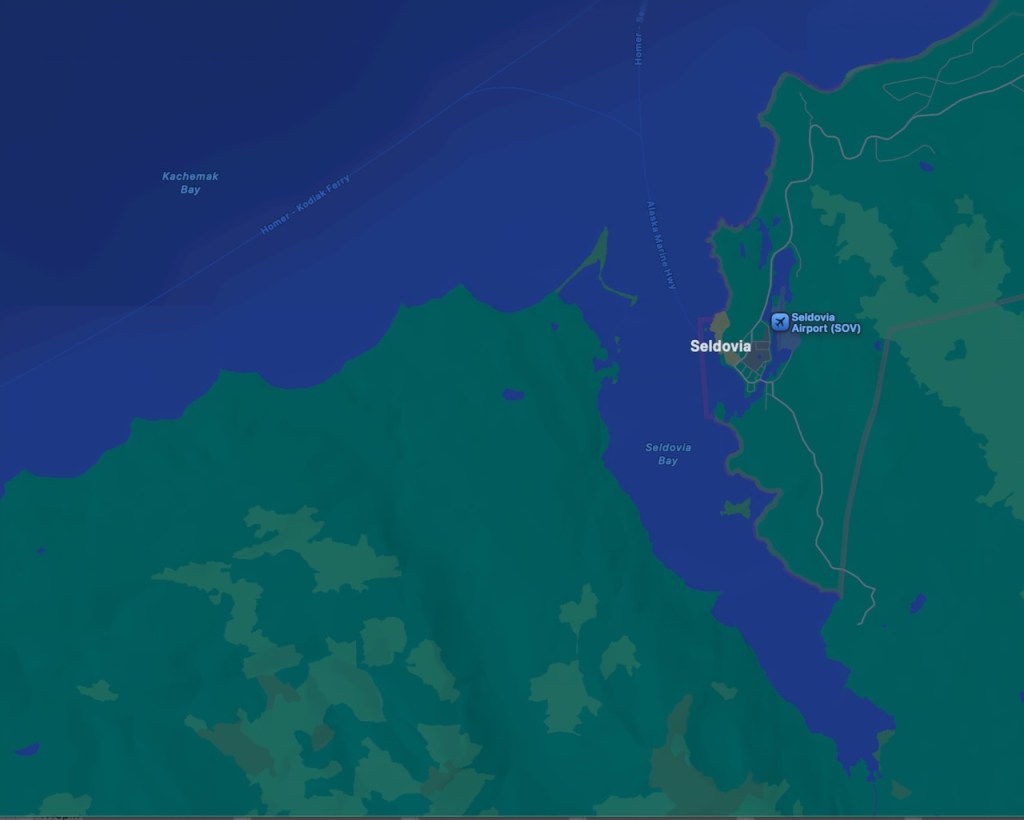
These bodies of water are not small, and the only way into the little town of Seldovia is by boat or plane.
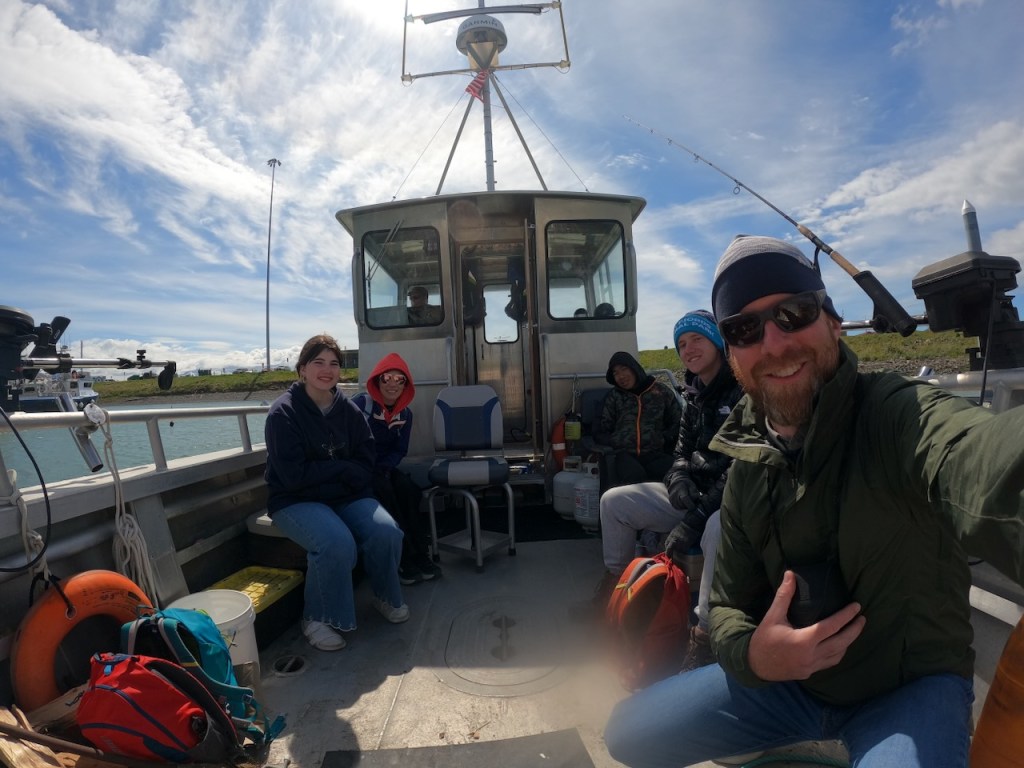
Having read some good things about Homer, the launch point for Seldovia, we were looking forward to a brief stop there and a walk around the place before Scott was to pick us up with his boat. The Homer Spit is a natural sand and now rock formation jutting out into Kachemak Bay with what we were told was cute shops and an eclectic vibe.
After a good lunch at Mike’s and a very odd experience at Bubbles (where a middle-aged woman literally stopped to look at Lincoln and Lydia, then promptly stuck her tongue out at them), we drove down the spit to peruse some shops.
If Kitty Hawk, NC and Ocean City, MD had a runt baby and shipped her west, it would be the Homer Spit. Yes there were a couple of clever shops, and lots of small office/outlets for charter boats, hunting trips, etc. We’d not make it a priority, though, to spend time there again. A few days later, we heard someone from Seldovia refer to people from Homer as “Homeroids.” I like a good regional rivalry and thought that was funny.
We hadn’t been browsing and shopping for too long before Scott called to let us know he was ready. We left Debbie in a marina lot and met Scott on the boat ramp to start the next phase of our adventure.
The water was very choppy, so we had to be strategic about our trip across the bay to avoid getting soaked. After a somewhat short ride out in the open, we moved into the cabin before heading into the waves. The incoming tide rolling over the shoals along the south coast of the bay made for a bunch of splashes and a wet deck.
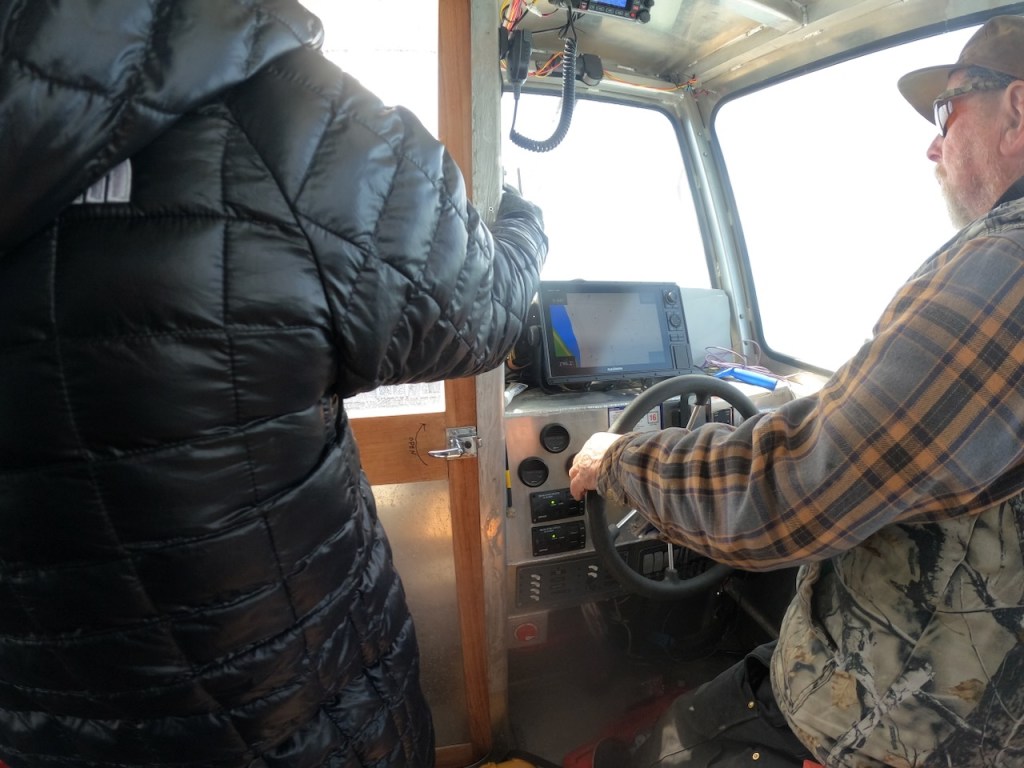
Scott showed us around some of the smaller bays with nice little cottages. It reminded Lincoln and me of Stony Lake where I’d visited as a kid on summer vacations and where my dad has taken Lincoln a couple of times for good fishing. Granite shores, spruce, small boathouses and docks… I love that place, and I liked what this beautiful place has to offer.
A trip that ordinarily takes about 45 minutes took us over two hours, but we finally made it to the cove where Scott beached his custom boat, lowered the front, and we stepped out onto the rocky shore. Janet showed us to the main cabin where Jenn and I were to stay and where we’d all eat. Then she showed the kids to the cabin Scott is presently building, the one with a flush toilet! Then she showed them up the path to the treehouse… and it’s a legitimate treehouse. I was thoroughly impressed by Scott’s creativity and execution with the design and construction.
There wasn’t any degree of reliable cell service (not a bad thing), so aside from a bar or two we got during our rides to Seldovia and out into the bay for fishing, we were, as they say, off the grid. It was kind of nice.
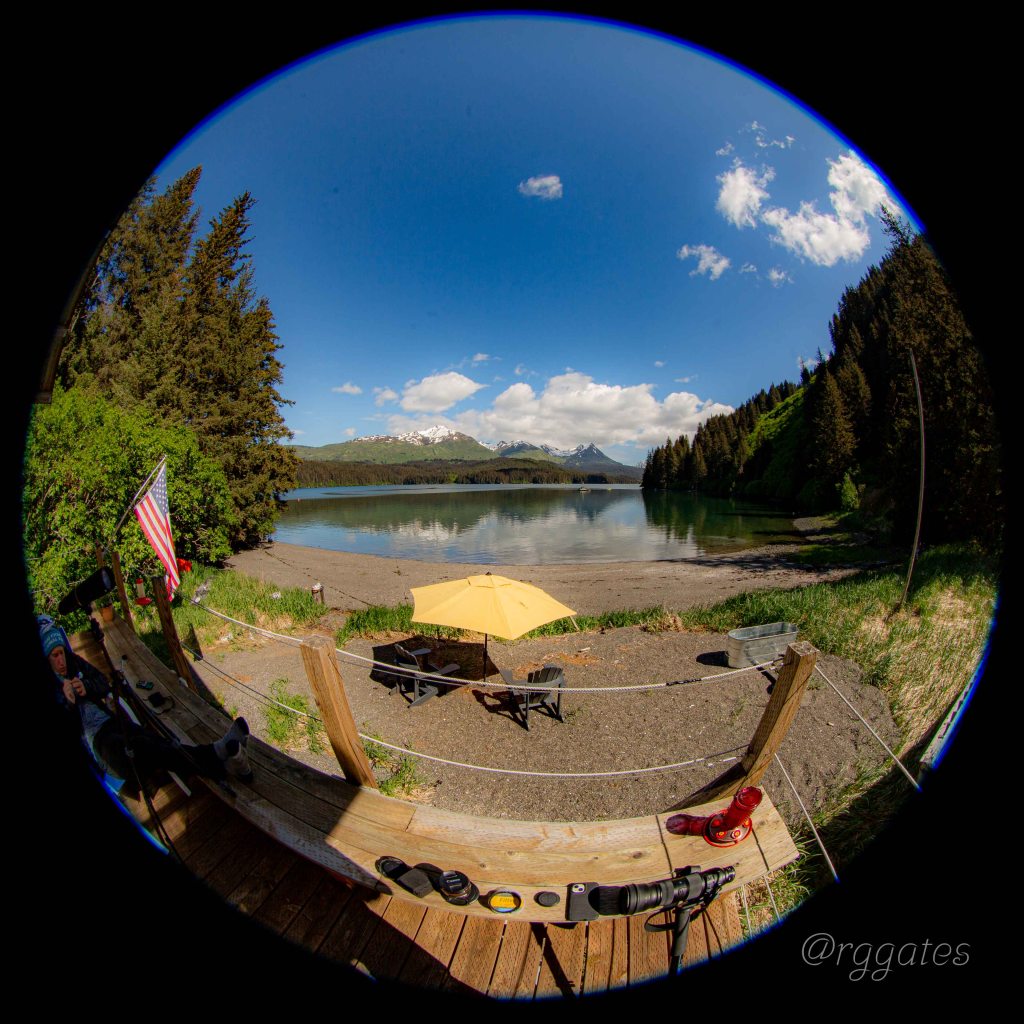
No Instagram Reels, no keeping up with work, no social media, just enjoying nature in a variety of ways, from hiking to boating, from fishing to wildlife watching.
Oh, the wildlife.
High up in a spruce a short distance from the main cabin, visible from the deck, sat a very large Bald eagle’s nest. We never saw fledglings, so it’s difficult to know if they were caring for eggs or newly hatched babies, but one of the pair was nearly always busy in the nest. The other busied itself hunting throughout the day.
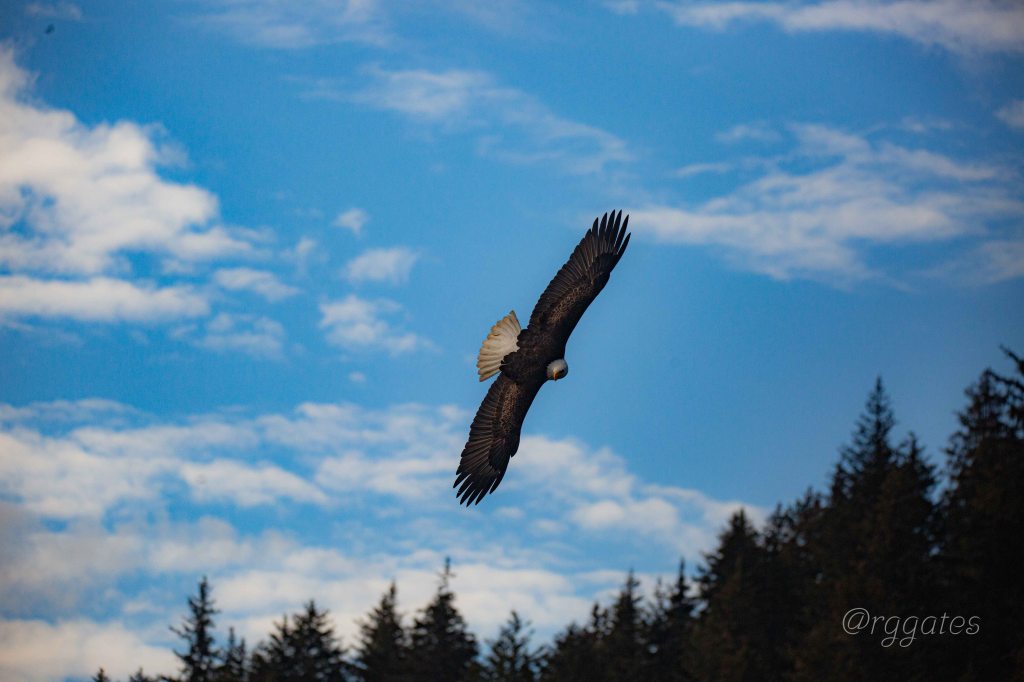
Our first morning included a bit of entertainment. Scott placed a couple of unused pieces of salmon out on the beach, whistled a call, and we were in for a show.
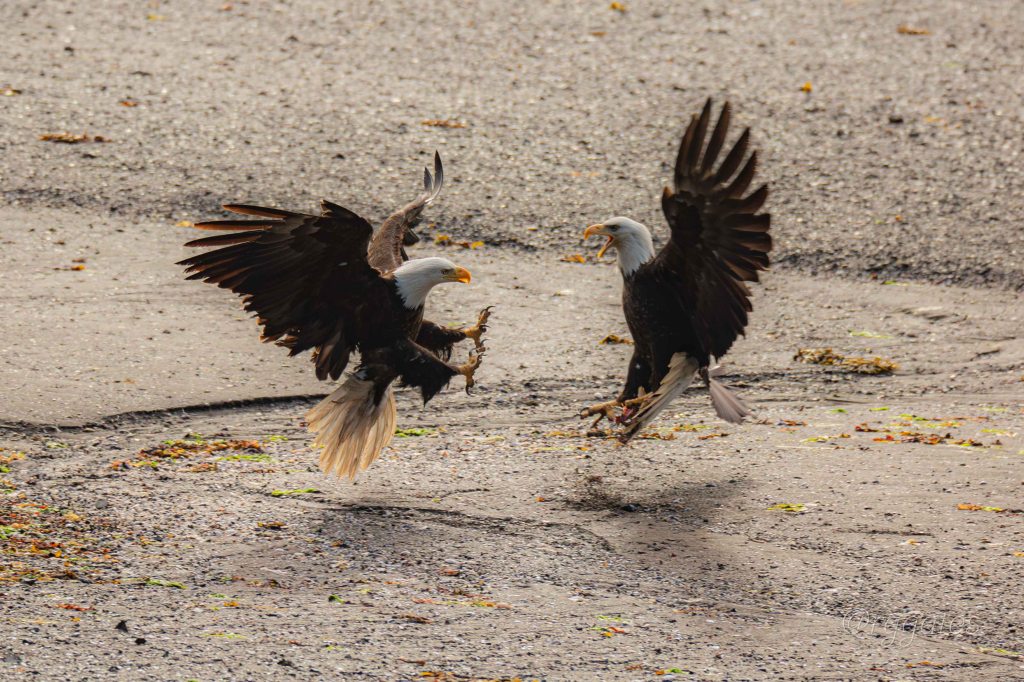
This whetted our appetite for more, and we got a good dose of the wild in wildlife. Sometimes the eagles would respond right away, while other times they’d look skeptically at us on the deck and take their time coming for the pieces of fish we made available to them. These eagles clearly weren’t hungry given the abundance of fish in the waters around Seldovia and beyond, so they could be quite casual. Things changed, though, when other eagles encroached upon what they viewed as their bay. A particular young eagle with not-yet-completely-shed juvenile head and tail feathers really upset them, and when that one would come around, they’d both leave the nest to chase it off.
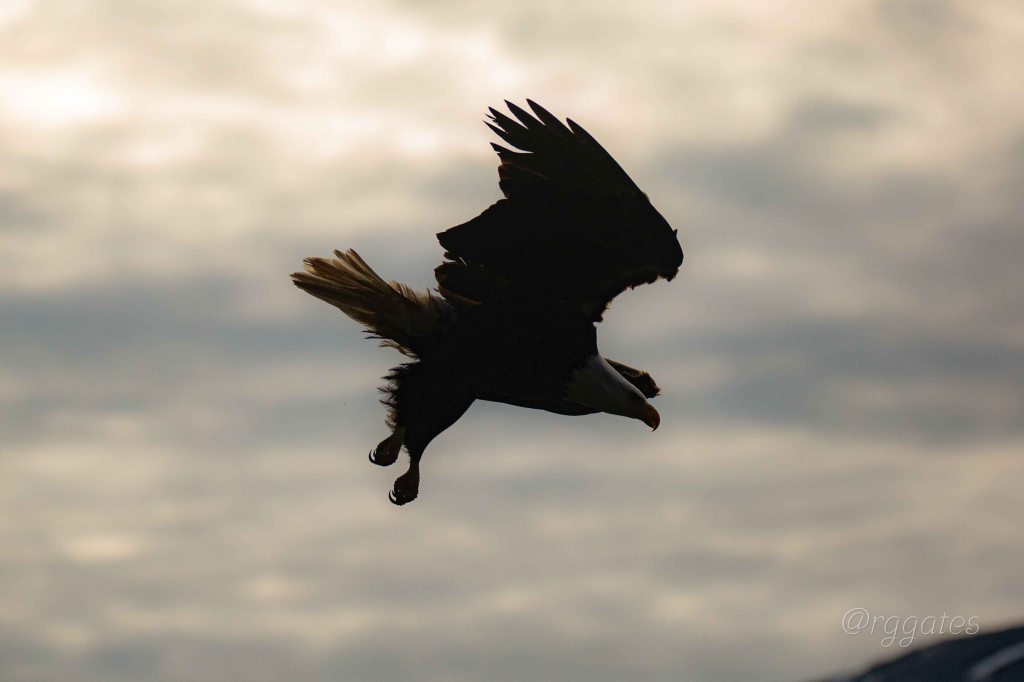
Watching their behavior, listening to their calls, and seeing them communicate even without screaming or calling was a sight to behold, and it just didn’t get old.
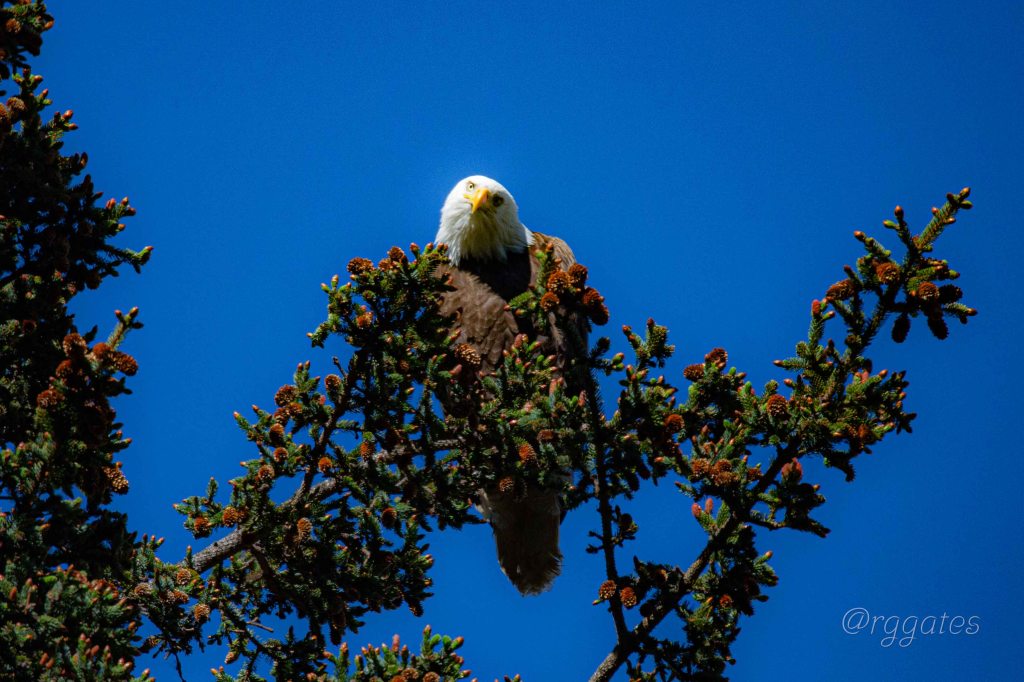
The town of Seldovia is a quiet place, with a couple of restaurants, a couple of inns, many wood-carved statues, lots of coastline, and a harbor that looks wildly different from high tide to low tide. We learned the tide changes around Seldovia are among the largest on the continent. During our stay, we saw fluctuations of not quite thirty feet!
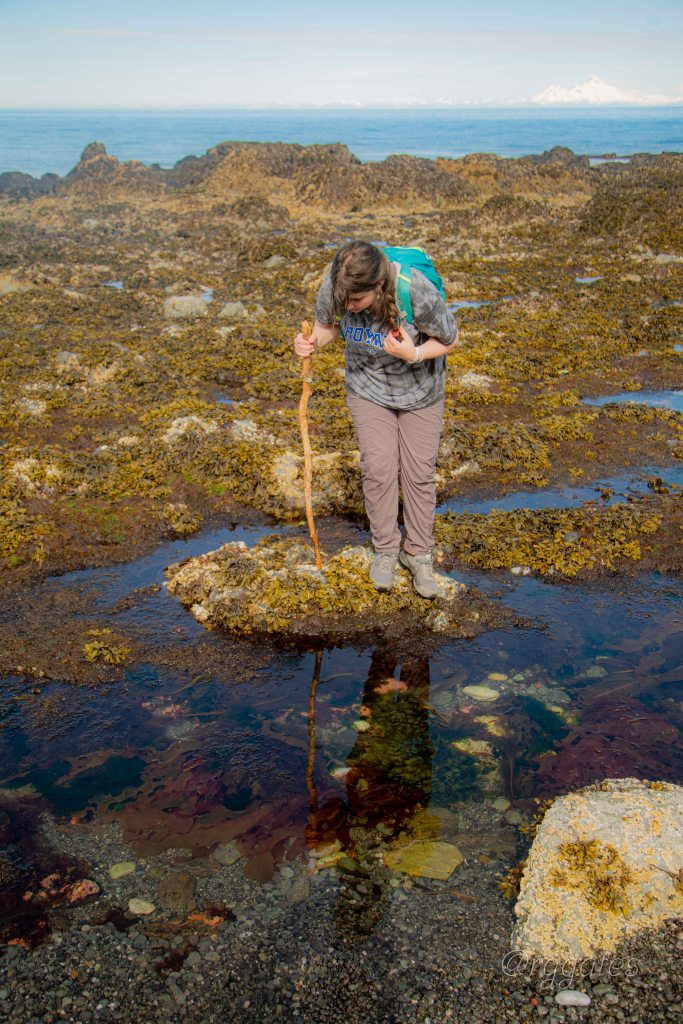
The Otterbahn Trail runs from just outside the center of town to the coast at Outside Beach, where if you time your hike for low tide, you can get some nice tide-pooling in. The color was better on the coasts of Oregon and Washington, but the closer we looked, the more little treasures we found, from anemone to crab to fish. And if you got tired of looking down at the small, aquatic life, you could look up and track the bald eagles flying around, both adult and juvenile.
Janet packed us a lunch for our time in Seldovia, but we also wanted to take in one of the eating spots, so after our packed lunch we ducked into Linwood Bar & Grill for some salmon dip and drinks overlooking the harbor. While we waited, the crows, eagles, and Violet-green sparrows kept us entertained.
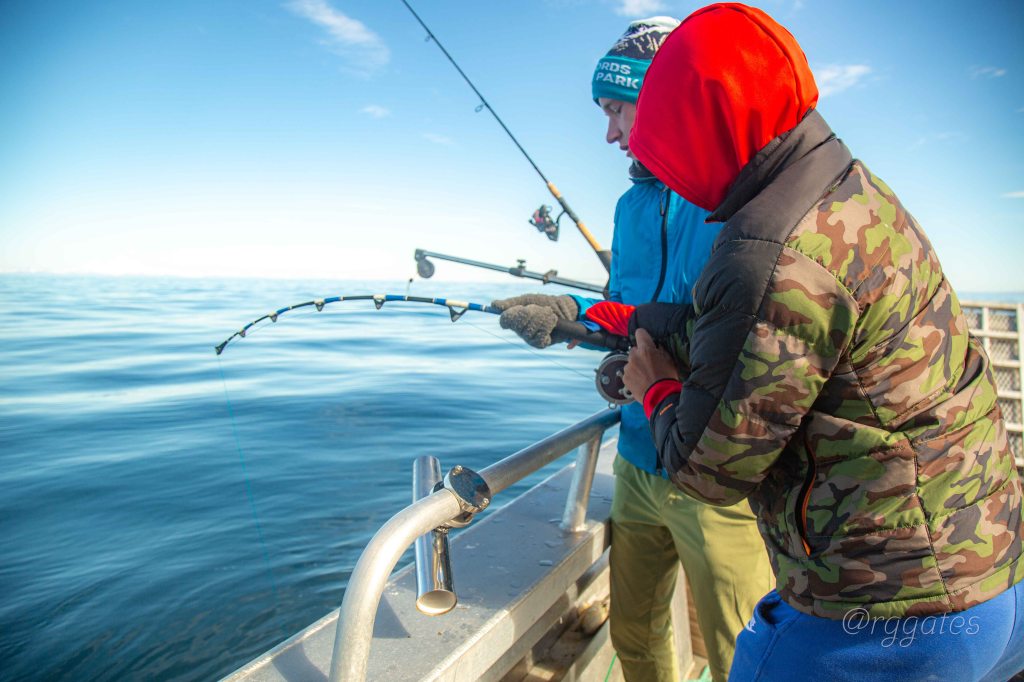
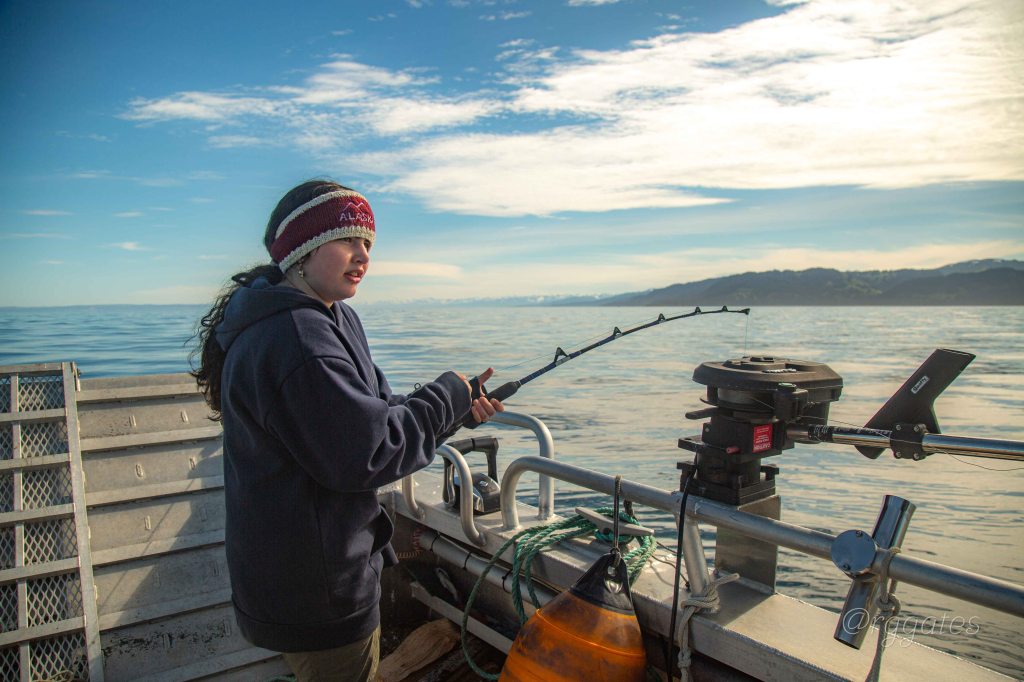
Scott called a local fishing buddy to determine where the halibut had been feeding most recently, and Jenn got a fishing license for Lincoln (Lydia and Henry fished free as out-of-state, under-16 year olds), so we set out, timed the tide, got some bait in Seldovia, and headed out into the Cook Inlet and dropped our lines into the water.
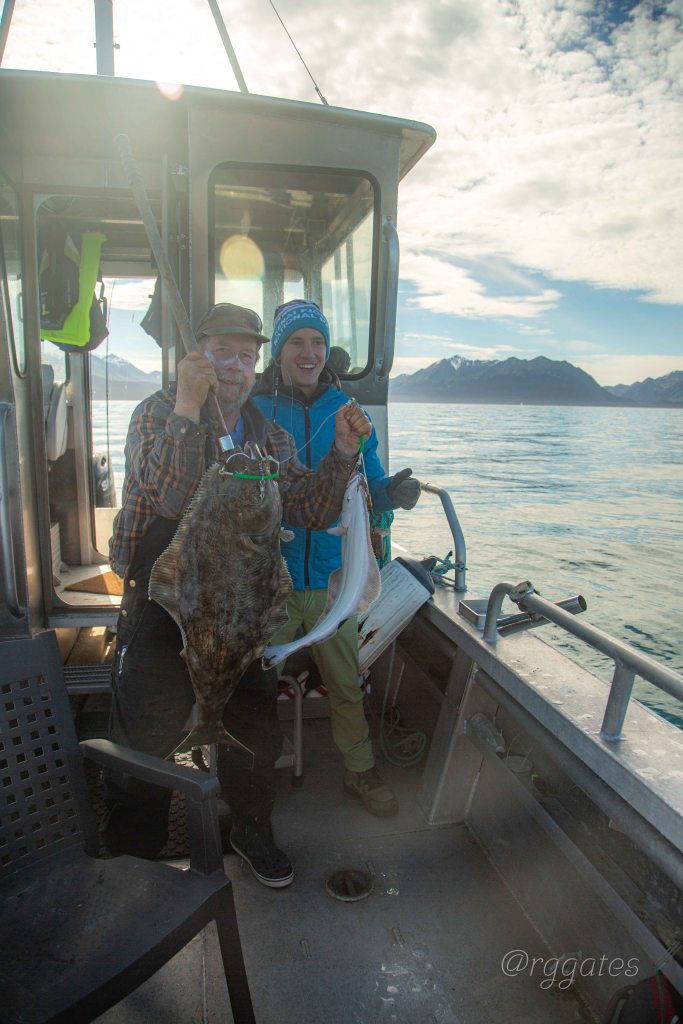
Lincoln limited out within sixty seconds. For real. Two halibut on the two hooks on the line.
Lydia got some nice catches, too.
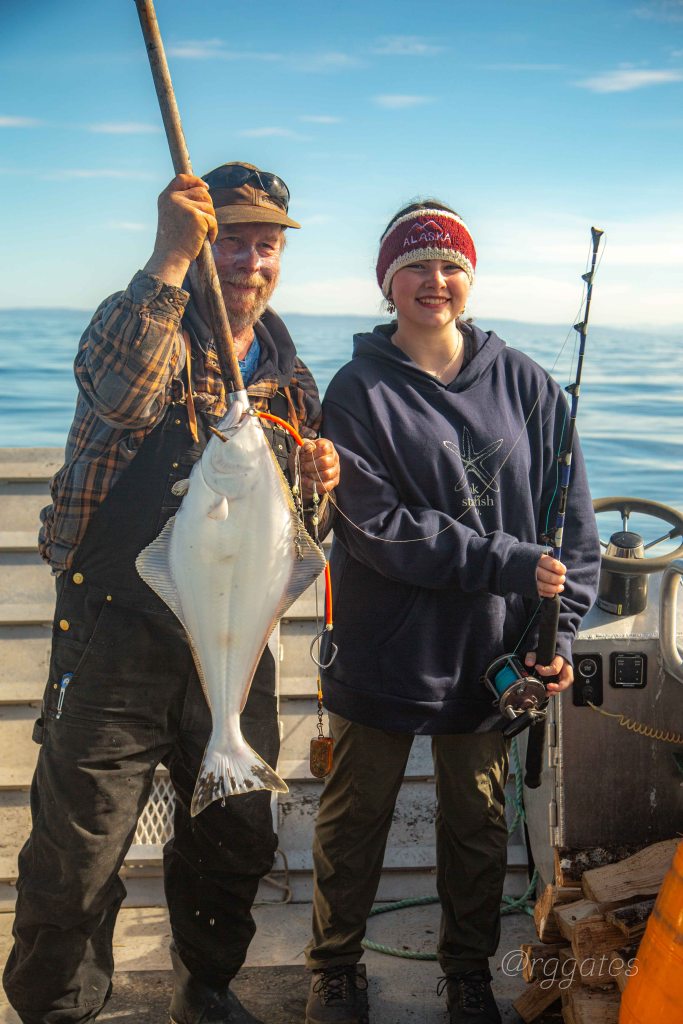
As did Henry.
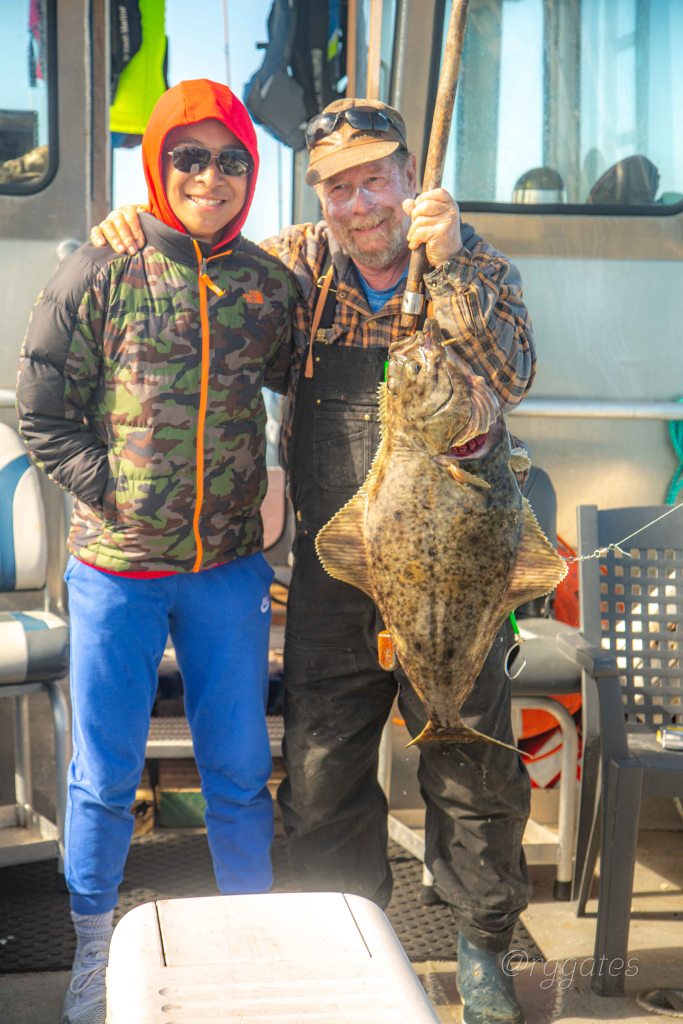
We didn’t have luck with our attempt at King salmon, and we learned the next day they started hitting just after we left. Doggoneit, if that’s not fishing for you. But we weren’t disappointed at all, and we returned to the marina to clean our catch. Lydia wanted to get her hands dirty and learn how to clean halibut, and Scott taught her!
Even Henry liked the fish dinner Scott and Janet cooked up, which was the freshest halibut dinner served in North America that evening. Henry’s given fish more than a fair shake for many years and he’s just not into it. But with the fresh salmon the Ogans prepared our first evening, and the halibut on our last evening, Henry may be slowly working his way over to the fish side.
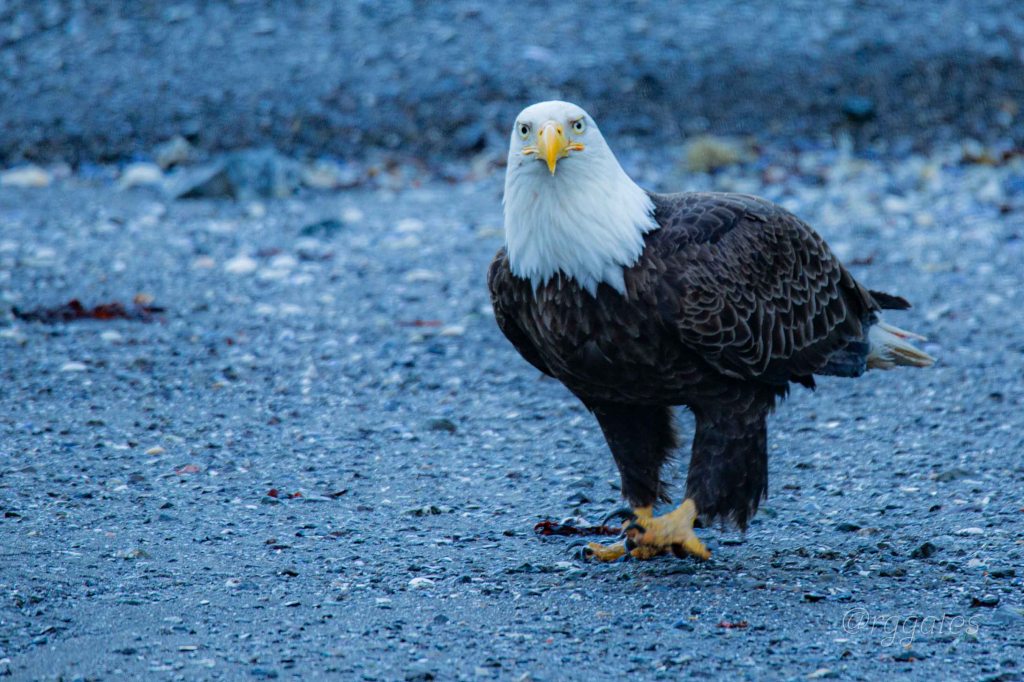
In between packing on our last evening, we watched more of the eagle show out in the cove, and knew we’d miss that upon our return home.
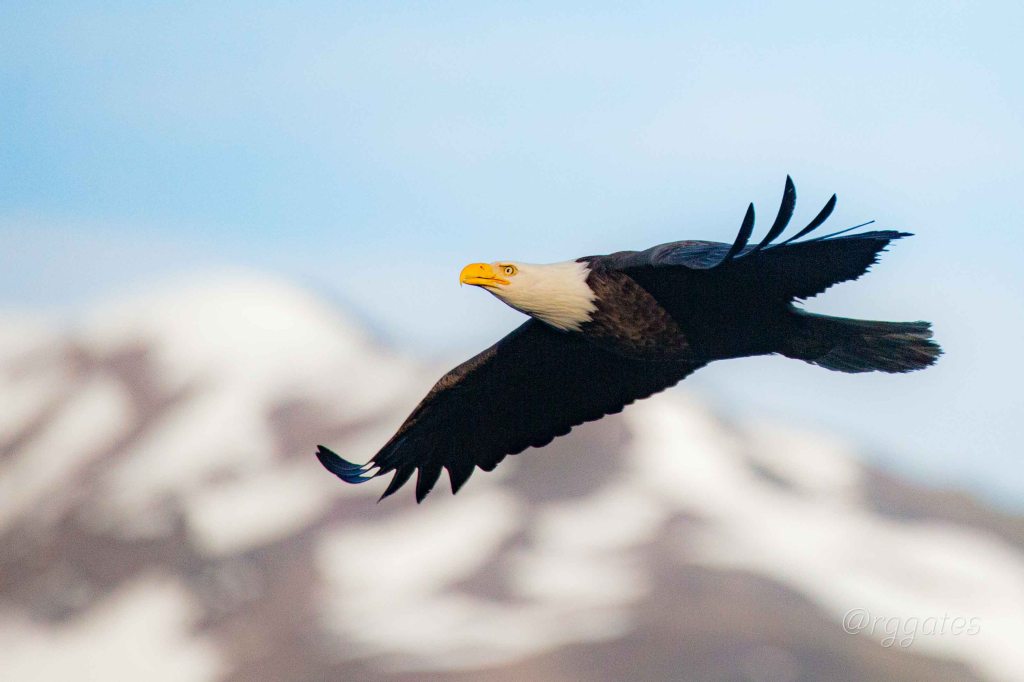
Going home from a remote place like Seldovia was an all day adventure by itself. I wouldn’t advise trying to catch an international flight same day unless it was a red eye.
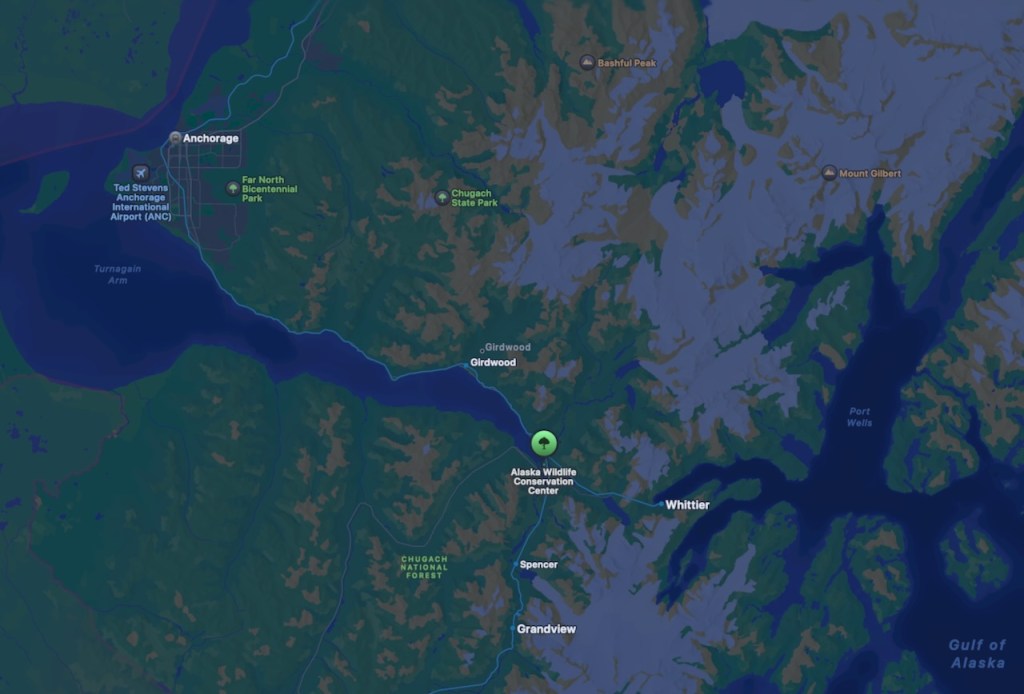
We took our time stopping at the Alaska Wildlife Conservation Center on the Seward Highway, just by the turn off for Whittier/ Portage Glacier.
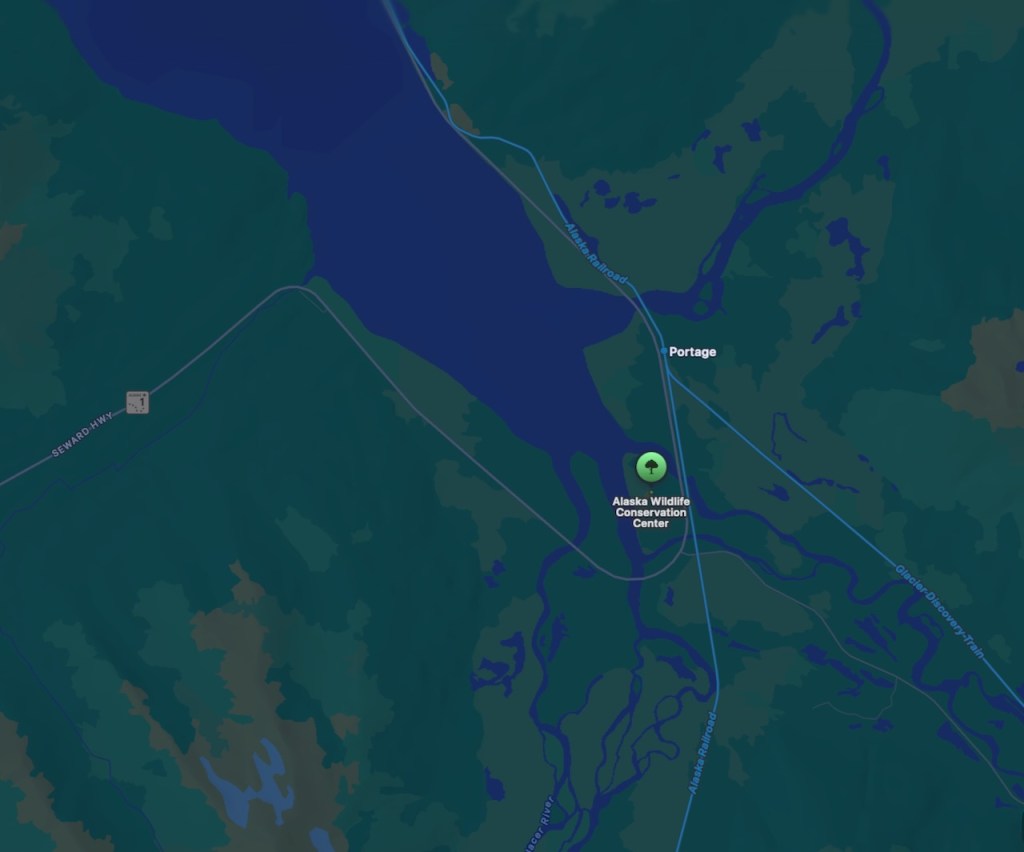
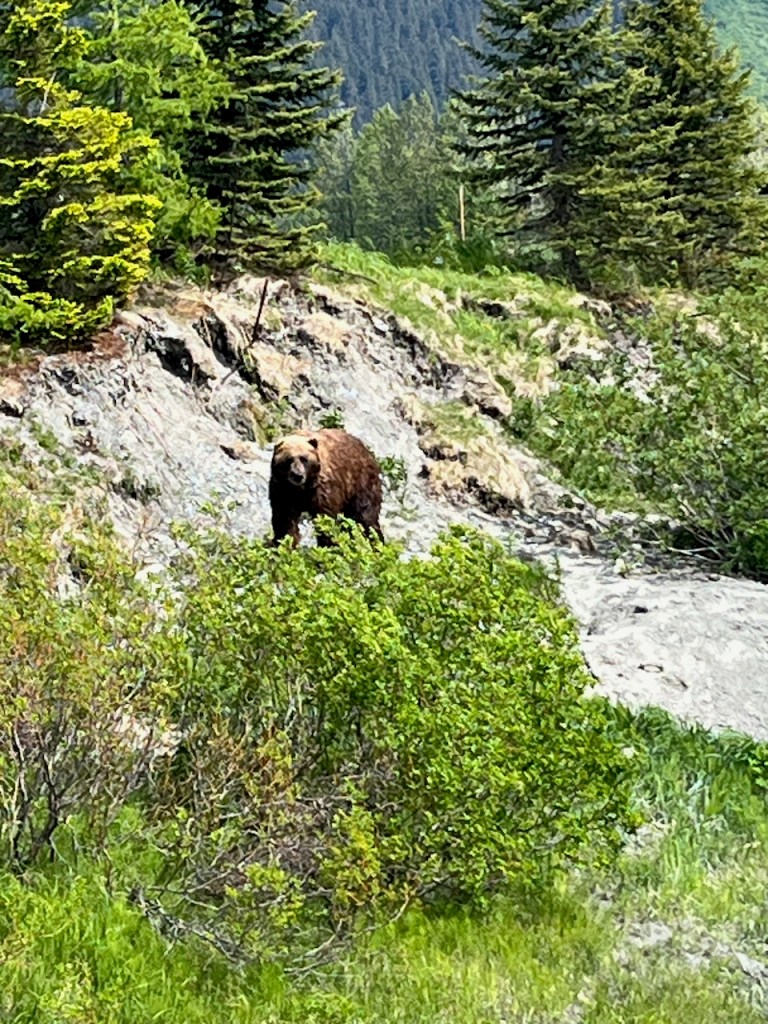
Talk about tourists! While the Conservation Center itself was well done & presented (the bear habitats in particular were fantastic) this was clearly a cruise excursion stop. So many busses of tourists!!! Perhaps if we had stopped on the front end of our trip earlier in June it wouldn’t have been so busy, but by mid-June the place was packed. Not sure if I’d pay that much again to be bumping into people for an hour.
Traveling home was … long. All told, we spent fifteen hours traveling given wake-up time, layovers, delays, gate changes, baggage claim, and the drive home. As much as it’s possible, we’ve historically tried to return home the day before a return to work, and we’re so glad we implemented that strategy this time around. With the readjustment to the timezone change, the laundry to push through, the responsibilities of home, and the groceries to restock, we really needed that Sunday.
I want to share some wrap-up items for the families reading our content and planning their own Alaska adventure. I asked each of our kids, “Think about what you packed for this trip. What do you wish you’d left at home, and what do you wish you’d brought with you?”
| Gates Member | Out | In |
| Lincoln | books | Settlers of Catan |
| Lydia | swimsuit | curlers |
| Henry | extra pants & crocs | phone |
| Jenn | warm weather clothes & Birks | sweatshirt / sweatpants |
| Ryan | Platypod | PJ pants |
- Lincoln: <eyeroll> Granted, he brought more books than he had time to read, and they take up weight. But consider the space of the creative table game. LOL
- Lydia: <eyeroll> We brought swimsuits for the hot tub at our VRBO in Healy, but it was rainy during the time we had to spend in it, so that makes sense, but curlers? In Alaska? LOL
- Henry missed not taking photos on his phone, and sweatpants only go so far. Better to take hiking pants for the outside stuff, not sweatpants.
- Jenn lamented feeling cold so often in our VRBOs.
- I didn’t end up using my Platypod, so that was wasted weight. There’s no night photography to speak of in Alaska in the summer, and it takes too long to set up for group shots when we’re out as a family. It’s more of a solo trip piece of equipment. I should have brought a set of pants for lounging in the evenings… jeans &hiking pants just aren’t the same.
This was absolutely the amazing trip and adventure we thought it would be. So many good stories to recount, so many great photos, so many memories that’ll last a lifetime. When you go with your own family, budget extra time for flexibility, stop to enjoy the wildlife, and remember you’ll not be taking your money with you when you die, so put it to good use making great memories.
We’ll be wrapping up our Gates50States project within the next year! Stay tuned…
 Gates50States
Leave a comment